
GE Washer Won't Start — 5 Causes & How to Fix Control Knob Issues
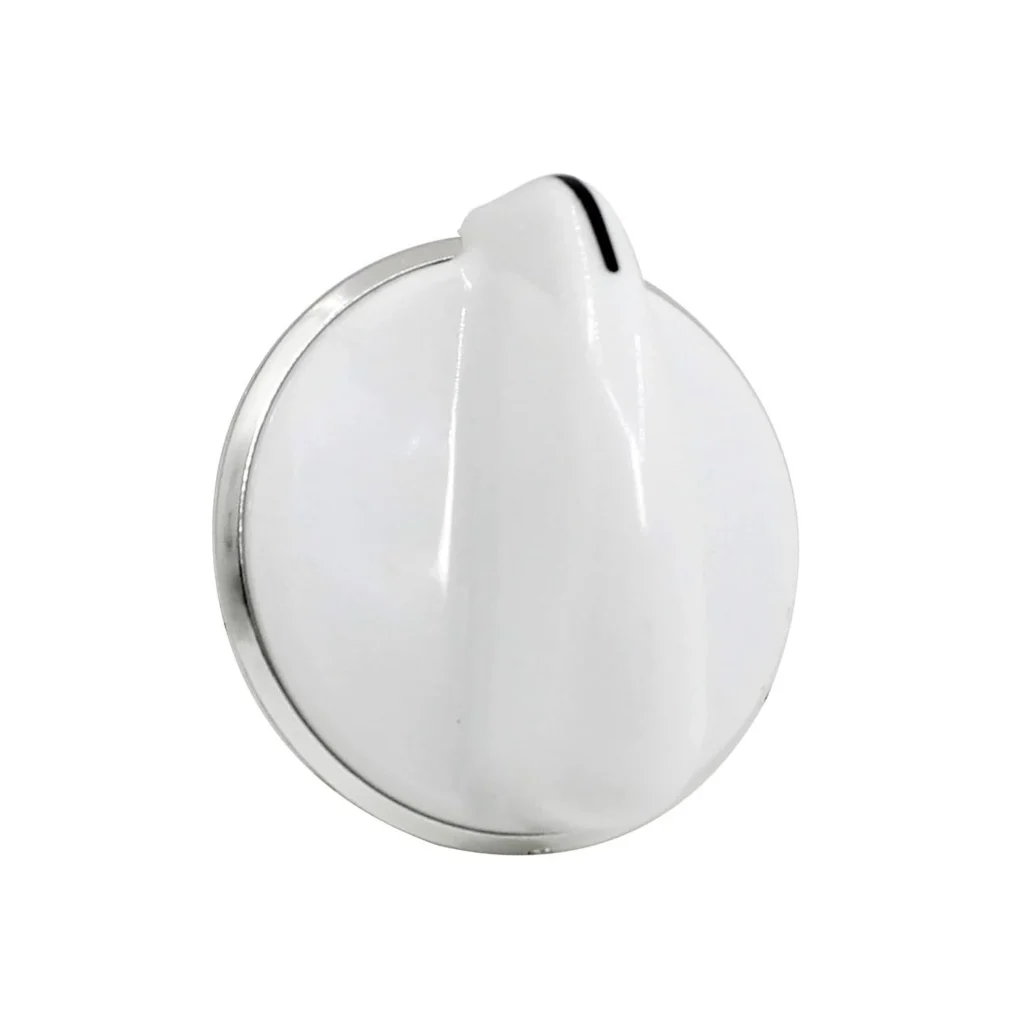
You load the washer, add detergent, press the start button — and nothing. The control panel lights up, but your GE washer refuses to begin the cycle. Before you assume it's a dead motor or control board, there's a surprisingly common culprit: the control knob assembly.
The WE01X20378 control knob and clip affects models like the GTDP180ED0WW, GTDX180ED5WW, and hundreds of other GE, Hotpoint, and RCA washers. When this small component fails, it can prevent cycle selection or interrupt the timer circuit entirely.
Quick Symptom Check
Before diving into repairs, verify you're dealing with a control knob issue:
- Panel lights work but cycle won't begin — power is reaching the control board
- Knob feels loose or spins freely — the internal clip has failed
- Timer doesn't advance — knob isn't engaging the timer shaft
- You can't select certain cycles — knob position sensor malfunction
- Knob fell off in your hand — clip separated from base
If three or more apply, you're likely dealing with a knob assembly problem rather than electronic failure.
Cause #1: Broken Retention Clip (65% of Cases)
The small plastic clip that secures the knob to the timer shaft is the weakest link. Years of turning, pulling, and temperature cycling make it brittle.
How to diagnose:
- Try to pull the knob straight off — if it comes away easily without resistance, the clip has failed
- Look at the back of the knob for a cracked or missing D-shaped retention piece
- Check if the knob spins 360° without stopping — it should have resistance and defined stop points
Why it happens: The clip is under constant spring tension. Every cycle start puts stress on the plastic. GE redesigned this part (WE01X20378 replaced WH01X10460) specifically because the original clip design failed prematurely.
The fix: Replace the entire knob assembly. The clip isn't sold separately, and attempting to glue or tape it creates safety issues. The WE01X20378 includes both the knob and the improved clip design. Cost: $24.99, 10-minute repair.
Cause #2: Worn Timer Shaft (20% of Cases)
The metal shaft the knob attaches to can wear down over time, preventing proper engagement even with a good knob.
How to diagnose:
- Remove the knob and examine the timer shaft with a flashlight
- Look for a D-shaped shaft that's become rounded or has visible grooves
- Try wiggling the shaft — excessive play indicates wear
If the shaft shows metal wear or the D-shape has rounded edges, the knob can't grip properly. This requires timer replacement (a more expensive repair around $180–$240).
Cause #3: Misaligned Knob Installation (10% of Cases)
Sometimes the knob is fine — it's just not seated correctly on the shaft.
How to diagnose:
- Remove the knob completely
- Look at the shaft and note the flat side of the D-shape
- Check that the knob's internal D-slot matches this orientation
- Press firmly until you hear a distinct click
If the washer starts working immediately after reseating, you've saved yourself a part order. Make sure to push until the clip engages — it should take moderate force.
Cause #4: Detergent Buildup Preventing Rotation (3% of Cases)
Liquid detergent vapor can migrate into the control panel over years, creating a sticky residue that prevents smooth knob operation.
How to diagnose:
- Remove the knob and wipe the shaft with a dry cloth
- Look for white crusty deposits or sticky residue
- Try turning the bare shaft with pliers — if it's difficult, buildup is the issue
The fix: Clean the shaft with isopropyl alcohol (90% or higher) and a cotton swab. Let it dry completely before reinstalling the knob. This often restores full function without replacement.
Cause #5: Broken Internal Knob Gear (2% of Cases)
The least common but most frustrating: the internal plastic gear teeth inside the knob have stripped.
How to diagnose:
- Remove the knob and look inside the D-shaped socket
- Look for small plastic teeth or ridges — they should be intact and uniform
- If you see smooth worn areas or broken teeth, that's your problem
This happens when someone forces the knob past its stop point or if a child plays with it excessively. Replacement is the only option.
When to Call a Pro
Replace the control knob yourself if you can remove and reinstall it without tools. It's a 10-minute job with zero electrical risk — the knob is purely mechanical.
Call a technician if:
- The timer shaft itself is worn (you'll need a full timer replacement)
- The washer still won't start after knob replacement
- You smell burning plastic near the control panel
- Multiple cycles fail, not just start issues
A service call runs $85–$150 for diagnosis plus parts. Timer replacement costs $180–$240 in parts alone, plus labor.
Frequently Asked Questions
Can I use super glue to fix a broken clip instead of replacing the knob?
Technically yes, but it's not recommended. The clip needs to flex slightly during installation and removal. Glued clips can break off inside the control panel, requiring disassembly to retrieve. For $24.99, the proper replacement is worth it.
Will a generic control knob work, or do I need the OEM GE part?
The WE01X20378 is the OEM replacement, but it's also widely available as an aftermarket part. The key is matching the D-shaft size and clip design. Generic knobs for $8–$12 work on some models but may not include the improved clip. The OEM part eliminates guesswork on fit.
Why does my washer work sometimes but not others after the knob broke?
Intermittent contact. The broken clip allows the knob to sit at slightly different depths on the shaft. Sometimes it makes contact with the timer switch, sometimes it doesn't. This gets worse over time as the clip breaks further. Replace it before you're stuck mid-cycle with a tub full of water.
Diagnosed the problem?
WE01X20378 · In Stock · Fast shipping