
GE Dishwasher Not Filling with Water — 5 Causes & How to Fix
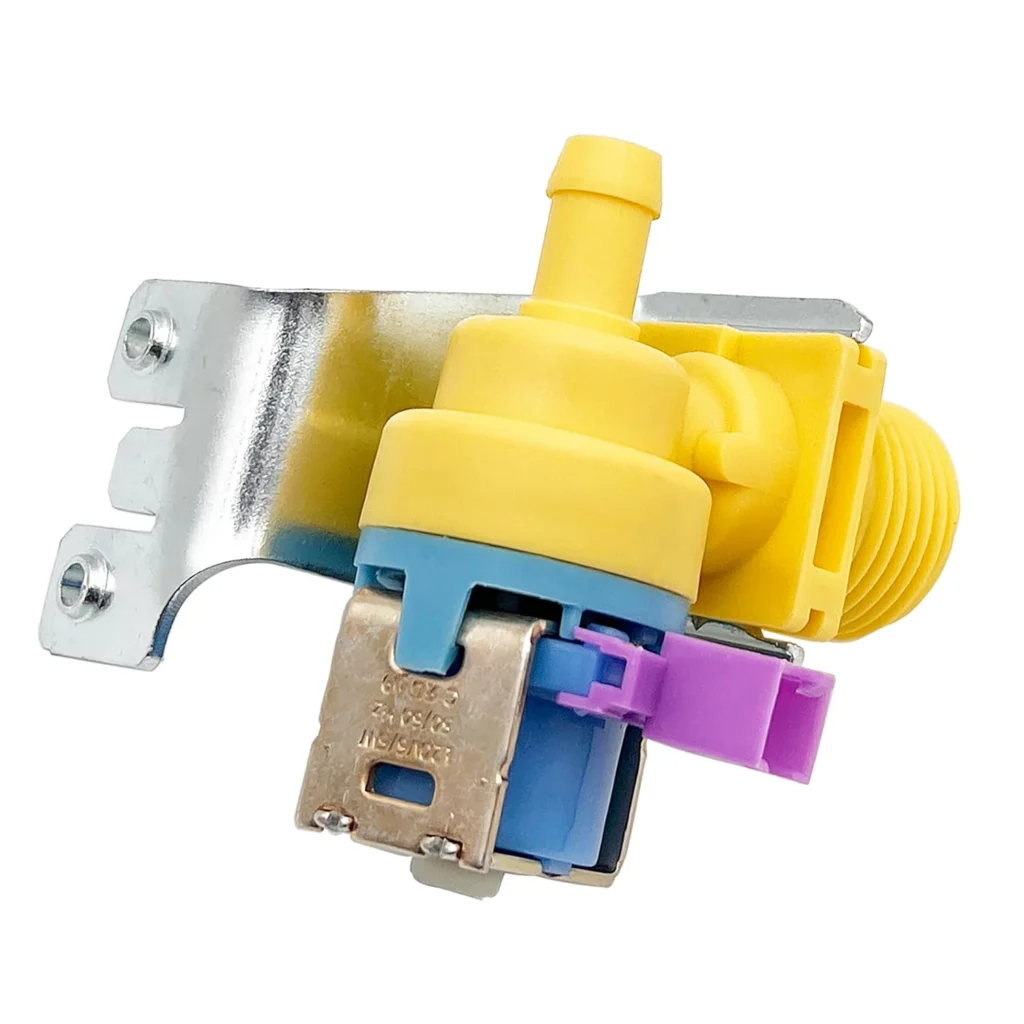
You load the dishwasher, press start, and walk away. Twenty minutes later you open it expecting clean dishes, but everything's bone dry. The cycle ran — you heard it — but zero water made it inside. This is one of those failures that stops your kitchen dead, and nine times out of ten, it's the water inlet valve that's gone bad.
The WD15X26078 inlet valve controls water flow into your GE, Haier, or Hotpoint dishwasher. When it fails, you'll get either no water at all or a trickle that's not enough to complete a cycle. Let's diagnose what's actually happening and get your dishwasher filling again.
Quick Symptom Check
Before you start pulling parts, verify what you're actually dealing with:
- No water enters during fill cycle — pump runs but tub stays empty
- Weak water flow — some water enters but cycle doesn't start properly
- Intermittent filling — works sometimes, fails other times
- Humming sound during fill — valve tries to open but no water flows
- Error codes — some GE models display fill-related fault codes
- Cycle runs without water — heating element may activate on empty tub (dangerous)
Cause #1: Failed Water Inlet Valve (65% Probability)
The inlet valve itself contains solenoids that open and close to control water flow. After a few years and hundreds of cycles, these solenoids burn out or the valve mechanism gets clogged with mineral deposits. This is especially common in hard water areas.
How to diagnose:
- Turn off water supply and power to dishwasher
- Remove lower front panel to access valve (located where water line enters)
- Check valve solenoid with multimeter — should read 500-1500 ohms
- If reading is infinite or zero, valve is dead
- Even with good reading, internal clog can cause failure
The WD15X26078 valve replaces AP6986683, PS16217027, and 4959029. It fits dozens of GE models including GDF630PGM4WW, GDT635HSM4SS, GDP665SYN2FS, and GDT530PGP5BB. Cost is $23.99, and replacement takes about 30 minutes with basic tools.
Cause #2: Clogged Inlet Valve Screen (20% Probability)
Every inlet valve has a small mesh screen that filters debris from your water supply. Over time, sediment, rust, and mineral buildup clog this screen. The valve itself works fine, but water can't pass through.
Diagnosis steps:
- Shut off water and power
- Disconnect water supply line from valve
- Look inside valve inlet — you'll see a small screen
- Use flashlight to inspect for buildup
- If screen is clogged, try cleaning with toothbrush and vinegar
Honestly though, if the screen is badly clogged, the valve's internal components are probably compromised too. At $23.99, replacing the whole valve makes more sense than spending an hour trying to clean a marginal part.
Cause #3: Faulty Water Supply (8% Probability)
Sometimes the dishwasher is fine — the problem's upstream. If your home's water supply valve is partially closed, kinked, or restricted, the dishwasher can't pull enough water.
Quick check:
- Locate shut-off valve under sink (usually a quarter-turn valve)
- Verify it's fully open
- Disconnect supply line and place in bucket
- Turn on valve — should flow at least 1 gallon per minute
- If flow is weak, problem is your plumbing, not the dishwasher
Cause #4: Defective Control Board Signal (5% Probability)
The control board sends electrical signals to open the inlet valve. If the board fails or a connection corrodes, the valve never gets the command to open — even though the valve itself is fine.
Testing approach:
- Start a wash cycle and listen at the valve location
- You should hear a click when valve energizes (within 30 seconds)
- No click means no signal from control board
- Check wiring harness connections for corrosion
- Test voltage at valve terminals during fill (should be 120V AC)
Control board diagnosis gets complicated. If the valve tests good electrically but doesn't get voltage during operation, you're looking at board replacement — a $150-300 repair that's best left to a pro.
Cause #5: Float Switch Stuck (2% Probability)
Your dishwasher has a safety float in the base that prevents overfilling. If this float gets stuck in the raised position, the dishwasher thinks it's already full and won't signal the valve to open.
Easy check:
- Open dishwasher door
- Remove lower rack
- Find float assembly (usually front corner of tub bottom)
- Lift and release — should move freely up and down
- If stuck, remove cover and clean out any debris underneath
When to Call a Pro
Replacing the inlet valve is straightforward — shut off water, disconnect three connections, swap the part. Most DIYers can handle this in under an hour. You'll need an adjustable wrench, screwdriver, and possibly a 1/4" nut driver.
Call a professional if:
- You're getting error codes you can't interpret
- Testing shows control board issues
- Water supply problems require plumbing work
- You're not comfortable working with water connections
- Multiple components seem faulty (suggests bigger problem)
But for a simple valve swap on models like GDF530PGM4WW, GDT605PSM5SS, or GDF630PMM4ES? That's a $23.99 part and 30 minutes of your time versus a $200 service call.
Frequently Asked Questions
How do I know if my GE dishwasher inlet valve is bad?
Start a cycle and listen at the valve location within the first minute. You should hear a click and then water flow. If you hear clicking but no water, or no clicking at all, test the valve solenoid with a multimeter (should read 500-1500 ohms). Zero or infinite resistance means the valve is failed. The WD15X26078 is a direct replacement for GE models GDF630PGM4WW through GDF510PGM5BB.
Can a dishwasher inlet valve be cleaned instead of replaced?
You can try cleaning the mesh screen at the inlet, especially if you have hard water. Disconnect the supply line, remove the screen, and soak it in vinegar for 30 minutes. However, if the valve solenoid has failed internally or mineral deposits have compromised the valve body, cleaning won't help. At $23.99, replacement is usually more reliable than attempting to salvage a marginal valve.
Why does my GE dishwasher fill slowly?
Slow filling usually indicates a partially clogged inlet valve screen or weak water supply pressure. Check that your shut-off valve is fully open and that supply line isn't kinked. If supply pressure is good, the inlet valve is likely restricted by mineral buildup. Models like GDT635HSM4SS and GDP645SYN3FS are prone to this in hard water areas after 3-5 years of use.
Diagnosed the problem?
WD15X26078 · In Stock · Fast shipping