
GE Oven Not Heating When Baking — 5 Causes & How to Fix WB44T10060
You preheated your GE oven for 20 minutes, slid in the lasagna, and came back to find it barely warm. The display says 350°F, but your hand tells a different story. If your oven's bake element isn't heating — or heating weakly — you're looking at one of five likely culprits.
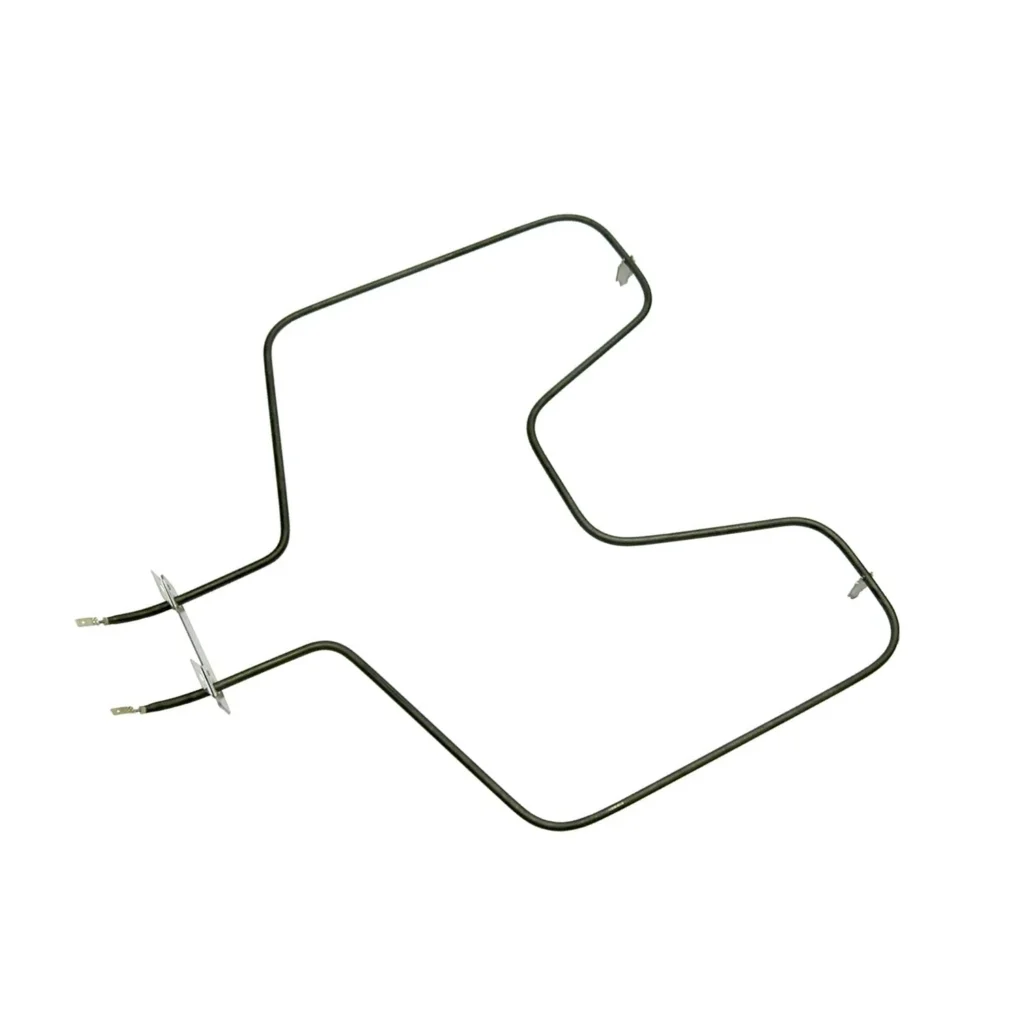
The WB44T10060 bake element is the workhorse at the bottom of your GE, Hotpoint, or Kenmore oven. When it fails, baking becomes impossible. Let's diagnose what's wrong.
Quick Symptom Check
Before you pull the oven out, confirm these symptoms:
- Element shows no glow: Turn the oven to bake and look through the window — the bottom element should turn bright orange within 90 seconds
- Partial heating: Element glows in spots but has dark sections that never heat
- Oven takes forever to preheat: Display eventually hits temperature, but it takes 30+ minutes
- Food cooks unevenly: Bottoms stay pale while tops brown (broil element compensating)
- Tripped breaker: Element shorted and kicked your circuit breaker immediately
If you're seeing any of these on models like the JB620DR4BB, JB645DK4WW, or JB625RK6SS, here's what's happening inside.
Cause #1: Burned-Out Bake Element (70% of Cases)
The WB44T10060 element itself is the most common failure point. These elements run at 2,500+ watts and cycle thousands of times over their lifespan. Eventually, the nichrome wire inside breaks.
How to diagnose:
- Turn off the breaker — you're working with 240V here
- Remove the two screws holding the element bracket at the back wall
- Gently pull the element forward to expose the terminal connections
- Set your multimeter to resistance (ohms)
- Touch probes to each terminal — you should read 15-30 ohms
- If you read infinite/OL, the element is open and dead
Visual clues: Look for blistering, separations, or a visible break in the coil. Sometimes you'll see a dark spot where it arced before failing completely.
Fix difficulty: Easy. Two screws, two push-on terminals. 15-minute job.
Part cost: $47.99 for the WB44T10060 replacement.
Cause #2: Loose or Corroded Wire Connections (15%)
Even if the element tests fine, corroded terminals create resistance that prevents proper heating. This happens because ovens trap moisture during self-clean cycles, and those terminals sit in a hot environment.
How to diagnose:
With the element pulled forward, inspect both push-on terminals. You're looking for:
- White or green corrosion on the brass terminals
- Burned or discolored wire insulation near the connector
- Loose terminals that wiggle when you touch them
If the element tests good (15-30 ohms) but the terminals look sketchy, this is your problem.
The fix: Clean terminals with sandpaper or a wire brush. If they're badly pitted, replace the element anyway — new terminals come with it. Make sure connections are fully seated and tight.
Cause #3: Faulty Oven Control Board (8%)
The electronic control board sends power to the bake element through a relay. When that relay fails — usually stuck open — the element never receives voltage even though it's perfectly functional.
How to diagnose:
- Test the element first (see Cause #1) — it should read 15-30 ohms
- With power ON (careful!), set oven to bake
- Use a multimeter on AC voltage setting
- Check voltage at the element terminals — should read 240V
- If element is good but you're reading 0V, the board isn't sending power
You can also swap bake and broil elements temporarily (they often use the same part). If the "bad" element works in the broil position, your control board isn't firing the bake circuit.
Fix difficulty: Moderate. Control boards run $150-300 and require label documentation to order the correct replacement.
Cause #4: Tripped Thermal Fuse (4%)
Some GE ranges have a thermal fuse that protects the bake circuit from overheating. If your oven ran a self-clean cycle recently and now won't bake, this one-time fuse may have blown.
Location: Usually behind the control panel or attached to the oven cavity near the element.
How to test: Remove it and check continuity with a multimeter. Should read near 0 ohms. If it's open, it's blown and needs replacement.
Important: Thermal fuses blow for a reason. If yours tripped, figure out why before replacing it — blocked vents and failed cooling fans are common causes.
Cause #5: Failed Bake Element Relay on Older Models (3%)
Ranges built before 2010 sometimes used a separate relay board to control the bake element. This is less common on newer models using the WB44T10060, but if you have an older JB620SR4SS or similar, check for a relay clicking when you turn on bake mode.
Listen test: Put your ear near the control area and switch to bake. You should hear a distinct click as the relay closes. No click = failed relay.
When to Call a Pro
Replacing the bake element itself? That's a straightforward DIY. You're dealing with two screws and two terminals.
Call a tech if:
- Element tests good, you have 240V at the terminals, but it still won't heat (rare internal break)
- You're not comfortable working with 240V circuits and testing live voltage
- Multiple elements aren't working (bigger electrical problem)
- Control board needs replacement and you want warranty coverage on the repair
Most element swaps take 20 minutes. Control board replacements take 45-60 minutes for a pro.
Frequently Asked Questions
How long should a GE bake element last?
Typical lifespan is 5-8 years with normal use. If you run self-clean cycles frequently or bake daily at high temperatures, expect 3-5 years. The WB44T10060 is a direct OEM-quality replacement that matches original longevity.
Can I use my oven with just the broil element working?
Technically yes, but it's not ideal. Broil heat comes from above, so you'll get uneven cooking — burned tops, raw bottoms. It'll work in a pinch for things like casseroles where you can cover the top, but replace that bake element soon. Your JB625DK4WW needs both elements for proper heat circulation.
Why did my element work fine yesterday and fail today?
Elements usually fail during heat-up when electrical resistance is lowest and current is highest. That's when weak spots in the nichrome wire finally give out. It's like a light bulb — most fail the moment you flip the switch, not while they're already on. Normal failure pattern, not a sign of other problems.
Diagnosed the problem?
WB44T10060 · In Stock · Fast shipping