
GE Microwave Not Heating But Runs — 5 Causes & How to Fix
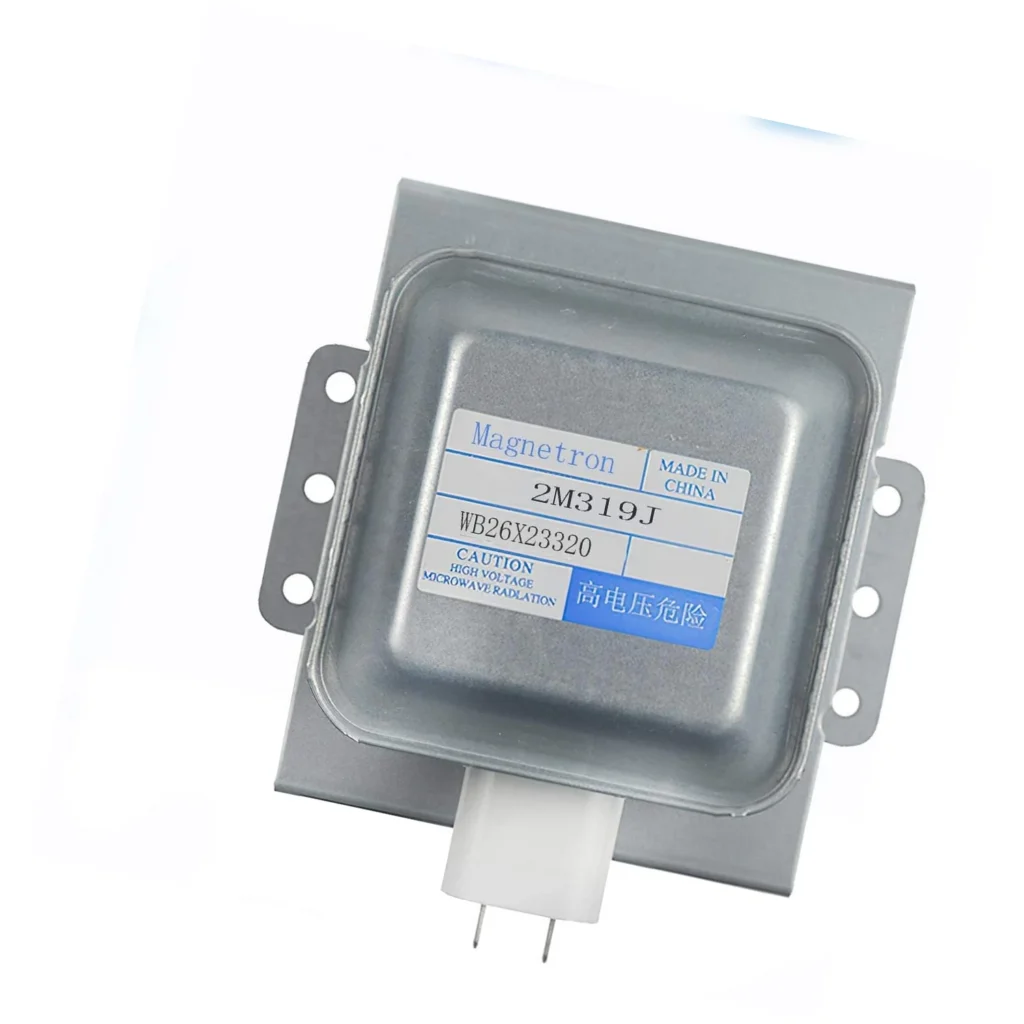
You hit the start button, hear the familiar hum, watch the turntable spin — but two minutes later, your coffee's still ice cold. The microwave sounds like it's working, but nothing's actually heating. This is the classic magnetron failure pattern, and if you've got a GE or Hotpoint over-the-range model like the JVM3160 or JNM3161 series, you're likely dealing with a $300 repair decision.
The magnetron is the muscle of your microwave — it converts electrical energy into the microwave radiation that heats food. When it fails, everything else can work perfectly while your food stays cold.
Quick Symptom Check
Before assuming it's the magnetron, verify these symptoms:
- Microwave runs but doesn't heat — turntable spins, light works, fan runs
- Intermittent heating — works sometimes, fails other times
- Arcing or sparking — visible electrical discharge inside cavity
- Burning smell — electrical or metallic odor during operation
- Loud humming or buzzing — abnormal noise when running
- Circuit breaker trips — microwave kicks the breaker immediately
If you've got the first symptom with no sparking or burning smell, you're probably looking at a straightforward magnetron replacement.
Cause #1: Failed Magnetron (Probability: 70%)
The magnetron itself burns out. This is the most common failure on GE microwaves in the 5-8 year range. The filament inside the magnetron tube degrades over time, especially if you run the microwave frequently on high power.
How to diagnose: You'll need a multimeter and the microwave unplugged for at least 5 minutes. Discharge the high-voltage capacitor first (this is dangerous — if you're not comfortable, stop here). Test the magnetron's terminals for continuity. You should see 2-3 ohms between the two filament terminals and infinite resistance to ground. If you get continuity to ground or zero resistance between terminals, the magnetron's shot.
The fix: Replace with WB27X11211 (replaces WB26X23320, AP6040604). This runs about $313, but it's the genuine part that fits JVM3160DF, JNM3161DF, and dozens of other GE over-the-range models. Plan on 45-60 minutes for the swap if you're handy.
Cause #2: High-Voltage Diode Failure (Probability: 15%)
The diode works with the capacitor to double the voltage feeding the magnetron. When it shorts, the magnetron doesn't get enough juice to generate microwaves. You'll hear the microwave running, but zero heat.
How to diagnose: Visually inspect the diode for burn marks or cracks. Test it with a multimeter set to diode mode — it should show continuity in one direction only. If it shows continuity both ways or no continuity at all, it's dead.
The fix: Replace the diode. They typically run $15-30. But here's the catch — if the diode failed, it often took the magnetron with it, or vice versa. Many techs replace both simultaneously to avoid a second service call.
Cause #3: Defective High-Voltage Capacitor (Probability: 8%)
The capacitor stores and releases energy to the magnetron. When it fails, the magnetron can't generate the power needed for heating. This sometimes produces a loud humming sound without any heating.
How to diagnose: After safely discharging it, test with a multimeter. The reading should start low and climb as the capacitor charges. No movement means it's dead. Also check for visible bulging or leaking — both indicate failure.
The fix: Replace the capacitor ($20-40). Again, if the capacitor failed, investigate why — it might've been stressed by a failing magnetron.
Cause #4: Faulty Door Switches (Probability: 5%)
GE microwaves have three door interlock switches. If one fails in the closed position, the microwave might run but not heat as a safety measure. Less common than magnetron failure, but worth checking.
How to diagnose: With the microwave unplugged, access the door switch assembly. Test each switch for continuity when the door is closed. All three should show continuity in the closed position.
The fix: Replace the defective switch ($10-25). This is actually easier than replacing the magnetron since you don't have to deal with high-voltage components.
Cause #5: Failed Control Board (Probability: 2%)
Rarely, the main control board fails to send proper signals to the magnetron circuit. This is the least likely cause if the microwave appears to run normally otherwise.
How to diagnose: This is process-of-elimination territory. If you've tested everything else and the microwave still won't heat, the control board might be the culprit. Look for burn marks or failed components on the board itself.
The fix: Control board replacement ($150-250 plus the complexity of the repair). At this price point plus a magnetron, you're approaching new microwave territory.
When to Call a Pro
Let's be straight: microwave repair involves lethal high voltage. The capacitor can hold a deadly charge even when unplugged. If you've never worked on microwaves before, this isn't the place to start your DIY journey.
Call a professional if:
- You're not comfortable discharging high-voltage capacitors
- You see evidence of arcing damage to the cavity or waveguide
- Multiple components appear damaged
- Your microwave is over 10 years old (repair cost vs. replacement value)
For newer GE models (under 5 years), replacing the magnetron makes sense. For older units, honestly evaluate whether $400 in parts and labor beats a new $300 microwave.
Frequently Asked Questions
Can I test if my GE microwave magnetron is bad without opening it?
Not reliably. The water heating test (run the microwave with a cup of water) tells you there's a problem but not what the problem is. Could be the magnetron, diode, capacitor, or door switches. You need to open the cabinet and test components individually to know for sure.
How long does a microwave magnetron typically last?
Most magnetrons last 5-8 years with normal residential use. Heavy use (multiple times daily on high power) shortens this. Commercial-grade magnetrons last longer, but residential microwaves use standard-grade tubes. If your microwave is approaching 10 years old, magnetron failure is expected, not premature.
Will a bad magnetron blow a fuse or trip a breaker?
Usually no. A shorted magnetron might, but most magnetron failures are open circuits — the filament burns out, so the microwave runs but doesn't heat. If you're blowing fuses or tripping breakers, look at the diode or capacitor first. Those components tend to fail short and draw excessive current.
Diagnosed the problem?
WB27X11211 · In Stock · Fast shipping