
GE Microwave Not Heating But Runs — 5 Magnetron Failures & Fixes
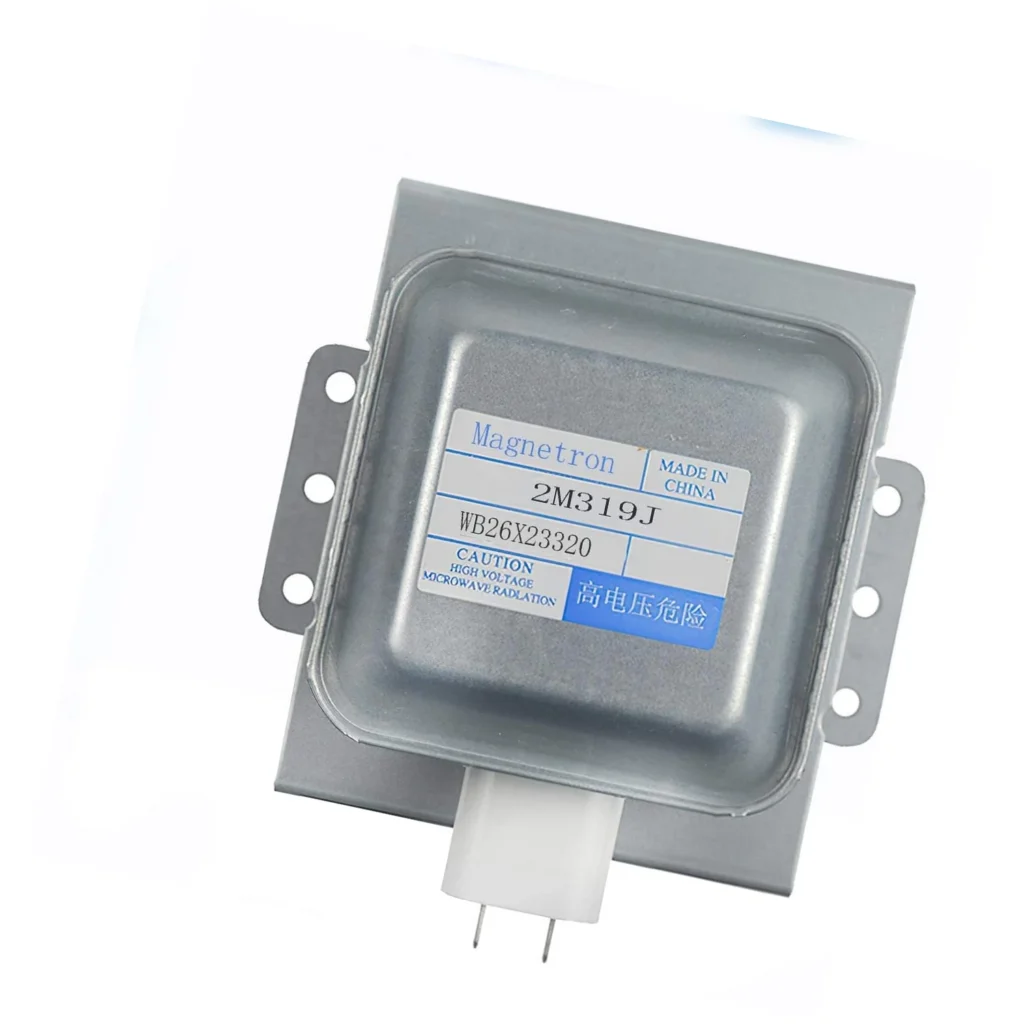
You hit 'start' on your GE microwave. The turntable spins, the light's on, timer counts down — but your coffee stays ice cold. That's the classic sign of a dead magnetron, and if you've got a JVM3160 or JNM3161 series, the WB26X23320 is likely your culprit.
The magnetron is the heart of your microwave — it's the component that converts electrical energy into the microwaves that heat your food. When it fails, everything else works perfectly except the one thing that matters: actual heating.
Quick Symptom Check
Before you blame the magnetron, verify these symptoms match yours:
- Microwave runs but doesn't heat — turntable spins, display works, timer counts down
- Partial heating — food gets slightly warm but takes 3-4 times longer than normal
- Intermittent heating — sometimes works fine, other times produces zero heat
- Burning smell during operation — acrid electrical odor coming from the unit
- Unusual noises — loud humming, buzzing, or clicking sounds when running
If you're seeing 2 or more of these, keep reading. The magnetron costs about $237, but misdiagnosing it could mean wasting money on the wrong part.
Cause #1: Burnt-Out Magnetron (Most Likely — 65% of Cases)
What happens: The magnetron's filament burns out after years of use, just like a light bulb. GE magnetrons typically last 5-7 years with normal use, but heavy users might see failure at 3-4 years.
How to diagnose: You'll need a multimeter. Unplug the microwave and discharge the high-voltage capacitor (critical safety step). Remove the magnetron and test continuity between the two filament terminals. You should see 0-1 ohms. Then test from each terminal to the magnetron case — you should see infinite resistance (no continuity). If either test fails, the magnetron's toast.
The fix: Replace with WB26X23320. This fits dozens of GE and Hotpoint models including the AVM4160DF series, JVM3160DF series, and JNM3161 series. The part replaces AP6040604, WB27X11211, and MW-4450-21.
Cost: $237 for the part. DIY saves you the $150-200 service call, but this is intermediate difficulty because you're working with high voltage components.
Cause #2: Failed High-Voltage Diode (20% of Cases)
What happens: The diode works with the capacitor to double the voltage going to the magnetron. When it shorts, the magnetron doesn't get enough power to generate microwaves. Your microwave runs, but produces little to no heat.
How to diagnose: Discharge the capacitor first. Then use a multimeter in diode test mode. The diode should show continuity in one direction only. If it shows continuity both ways or no continuity at all, it's failed.
The fix: Replace the high-voltage diode. Here's the catch — a failed diode often damages the magnetron too. If your diode tests bad, there's a 50/50 chance the magnetron is also compromised. Many techs replace both simultaneously to avoid a second repair visit.
Cost: Diode runs $15-25. But if you need both parts and already have the microwave apart, it's smarter to do both now.
Cause #3: Defective High-Voltage Capacitor (10% of Cases)
What happens: The capacitor stores and releases energy to power the magnetron. When it fails, it can't hold a charge, so the magnetron starves for power. You'll sometimes hear a louder-than-normal humming when this component fails.
How to diagnose: After discharging (do this EVERY time you work inside), use a capacitor tester or multimeter with capacitance function. A typical microwave capacitor should read between 0.9-1.1 microfarads. Significantly lower readings mean replacement time.
The fix: Replace the high-voltage capacitor. Like the diode, a failed capacitor can stress the magnetron, potentially damaging it over time.
Cost: $20-35 for the capacitor.
Cause #4: Faulty Door Switch (3% of Cases)
What happens: Microwaves have multiple door switches as safety interlocks. If the primary or secondary switch fails, the magnetron won't receive power even though the control board thinks everything's fine. The microwave appears to run normally — except for that whole 'heating food' part.
How to diagnose: Listen carefully when you close the door. You should hear distinct clicks. Test each door switch with a multimeter for continuity when the door is closed. They should show continuity (closed circuit). If one stays open, that's your problem.
The fix: Replace the defective door switch. This is actually the easiest fix on this list — no high voltage work required.
Cost: $8-15 per switch.
Cause #5: Control Board Issue (2% of Cases)
What happens: The control board manages power distribution to all components. A failed relay or burnt trace can prevent the magnetron from receiving the signal to turn on. This is rare but happens, especially after power surges.
How to diagnose: If you've tested everything else and it checks out, the control board is the likely culprit. You might see error codes on the display, or the microwave might blow fuses repeatedly.
The fix: Control board replacement. This is expensive and sometimes approaches the cost of a new microwave, especially for older units.
Cost: $150-300 depending on the model.
When to Call a Pro
Here's the honest truth: magnetron replacement involves working with high-voltage components that can hold a lethal charge even when unplugged. If you're not comfortable discharging a capacitor or using a multimeter, this isn't the project to learn on.
Call a professional if:
- You've never worked on microwave internals before
- You don't own a multimeter and aren't comfortable using one
- The microwave is still under warranty (DIY voids it)
- You're seeing repeated failures after replacing parts
That said, if you've done appliance repairs before and respect the safety procedures, this is a doable DIY job that saves $150-200 in labor.
Frequently Asked Questions
How long does a GE microwave magnetron typically last?
With normal use (heating 2-3 items per day), expect 5-7 years. Heavy users running the microwave 10+ times daily might see failure at 3-4 years. The magnetron is a wear item — it will eventually fail, just like any heating element.
Can I test a magnetron without removing it from the microwave?
Not effectively. You need to remove it to properly test the filament terminals and check for shorts to the case. Plus, you must discharge the high-voltage capacitor before touching anything, which requires partial disassembly anyway.
Will a bad magnetron blow the microwave fuse?
Sometimes. A shorted magnetron can cause the fuse to blow immediately when you start the microwave. But a magnetron with a burnt-out filament usually won't blow the fuse — the microwave just won't heat. If you're blowing fuses repeatedly, test the diode and capacitor first before assuming it's the magnetron.
Diagnosed the problem?
WB26X23320 · In Stock · Fast shipping