
GE Range Element Won't Heat — 5 Causes & How to Fix WB24T10058
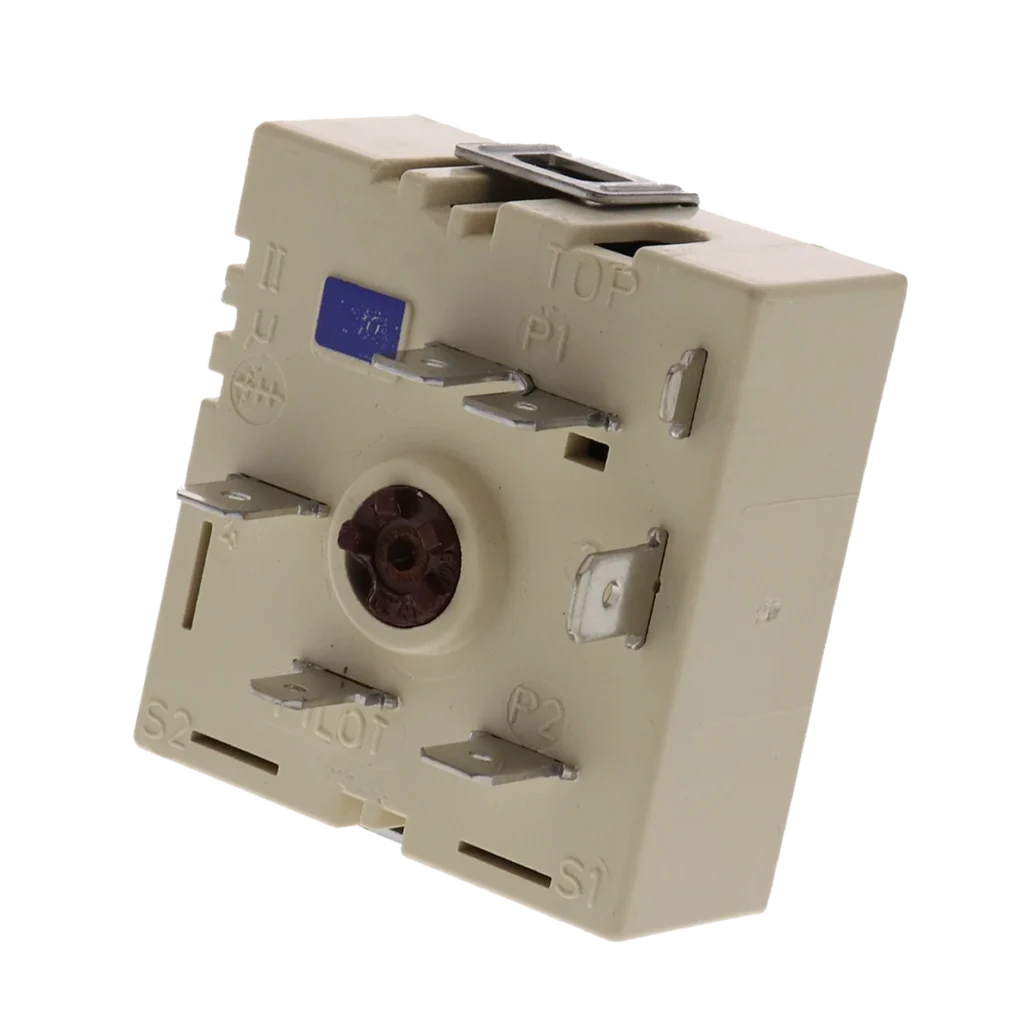
You turn the knob to high, wait five minutes, and your pan's still cold. The burner element sits there doing absolutely nothing while your dinner plans fall apart. Before you start shopping for a new range, understand this: when a GE, Hotpoint, or Kenmore electric range element refuses to heat, you're looking at one of five specific failures — and the dual element infinite control switch (part WB24T10058) is involved in nearly 40% of them.
This guide walks through each cause in order of likelihood, based on failure patterns in models like the JB850DP series, JBP90 series, and hundreds of other compatible GE ranges. We'll show you how to diagnose which component failed and whether you can fix it yourself.
Quick Symptom Check
Before you start testing components, verify these symptoms match your situation:
- Element shows zero heat — no glow, no warmth after 3+ minutes
- Knob turns normally — no grinding, clicking happens as usual
- Other burners work fine — problem isolated to one burner position
- No tripped breaker — range has full power, clock works
- Element looks intact — no visible breaks, blisters, or burn marks
If your element glows but doesn't get hot enough, that's a different issue (usually a weak element). This guide addresses complete heating failure.
Cause #1: Failed Infinite Control Switch (Most Likely)
Probability: 40% | Part Cost: $81 | Difficulty: Moderate
The infinite control switch (WB24T10058) is the rotary device behind your burner knob that regulates power to the element. It cycles on and off to maintain temperature. When the internal contacts weld themselves together or burn out, power never reaches the element.
How to diagnose:
- Unplug the range or shut off the breaker
- Remove the control knob by pulling straight off
- Remove the front control panel screws (usually 4-6 screws along the top edge)
- Tilt the panel forward carefully — wires are still connected
- Locate the switch behind the affected burner position
- Use a multimeter set to continuity/ohms
- With the switch in the OFF position, test between the two element terminal screws
- Should read infinite resistance (open circuit)
- Turn the switch shaft to any heating position
- Should now read 0-2 ohms (closed circuit)
If you get infinite resistance in both positions, the switch is dead. If you get continuity in the OFF position, the contacts are stuck closed (rare but dangerous — replace immediately).
Why this fails: These switches handle 15-20 amps at 240 volts. Over years of heating cycles, the metal contacts inside oxidize and pit. Eventually they can't make solid contact anymore, or they fail open entirely. High-use burners (usually right front) fail first.
Cause #2: Burned Element Connection at Terminal Block
Probability: 25% | Part Cost: $0-15 | Difficulty: Easy
The element plugs into a terminal block under the cooktop. These connections carry heavy current and can develop resistance over time, creating heat that burns the terminals.
How to diagnose:
- Lift the cooktop (most GE ranges have a front hinge — lift from the back)
- Locate where your element plugs in (ceramic block with metal terminals)
- Look for discoloration, melted plastic, or black carbon deposits
- Wiggle the element in its socket — should be snug, not loose
- Remove the element and inspect both the terminal prongs and the socket holes
If you see any burning or corrosion, you've found your problem. The connection has high resistance, which prevents full power from reaching the element.
The fix: If just the element terminal is corroded, sand it lightly with fine sandpaper and reinsert firmly. If the terminal block itself is burned, you'll need to replace it (part varies by model). Some techs have success carefully cleaning the socket holes with a small wire brush, but replacement is more reliable.
Cause #3: Open Element Coil (Internal Break)
Probability: 20% | Part Cost: $35-65 | Difficulty: Easy
The element itself is a resistive coil sealed inside a metal tube. If that coil breaks internally, you get zero heat — but the element might look perfect from the outside.
How to diagnose:
- Remove the element from the range
- Set multimeter to resistance (ohms)
- Test across the two terminal prongs
- Should read 30-60 ohms depending on wattage (8-inch elements typically 40-50 ohms, 6-inch elements 50-70 ohms)
- If you get infinite resistance (OL on meter), the coil is broken
Sometimes you'll see a visible blister or bulge where the break occurred, but often there's no external sign.
Why this happens: Thermal cycling causes metal fatigue. Coils expand when hot, contract when cool. After thousands of cycles, the wire can crack. It's also common if someone spilled liquid on a hot element — rapid cooling can shock the metal and cause a break.
Cause #4: Faulty Wiring from Switch to Element
Probability: 10% | Part Cost: $0 | Difficulty: Moderate
The wire that runs from the infinite switch to the element terminal block can develop breaks, especially where it flexes near the hinge when you lift the cooktop.
How to diagnose:
- Access both the control panel and the cooktop area
- Trace the wires from the switch terminals to where they connect under the cooktop
- Look for frayed insulation, cracked wires, or burned connectors
- With power off, disconnect both ends and test continuity through the wire
If the wire tests open (no continuity), you've found it. These wires are usually part of a harness and can be individually replaced, though sometimes it's easier to replace the entire harness if multiple connections are sketchy.
Cause #5: Neutral Connection Problem (Rare)
Probability: 5% | Part Cost: $0 | Difficulty: Advanced
Electric ranges use 240V split-phase power. Each element actually uses 120V from each leg. If the neutral connection at the main terminal block is loose or corroded, you can get weird symptoms where some burners work and others don't.
How to diagnose:
- Check if OTHER burners are also acting weak or inconsistent
- Test voltage at the main power terminal block (requires working with live 240V — not recommended for DIYers)
- Look for loose neutral wire connections
Warning: This diagnosis involves live electrical testing. If you suspect a neutral problem (especially if multiple burners act weird), call a tech. A loose neutral can create dangerous voltage situations.
When to Call a Pro
You can handle this yourself if you're comfortable with basic electrical testing and can safely access the control panel. But call a technician if:
- You're not confident using a multimeter safely
- You smell burning when the knob is turned (indicates active arcing)
- Multiple burners fail simultaneously (suggests main power problem)
- You see evidence of overheating beyond just one component
- Your range is still under warranty
A service call runs $100-150 for diagnosis, plus parts and labor. The WB24T10058 switch replacement typically takes a tech 30-45 minutes including diagnosis. If you're handy and have the tools, you'll save $75-100 in labor doing it yourself.
Replacing the WB24T10058 Switch: What to Expect
If diagnosis confirms the infinite switch is bad, here's the replacement process:
- Power off completely — breaker off, not just unplugged
- Remove control knobs — pull straight off, note which position each came from
- Remove front panel — screws along top edge, lift panel forward carefully
- Photograph wire connections — the switch has 3-4 terminals with specific wire positions
- Label wires with tape — mark each wire with its terminal position (L1, L2, H, P)
- Remove mounting screws — usually two screws holding the switch to the control panel bracket
- Transfer wires one at a time — don't disconnect all at once
- Mount new switch — torque screws snug but don't overtighten (you'll crack the plastic housing)
- Reinstall panel and test — element should glow within 30-60 seconds on HIGH
Total DIY time: 45-60 minutes for first-timers, 20 minutes once you've done it before.
Frequently Asked Questions
Can I use a single-element switch if my dual-element switch fails?
No. The WB24T10058 is specifically designed for dual (two-coil) elements common on GE ranges with "Power Boil" or large 8-inch burners. These elements have an inner and outer coil that the switch controls separately for different heat levels. A standard single switch doesn't have the extra terminals needed. Using the wrong switch can damage your element or create a fire hazard.
Why does the element work sometimes but not others?
This intermittent failure usually means the switch contacts are pitted but not completely dead. When you turn the knob, sometimes the contacts make connection (element heats) and sometimes they don't (no heat). This will get progressively worse until it fails completely. Replace the switch now before you get stuck mid-cooking — intermittent failures always become permanent.
Is WB24T10058 the same as WB24T10031?
Yes, WB24T10058 supersedes (replaces) the older WB24T10031. GE updated the design slightly but they're functionally identical and directly interchangeable. If you see references to AP2622889 or PS236780, those are the same part with different numbering systems (manufacturer vs. supplier part numbers). They all work in the same GE, Hotpoint, and Kenmore range models including the JB850 series, JBP90 series, and dozens more.
Diagnosed the problem?
WB24T10058 · In Stock · Fast shipping