
GE Cafe Range Burner Knob Won't Turn or Slips — 5 Causes & Fixes
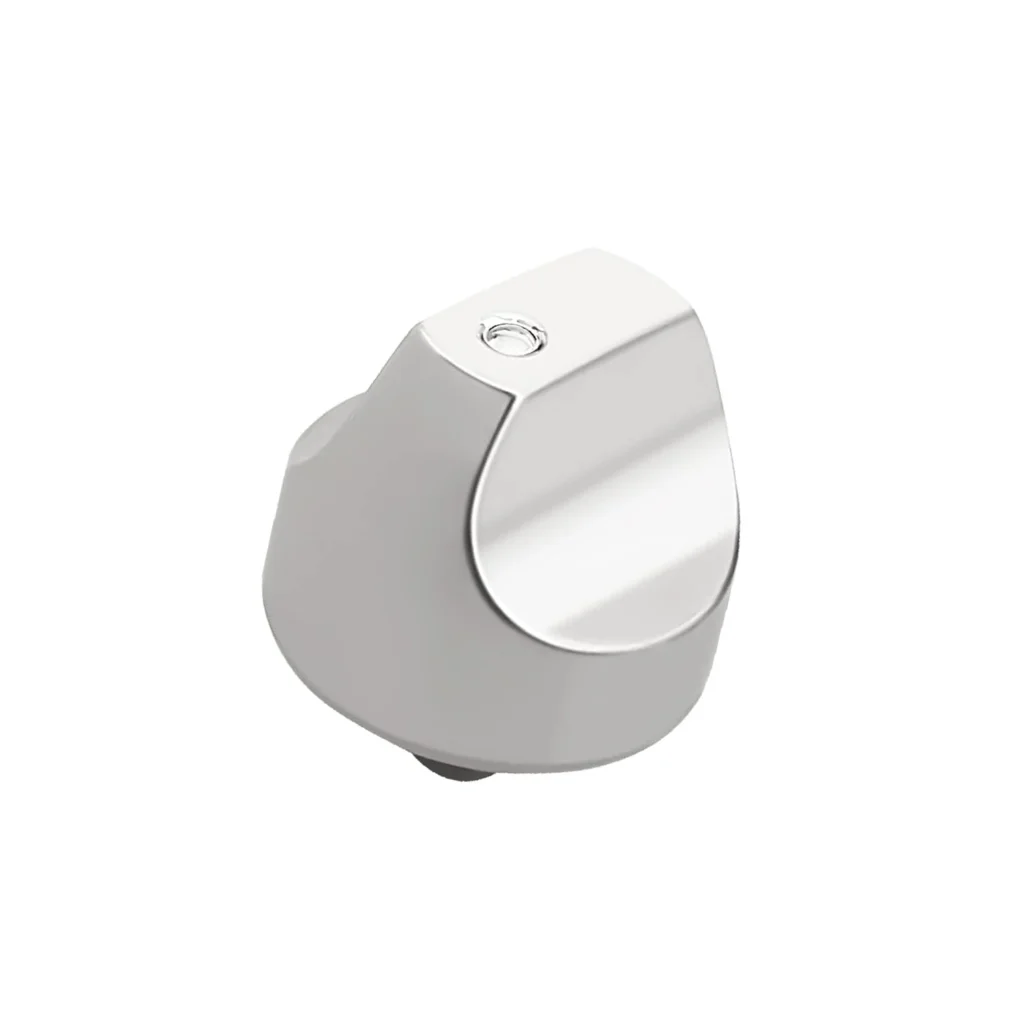
You're trying to start the front right burner on your GE Cafe CGP350SET2SS, but the knob just spins freely without engaging the valve stem. Or maybe it's the opposite problem — the knob's so stuck you can barely turn it to ignite the burner. Either way, you're cooking on three burners instead of four, and that's not going to work for tonight's dinner.
Burner control knobs fail more often than you'd think. Between grease buildup, worn D-shaft fittings, and cracked plastic from heat exposure, these knobs take a beating in daily use.
Quick Symptom Check
- Knob spins freely without resistance — valve stem not engaging
- Knob won't turn at all — seized with grease or debris
- Knob loose and wobbly — worn D-shaft socket
- Knob cracks or breaks when turned — heat-damaged plastic
- Indicator marks don't align with settings — knob slipped off position
Cause #1: Worn D-Shaft Socket Inside Knob
The most common failure. Inside each knob there's a D-shaped socket that fits onto the valve stem. After hundreds of rotations, this plastic socket wears down — especially if someone's been forcing a sticky knob instead of cleaning it first.
How to diagnose: Pull the knob straight off (no tools needed on GE Cafe models). Look inside at the D-shaped hole. If you see rounded edges, cracks, or if the knob wobbles significantly when you put it back on, the socket's worn out.
Probability: 60% of knob problems on CGP350 and CGP650 series ranges.
The fix: Replace with WB03T10329. The new knob has a reinforced D-shaft socket designed to last longer than the original WB03X32194 part. Pull off the old knob, align the new one's D-socket with the flat side of the valve stem, and push firmly until it seats flush.
Cause #2: Grease and Debris Buildup on Valve Stem
Cooking grease migrates everywhere. It gets behind the knobs, coating the valve stem and making the knob either stick or slip. I've seen stems so coated with baked-on grease that the knob would turn but wouldn't actually rotate the valve.
How to diagnose: Remove all knobs and look at the exposed valve stems. If they're sticky, discolored, or have visible grease buildup, that's your problem. Try turning the valve stem with your fingers — it should rotate smoothly with light resistance.
Probability: 25% of cases, often combined with worn knobs.
The fix: Remove all burner knobs. Spray degreaser on a cloth (never directly on the range) and clean each valve stem thoroughly. For stubborn buildup, use a small brush or old toothbrush with hot soapy water. Dry completely before reinstalling knobs. If the old knob is already worn, replace it now — cleaning won't fix a damaged D-socket.
Cause #3: Cracked or Heat-Damaged Knob Body
Plastic doesn't love heat cycles. The knobs on your GE Cafe range sit right above burners that hit 15,000+ BTUs. Over years of use, the plastic becomes brittle. You'll see small cracks radiating from the center socket, or the knob face separates from the base.
How to diagnose: Inspect the knob under good light, especially around the D-shaft socket and indicator mark. Hairline cracks mean the knob's on borrowed time. If you can flex the knob and see it separate into layers, it's already failed.
Probability: 10% of failures, more common on ranges 7+ years old.
The fix: Replace the knob. There's no repair for cracked plastic — it'll only get worse. WB03T10329 fits all GE Cafe CGP and CP series ranges including CGP350SET1SS through SET4SS and CGP650SET1SS through SET4SS models.
Cause #4: Wrong Knob for That Burner Position
Here's something that catches people after cleaning day: not all burner knobs are identical on GE Cafe ranges. Some models have different knob styles for different burner sizes. Put a simmer burner knob on the power burner valve, and it won't engage properly.
How to diagnose: Check your range's configuration. Most GE Cafe 36-inch ranges have varied BTU burners. If you recently removed all knobs for cleaning and now one doesn't work right, you've probably mixed up the positions.
Probability: 3% of cases, but 100% preventable.
The fix: Consult your model's control panel layout. On CGP650 series ranges, for example, the front left and rear right typically share the same knob type, while the front right and rear left use another. Mark the back of each knob with its position before removing them for cleaning.
Cause #5: Damaged Valve Stem Behind the Knob
Less common but worth checking: the valve stem itself might be damaged. If someone forced a stuck knob or dropped something heavy on it, the D-shaped stem can shear, round off, or crack.
How to diagnose: Remove the knob and inspect the valve stem closely. It should have a distinct D-shape — flat on one side, rounded on the other. Try turning it with pliers (gently). If it spins without resistance or feels crunchy, the valve needs attention.
Probability: 2% of knob-related complaints.
The fix: This requires replacing the gas valve assembly, which means gas line disconnection. That's a job for a qualified technician unless you're comfortable working with gas appliances and have the proper tools to pressure-test your work.
When to Call a Pro
Replacing the knob itself? DIY all day. It's literally pull-off, push-on. No tools required.
But call a professional if: the valve stem is damaged (gas work requires certification in most areas), you smell gas after replacing a knob (shut off the gas supply immediately), multiple valves are acting up simultaneously (control module issue), or you're not comfortable working around gas burners.
Labor for knob replacement runs $85–$125 if a tech does it, but honestly, you're paying for the service call — the actual swap takes 30 seconds.
Frequently Asked Questions
Will any GE range knob fit my GE Cafe model?
No. While WB03T10329 is specifically designed for GE Cafe CGP and CP series ranges, generic GE range knobs won't fit properly. The D-shaft dimensions and knob design vary across GE product lines. Always verify part compatibility with your model number — in this case, models like CGP350SET1SS, CGP650SET2SS, or CP650ST3SS are confirmed fits.
Why does my new knob feel tighter than the old one?
That's normal and actually good. The new WB03T10329 knob has a fresh D-shaft socket that grips the valve stem properly. Your old knob felt loose because the socket was worn out. The new one should require moderate force to turn — not effortless spinning, not wrestling-match resistance. If it's genuinely too tight to turn, remove it and check that the valve stem is clean and the D-socket isn't damaged from shipping.
Can I clean burner knobs in the dishwasher?
GE doesn't recommend it, and I've seen why. The high heat and harsh detergents can fade the indicator markings and warp the plastic slightly. Hand wash with warm soapy water instead. For stubborn grease, let them soak 15 minutes in hot water with dish soap, then scrub with a soft brush. Dry completely before putting them back on — water inside the D-socket can cause the knob to slip on the valve stem.
Diagnosed the problem?
WB03T10329 · In Stock · Fast shipping