
Whirlpool Dishwasher Not Dispensing Detergent — 5 Causes & How to Fix
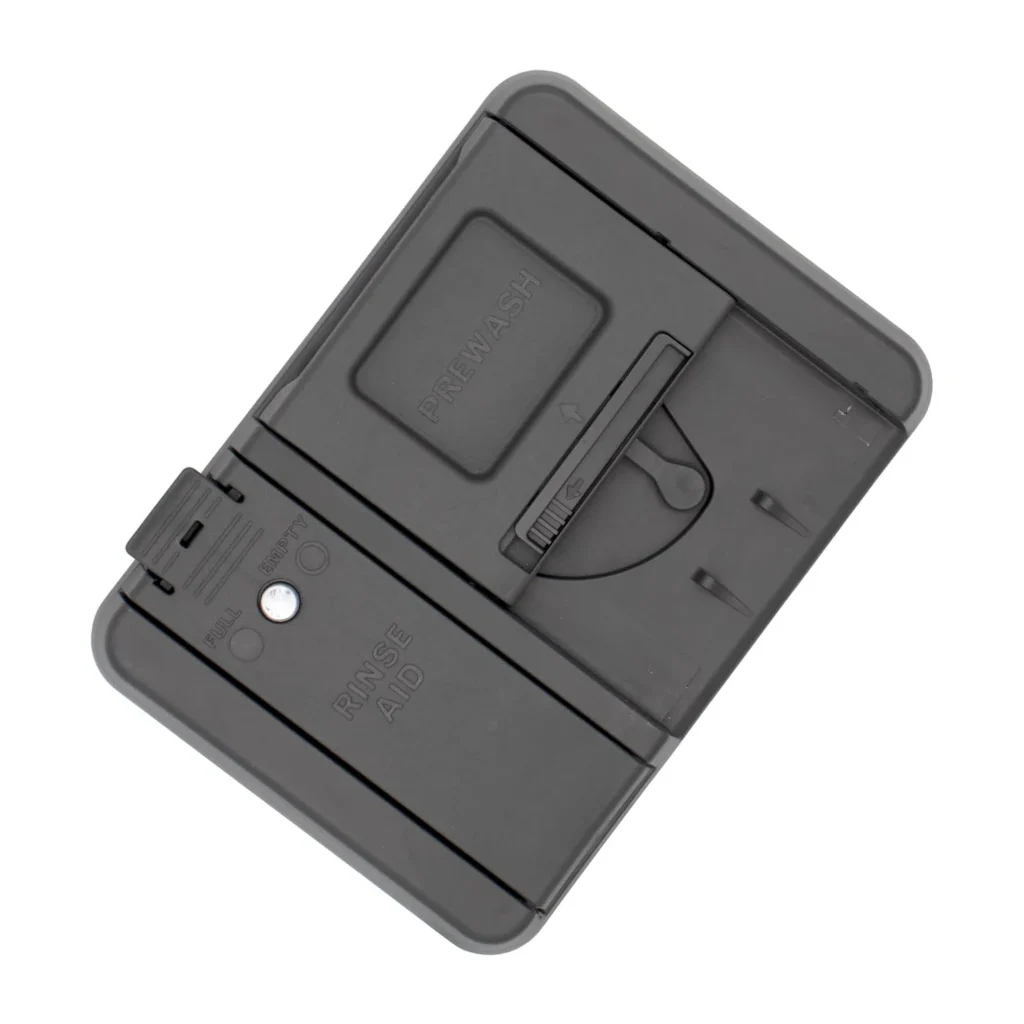
You unload the dishwasher and the soap cup is still full. Dishes come out greasy, the detergent pod sits there completely dry, and you're running loads twice just to get plates clean. This isn't a detergent problem — it's a dispenser failure, and it's one of the most common issues on Whirlpool, Maytag, and KitchenAid models like the WDT750SAKZ0, WDTA50SAKZ1, and MDB4949SKZ0.
The detergent and rinse aid dispenser (part W11412300) is a mechanical assembly with a spring-loaded door, electronic release mechanism, and wax motor actuator. When any component fails, you'll notice detergent sitting untouched after a full cycle. Let's diagnose what's actually broken.
Quick Symptom Check
Before you tear anything apart, confirm what's happening:
- Detergent cup stays closed — door never opens during wash cycle
- Detergent cup opens but soap remains — door opens partially or at wrong time
- Rinse aid leaks inside door — dispenser seal cracked or housing damaged
- Dishes come out soapy — dispenser opens too early, soap never rinses
- Control panel shows error code — electronic dispenser failure detected
Cause #1: Wax Motor Actuator Failure (Most Common — 45% of Cases)
The dispenser uses a wax motor that heats up and expands to push the door latch open. After 3–5 years, this motor burns out. You'll hear the dishwasher running normally, but the door never pops open.
How to diagnose: During a wash cycle, open the door carefully at the 15-minute mark (after the first fill). The detergent cup should be open. If it's still latched shut and you can see the wax motor leads connected, the motor's dead.
Why it happens: Repeated heating cycles degrade the wax compound inside. Hard water deposits can also corrode the electrical terminals. Models WDT970SAKZ3 and WDTA80SAKZ0 are particularly prone to this after 1,200–1,500 cycles.
Fix: Replace the entire dispenser assembly (W11412300). The wax motor isn't sold separately because it's integrated into the housing. Cost is $62.99 for the OEM part, and you're looking at a 30-minute repair once you remove the inner door panel.
Cause #2: Broken Dispenser Door Spring or Latch
The spring-loaded door can crack or the latch tab can snap off. You'll see the door hanging loose or partially open even before you start a cycle. Sometimes detergent falls out immediately when you close the dishwasher door.
How to diagnose: Open and close the detergent cup manually. It should snap shut with tension. If it feels loose, floppy, or won't stay latched, the spring or plastic latch is broken.
Why it happens: Slamming the dishwasher door or overfilling the detergent cup puts stress on the plastic components. Detergent pods that are too large can also wedge the door open and crack the housing.
Fix: You can't repair the spring or latch — the whole dispenser needs replacement. Don't try gluing it. The heat and moisture will fail any adhesive within days.
Cause #3: Clogged or Corroded Dispenser Housing
Hard water, detergent buildup, and rinse aid residue can cement the door shut. The wax motor works, but the door physically can't open because it's glued in place by mineral deposits.
How to diagnose: Remove the detergent cup cover and look for white crusty buildup around the door hinge and latch area. Try manually opening the door — if it's stuck or requires force, it's clogged.
Why it happens: Using too much detergent or cheap powder formulas leaves residue. If you're in a hard water area and don't use rinse aid, calcium deposits accelerate.
Fix: You can try soaking the dispenser in white vinegar for 2–3 hours to dissolve buildup, but if the door mechanism is corroded, replacement is the only reliable fix. On models like WDT740SALB0 and WDT750SAKB1, buildup often damages the seal, causing rinse aid leaks even after cleaning.
Cause #4: Faulty Control Board Signals
The main control board sends a timed voltage signal to the dispenser's wax motor. If the board fails or the wiring harness corrodes, the dispenser never receives the command to open.
How to diagnose: If your dishwasher displays error codes related to the dispenser (check your model's tech sheet), or if other electronic functions are glitchy (delayed start not working, cycle lights flashing), suspect the board. You can test voltage at the dispenser connector with a multimeter during the wash cycle — it should read 120V AC for 60–90 seconds.
Why it happens: Water leaks from above (often from a damaged door gasket) drip onto the control board and corrode traces. Power surges can also fry the dispenser relay.
Fix: If voltage isn't reaching the dispenser, you'll need a new control board. That's a $150–$300 part. But test the dispenser first by swapping in a known-good unit — you don't want to replace the board only to find the dispenser was bad all along.
Cause #5: Blocked Spray Arm or Low Water Pressure
This is indirect, but worth checking. If the spray arm is clogged or water pressure is too low, the dispenser door may open but detergent doesn't dissolve because there's not enough water hitting it.
How to diagnose: The detergent cup is empty after a cycle, but dishes still aren't clean. Check if water is actually spraying forcefully. Remove the lower spray arm and inspect the holes for debris.
Why it happens: Food particles, hard water scale, and small utensils can block spray arm jets. Some users on models like WDTA50SAKT0 report low water fill levels due to inlet valve problems.
Fix: Clean the spray arms, check the inlet valve screen, and ensure your home water pressure is at least 20 PSI. If detergent still doesn't dissolve, the dispenser timing may be off — that's a control board issue.
When to Call a Pro
Replacing the dispenser (W11412300) is straightforward: remove six screws from the inner door panel, disconnect two wire harnesses, and swap the unit. No special tools required. But if you're dealing with control board diagnostics, intermittent electrical issues, or you've replaced the dispenser and it still doesn't work, call a tech. Chasing wiring faults without a schematic wastes time and money.
Also, if your dishwasher is under 3 years old and this is the first failure, check your warranty. Whirlpool has had enough dispenser issues on recent models that some extended coverage may apply.
Frequently Asked Questions
Can I manually open the dispenser door during the cycle?
Not recommended. The door opens at a specific time based on water temperature and cycle phase. If you force it open early, detergent won't rinse properly and you'll have residue on dishes. Plus, you'll void any remaining warranty on the dispenser.
Will third-party dispensers work as well as the OEM W11412300?
Aftermarket units exist, but they often use cheaper wax motors that fail faster. The W11412300 replaces older part numbers W11092649, AP6981330, and PS12745376 — stick with the OEM part for reliability. It's compatible with Whirlpool, Maytag, KitchenAid, and Jenn-Air models, so you're paying for engineering that actually fits.
How do I prevent dispenser failure in the future?
Use the recommended detergent amount (usually 1 tablespoon for powder, one pod for pods). Run a monthly cleaning cycle with dishwasher cleaner or white vinegar to prevent buildup. Keep rinse aid topped off — it reduces film that can gum up the mechanism. And don't slam the door. The dispenser assembly is plastic and doesn't handle impact well.
Diagnosed the problem?
W11412300 · In Stock · Fast shipping