
Whirlpool Refrigerator Not Cooling but Running — 5 Causes & How to Fix
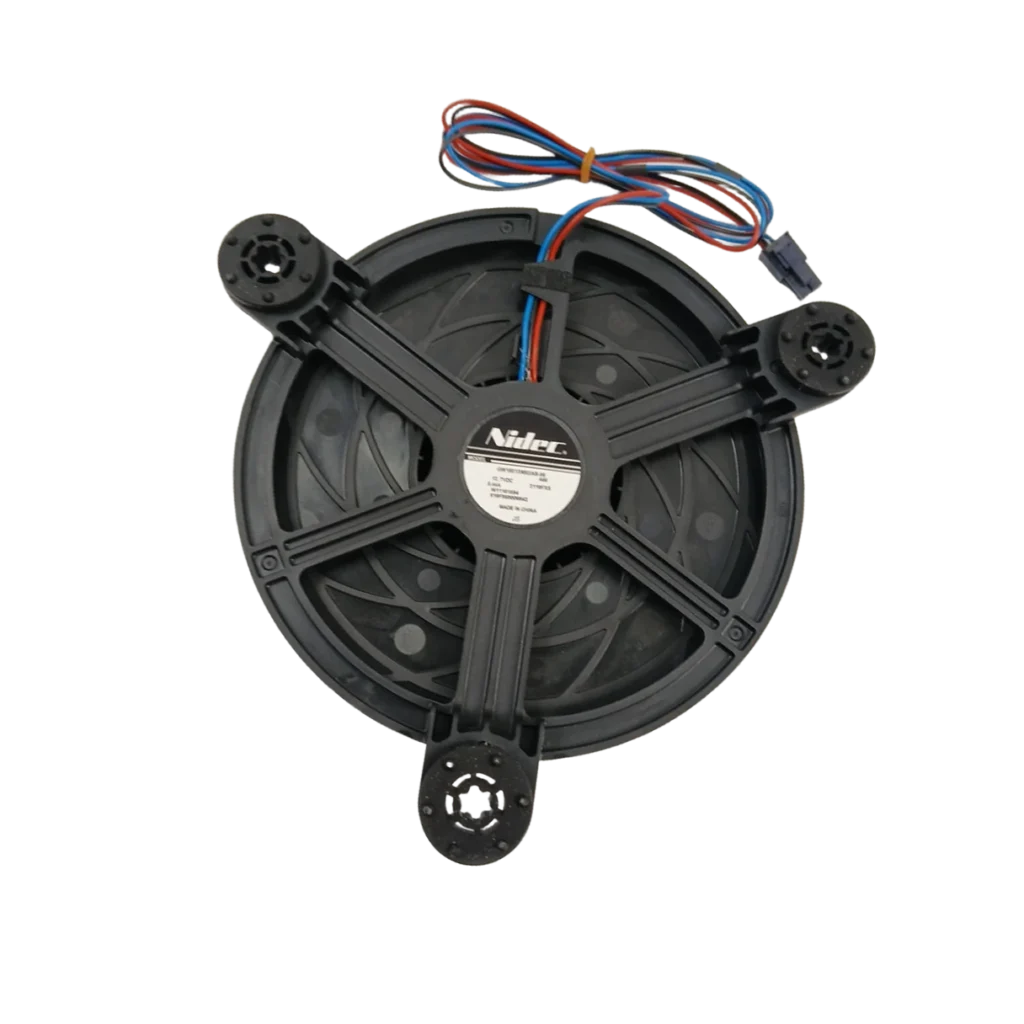
Your Whirlpool refrigerator is humming away like everything's normal, but your milk is warm and your ice cream is soup. The compressor's running, the lights are on, but somehow the cold air just isn't happening. If you've got a WRQA59CNKZ, KRQC506MPS00, or similar model, there's a good chance the evaporator fan motor assembly (part W11101594) has given up the ghost — but it's not the only possibility.
Here's the thing: when your fridge runs but doesn't cool, you're dealing with an airflow or refrigerant circulation problem. The evaporator fan is responsible for circulating cold air from the freezer throughout the entire unit. When it fails, the freezer might still get somewhat cold (the evaporator coils are doing their job), but the fresh food section warms up because that chilled air never makes it there.
Quick Symptom Check
- Freezer is colder than the fridge section — classic evaporator fan failure pattern
- No airflow sound from vents — you should hear a quiet whooshing when the compressor runs
- Frost buildup on back wall — indicates airflow problems
- Compressor runs constantly — working overtime trying to compensate
- Food spoiling in fridge, freezer items okay — tells you where the cold air isn't reaching
Cause #1: Failed Evaporator Fan Motor (60% Likelihood)
This is your prime suspect. The evaporator fan motor (W11101594 for many Whirlpool and KitchenAid models) sits behind the back panel in your freezer compartment. It's supposed to run whenever the compressor runs, pulling cold air across the evaporator coils and pushing it through vents into both compartments.
Diagnosis: Open your freezer door and listen carefully. Press the door switch (usually on the right side) to trick the fridge into thinking the door is closed. Do you hear a fan running? If not, or if you hear a grinding, squealing, or clicking sound, the motor's likely seized or burned out.
You can also manually spin the fan blade (with the fridge unplugged). It should turn freely with slight resistance. If it's stuck, wobbles excessively, or you see visible damage to the blade, you've found your problem.
Why it fails: These motors run thousands of hours per year in sub-freezing temperatures. The bearings wear out, moisture gets into the motor housing, or frost buildup jams the blade. Models like the WRQA59CNKZ that use automatic defrost cycles put extra thermal stress on these components.
The fix: The W11101594 is a complete assembly replacement — motor, blade, and mounting bracket. You'll need to unplug the fridge, remove the freezer shelves and back panel (usually 4-6 screws), disconnect the wire harness, and swap the entire unit. Budget 45-60 minutes if you're methodical.
Cause #2: Blocked or Frozen Air Vents (25% Likelihood)
Sometimes the fan motor is fine, but ice buildup blocks the vents between compartments. This happens when the defrost system isn't working properly or when humid air gets into the freezer (damaged door gasket, door left open).
Diagnosis: Remove items from the back of your freezer and look for frost covering the vents or the entire back wall. If you see a thick layer of ice, that's blocking airflow even if the fan is spinning.
The fix: Unplug the fridge and let it thaw completely (6-8 hours, towels on the floor). If the problem returns within days, you've got a defrost system issue — either the defrost heater, defrost thermostat, or defrost timer has failed. That's a separate repair, but at least you'll know the fan motor itself is probably okay.
Cause #3: Defective Thermistor or Temperature Sensor (8% Likelihood)
The thermistor tells the control board what temperature your fridge is at. If it sends bad data, the board might not run the evaporator fan when needed, even though everything else works fine.
Diagnosis: This one's tricky without a multimeter. The thermistor is a small probe (usually near the evaporator coils or in the fresh food section) that changes resistance with temperature. At 32°F, it should read around 16,600 ohms; at 70°F, around 4,700 ohms. Way off? Replace it.
A simpler test: if your fridge temperature display shows wildly inaccurate readings (says 15°F when your handheld thermometer shows 50°F), the thermistor is lying to the brain of your fridge.
Cause #4: Control Board Failure (5% Likelihood)
Less common but maddening: the main control board decides to stop sending power to the evaporator fan. Everything else might work — lights, compressor, ice maker — but the fan never runs.
Diagnosis: With a multimeter, check for voltage at the fan motor connector (with the compressor running). Should be around 120V AC or 12V DC depending on your model. No voltage? The board's not calling for fan operation.
Before buying a $300 control board, make absolutely sure the wiring harness isn't damaged and that all connections are solid. I've seen rodent damage and connector corrosion mimic control board failure more than once.
Cause #5: Damper Control Stuck Closed (2% Likelihood)
Some models use an automatic damper (a little door) to control how much cold air flows from freezer to fridge. If it's mechanically stuck closed or the damper motor failed, you'll get the exact symptoms we're talking about.
Diagnosis: Locate the damper (usually in the air duct between compartments, often behind the crisper drawers). Can you see or feel it moving when the compressor cycles? If it's stuck in one position, that's your culprit.
When to Call a Pro
If you're comfortable unplugging appliances and removing a few screws, replacing the evaporator fan motor assembly is totally DIY-friendly. It's not a sealed system repair (no refrigerant involved), so there's no EPA certification needed.
Call a tech if:
- You've replaced the fan and still have no cooling
- The compressor isn't running at all (different problem entirely)
- You hear hissing or see oil residue (refrigerant leak — serious issue)
- Your model has electronic diagnostics you can't interpret
Refrigerant work requires specialized equipment and certification. Everything else? You can handle it.
Frequently Asked Questions
Will my food spoil while I wait for the part to arrive?
Probably some of it, yeah. If the freezer is still somewhat cold (below 40°F), move your most critical fridge items there temporarily. Use a cooler with ice for everything else. Most shipping is 2-3 days for the W11101594, so you're not looking at a long wait.
Can I just replace the fan blade instead of the whole motor assembly?
Technically yes, if only the blade is damaged and the motor spins freely. But if the motor has been struggling with a damaged blade, the bearings are probably worn too. The W11101594 comes as a complete assembly specifically because partial repairs often fail within months. Save yourself the second repair.
Why is the freezer still cold but the fridge warm?
The evaporator coils are in the freezer compartment, so they'll keep making cold air even if the fan isn't circulating it. The freezer stays cold through direct contact with those coils. The fresh food section depends entirely on the fan pushing cold air through vents. No fan = no circulation = warm fridge, somewhat-cold freezer.
Diagnosed the problem?
W11101594 · In Stock · Fast shipping