
Whirlpool Washer Won't Shift Gears — 5 Causes & How to Fix
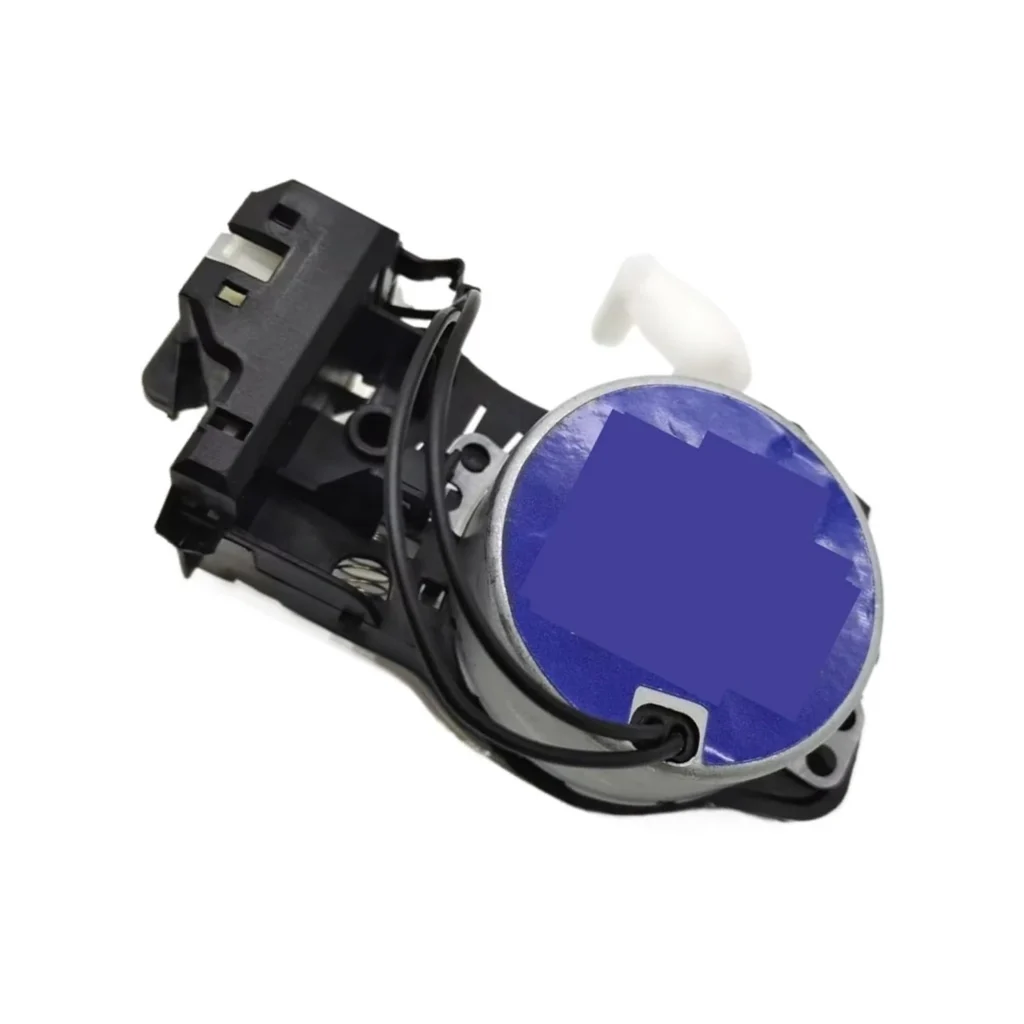
Your Whirlpool washer fills with water just fine, agitates normally, then stops dead when it's supposed to shift into spin mode. You hear a clicking sound, maybe a grinding noise, but the drum just sits there full of soaking wet clothes. This is the classic signature of a failed shift actuator—and it's one of the most common failures on Whirlpool top-load washers built between 2011 and 2018.
The shift actuator (part W10815027) is essentially the transmission's gearbox controller. It physically moves internal components to switch between agitate and spin modes. When it fails, your washer gets stuck in agitate mode and can't complete the cycle.
Quick Symptom Check
Your washer likely has a failed shift actuator if you're experiencing:
- Washer won't enter spin cycle — fills, agitates, then stops with clothes soaking wet
- Clicking or grinding noise during the transition between agitate and spin
- Error codes F7E1 or F7E5 on models with digital displays (WTW5000DW series)
- Washer stuck in agitate mode — just keeps agitating endlessly
- Intermittent spinning — sometimes works, often doesn't
This issue affects dozens of Whirlpool, Maytag, and Amana models, particularly the WTW4816FW2, WTW4815EW1, WTW5000DW1, WTW4616FW2, and WTW4715EW2 series washers.
Cause #1: Stripped Actuator Gears (70% of Cases)
Likelihood: Very High | Cost: $45–$65 | Time: 45 minutes
The plastic gears inside the shift actuator wear down over time, especially if you run heavy loads frequently. The motor still tries to engage, but the stripped gears can't transfer motion to the shift mechanism.
How to diagnose:
- Unplug the washer and remove the front panel (three screws at the bottom, lift and tilt forward)
- Locate the shift actuator—it's mounted to the transmission on the right side, has a white motor housing about 4 inches long
- Manually try to rotate the actuator shaft while someone else watches the transmission shift fork
- If the motor spins but nothing moves, the internal gears are stripped
You'll need to replace the entire actuator assembly. These gears can't be serviced separately.
Cause #2: Seized Actuator Motor (15% of Cases)
Likelihood: Moderate | Cost: $45–$65 | Time: 45 minutes
Water leaks or humidity can cause the small motor inside the actuator to seize. You'll typically hear a humming sound as the motor tries to turn but can't overcome the internal resistance.
How to diagnose:
- Access the actuator (same process as above)
- Disconnect the wire harness from the actuator
- Try manually rotating the actuator shaft—it should turn with moderate resistance
- If it won't budge at all, or requires extreme force, the motor is seized
Don't try to force it. You'll damage the transmission shift mechanism. Replace the actuator.
Cause #3: Broken Wire Harness Connection (8% of Cases)
Likelihood: Low-Moderate | Cost: $0–$20 | Time: 15 minutes
The wire connector to the shift actuator can vibrate loose or corrode, especially on washers in humid basements. The actuator gets no power signal, so it never attempts to shift gears.
How to diagnose:
- Access the actuator and inspect the wire harness connector
- Look for corrosion (green or white deposits), loose pins, or obvious damage
- Disconnect and reconnect firmly—you should hear a distinct click
- Check for continuity with a multimeter if you have one (should read ~150 ohms across the two pins)
If the connector is corroded, clean with electrical contact cleaner. If pins are damaged, you may need to splice in a new connector or replace the actuator.
Cause #4: Failed Control Board (5% of Cases)
Likelihood: Low | Cost: $150–$250 | Time: 1 hour
The main control board sends the signal to the shift actuator. If the board's relay fails, the actuator never gets the command to shift even though it's mechanically fine.
How to diagnose:
- Verify the actuator itself works by testing it with a 12V power source (it should rotate when powered)
- Check if other functions work normally—if multiple features are failing, suspect the board
- Look for error codes that point to control board issues (F1E2, F0E5)
This is rare. Replace the actuator first unless you have clear evidence of board failure.
Cause #5: Transmission Shift Fork Damage (2% of Cases)
Likelihood: Very Low | Cost: $300–$500 | Time: 2–3 hours
If someone previously tried to force a seized actuator, the shift fork inside the transmission can break. The actuator works fine, but the mechanical linkage it's supposed to move is damaged.
How to diagnose:
- Install a known-good actuator (borrow one or buy with intent to return if not needed)
- If the new actuator doesn't fix the problem, the issue is deeper in the transmission
- You'll see the actuator trying to move, but the drum doesn't respond
At this point, you're looking at transmission replacement or considering a new washer. Get a second opinion from a tech.
When to Call a Pro
The shift actuator replacement is genuinely DIY-friendly—it's literally three screws and one wire connector. If you've changed your own car battery, you can do this.
Call a professional if:
- You've replaced the actuator and the problem persists (likely transmission damage)
- You're getting multiple error codes that don't relate to shifting
- You see oil leaking from the transmission—that's a different problem entirely
- The washer is under warranty (don't void it for a $50 part)
Otherwise, this is a straightforward repair that'll save you $200+ in service call fees.
Frequently Asked Questions
How do I know if my shift actuator is bad or if it's the transmission?
Remove the actuator and manually try to move the shift fork with your hand (it's the metal lever the actuator connects to). If you can move the fork smoothly through its full range and it springs back to center, the transmission shift mechanism is fine and you just need a new actuator. If the fork is stuck, broken, or doesn't spring back, you've got transmission damage.
Can I just leave the washer in agitate mode and drain it manually?
You can as a temporary workaround, but you'll be wringing out 40 pounds of soaking wet laundry by hand every load. The actuator costs $50 and takes less than an hour to replace—just fix it. Your back will thank you.
Will this part work on my Maytag Bravos or Amana washer?
Yes, if your model number is compatible. Whirlpool owns Maytag and Amana, and they use the same transmission design across brands. The W10815027 actuator works on dozens of models—check the compatibility list for your specific model number (it's on the washer lid or inside the door). Common compatible models include MVW4505MW, NTW4516FW, and most Whirlpool WTW models from 2011–2018.
Diagnosed the problem?
W10815027 · In Stock · Fast shipping