
Whirlpool Gas Cooktop Knob Won't Turn or Fell Off — 5 Causes & Fixes
You're halfway through dinner prep when the front-left burner knob just... spins. No click, no gas flow, just free rotation. Or maybe it fell off completely when you tried adjusting the flame. Either way, your WCG51US0DB00 or WCG75US0DS00 is now a three-burner cooktop, and that's not going to work.
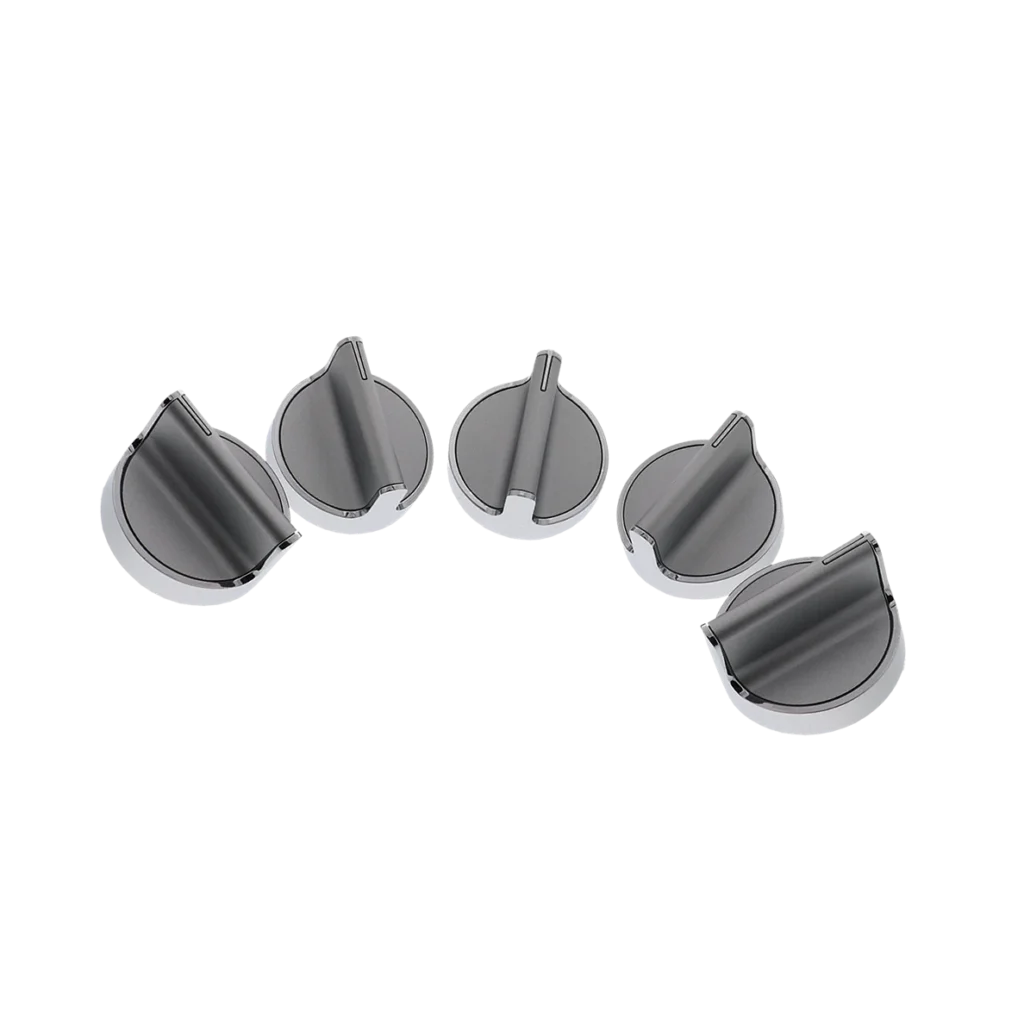
Gas cooktop control knobs take serious abuse — they're twisted dozens of times daily, often with wet or greasy hands. The W10698166 knob kit is the OEM replacement for Whirlpool, Amana, and IKEA gas cooktops, and knob failures follow predictable patterns. Let's troubleshoot what's actually broken.
Quick Symptom Check
- Knob spins freely without engaging valve: Most common issue — the D-shaped stem inside the knob has stripped or cracked
- Knob fell off and won't stay on: Either the knob's internal grip is damaged or the valve stem itself is broken
- Knob turns but burner won't ignite: Could be knob position misalignment or valve stem damage
- Knob is stuck and won't turn at all: Usually food residue or grease buildup, less commonly a seized valve
- Knob feels loose or wobbly: Internal mounting mechanism worn out from years of use
Cause #1: Stripped D-Stem Socket Inside Knob
Probability: 65%
The valve stem on your cooktop has a D-shaped cross-section (flat on one side). The knob has a matching D-shaped socket inside. Over time, that plastic socket rounds out from repeated twisting, especially if someone forced a stuck knob. When this happens, the knob spins but doesn't rotate the valve underneath.
How to diagnose: Pull the knob straight off (they're friction-fit). Look inside the knob for the D-shaped hole. If it's rounded, oval, or cracked, that's your problem. Now check the actual valve stem — it should still have a clean D-shape with sharp edges.
The fix: Replace the knob. The W10698166 kit includes multiple knobs, so you can replace just the damaged one or do all of them for consistent appearance. Costs $49.99 for the complete kit. If you're only replacing one knob and want to save the others for future failures, that's fine — these knobs don't wear evenly since some burners get used more than others.
Cause #2: Broken Valve Stem
Probability: 20%
If the knob's D-socket looks perfect but it still won't engage, the valve stem itself might be damaged. This usually happens from someone forcing a stuck knob or dropping something heavy onto the cooktop. The metal or plastic valve stem can crack, strip, or break off entirely.
How to diagnose: With the knob removed, look directly at the valve stem sticking up from the cooktop. It should be smooth, intact, and have clean D-shape edges. If it's cracked, rounded, or shorter than the others, it's compromised. Try gently wiggling it — there should be no play side-to-side.
The fix: This requires replacing the entire gas valve assembly, not just the knob. You'll need to access the valves from underneath the cooktop (usually means lifting the top or working through the drawer area). Gas valve replacement costs $45-$80 for the part plus requires shutting off gas supply. Unless you're comfortable with gas line work, call a pro for this one — it's not worth the risk.
Cause #3: Grease and Food Residue Seizure
Probability: 10%
Sometimes the knob won't turn because the valve stem is cemented in place by years of carbonized grease and food splatter. This is more common on front burners that see the most action, especially if you rarely remove and clean the knobs.
How to diagnose: Pull all knobs off. If the problematic valve stem looks crusty or has visible buildup around the base, and the knob itself is sticky or has residue in the D-socket, you've found it. The other valve stems will look cleaner by comparison.
The fix: Soak the knob in hot soapy water with degreaser for 30 minutes. Use an old toothbrush on the D-socket. For the valve stem, carefully clean around the base with degreaser and a small brush — don't let liquid run down into the valve body. Once clean, the knob should fit snugly and turn smoothly. If the knob socket is damaged from someone forcing it while it was stuck, you'll still need a replacement knob.
Cause #4: Misaligned Knob Installation
Probability: 3%
This happens after someone removes knobs for cleaning or replaces one knob. The D-stem only fits one way, but if you force it on slightly rotated, the knob will either not turn properly or will be pointing the wrong direction when the burner is off.
How to diagnose: Remove the knob and look at the valve stem orientation. The flat side of the D should face a specific direction (typically toward the front on most models). When you reinstall the knob with the OFF mark pointing toward you, does the D-socket align naturally with the valve stem, or do you have to force it?
The fix: Pull the knob off and reposition it correctly. There's only one way it fits properly without force. If you've been forcing it on wrong for a while, you might have damaged the D-socket — check for deformation before assuming it's fixed.
Cause #5: Wrong Knob for Your Model
Probability: 2%
If you recently replaced knobs with a "universal" kit or bought the wrong part number, they might not fit your specific valve stem dimensions. The W10698166 fits WCG51US0DB00, WCG55US0HB00, WCG75US0DS00, AGC6540KFB00, and dozens of other Whirlpool and Amana models, but not every gas cooktop uses the same stem size.
How to diagnose: Check your cooktop's full model number (usually on a tag inside the storage drawer or on the back). Cross-reference against the W10698166 compatibility list. If your model isn't listed, you need a different knob kit.
The fix: Order the correct knob kit for your specific model. Don't try to "make it work" with the wrong part — you'll just damage the valve stem.
When to Call a Pro
Call a technician if you've determined the gas valve assembly itself is damaged. Any repair that involves disconnecting gas lines or removing valve bodies should be done by someone with proper training and a gas leak detector. The repair typically costs $150-$250 including parts.
Also call if you smell gas at any point during diagnosis — shut off the gas supply immediately and don't operate the cooktop until it's inspected.
Frequently Asked Questions
Can I replace just one knob from the W10698166 kit?
Yes, you can use just one knob from the kit and save the others for future replacements. However, if your existing knobs are several years old, the new one might not match in color exactly — plastic yellows over time from heat exposure. Some people prefer replacing all knobs at once for aesthetic consistency.
Why do gas cooktop knobs always fail on the same burner?
The front-right burner (or whichever one you use most) wears out first because it sees 5-10x more use than the others. If you boil water on the same burner every morning for coffee, that's 3,650 twist cycles per year just from that one task. The plastic socket wears gradually until it suddenly strips out completely.
How long do replacement knobs typically last?
With normal use, OEM knobs like the W10698166 last 8-12 years. Aftermarket generic knobs typically last 3-5 years because they use softer plastic that strips more easily. If you're replacing knobs every 1-2 years, you might have a valve stem problem causing excessive wear, or someone's using too much force when turning them.
Diagnosed the problem?
W10698166 · In Stock · Fast shipping