
Whirlpool Refrigerator Won't Start — 5 Inverter Control Board Issues & How to Fix
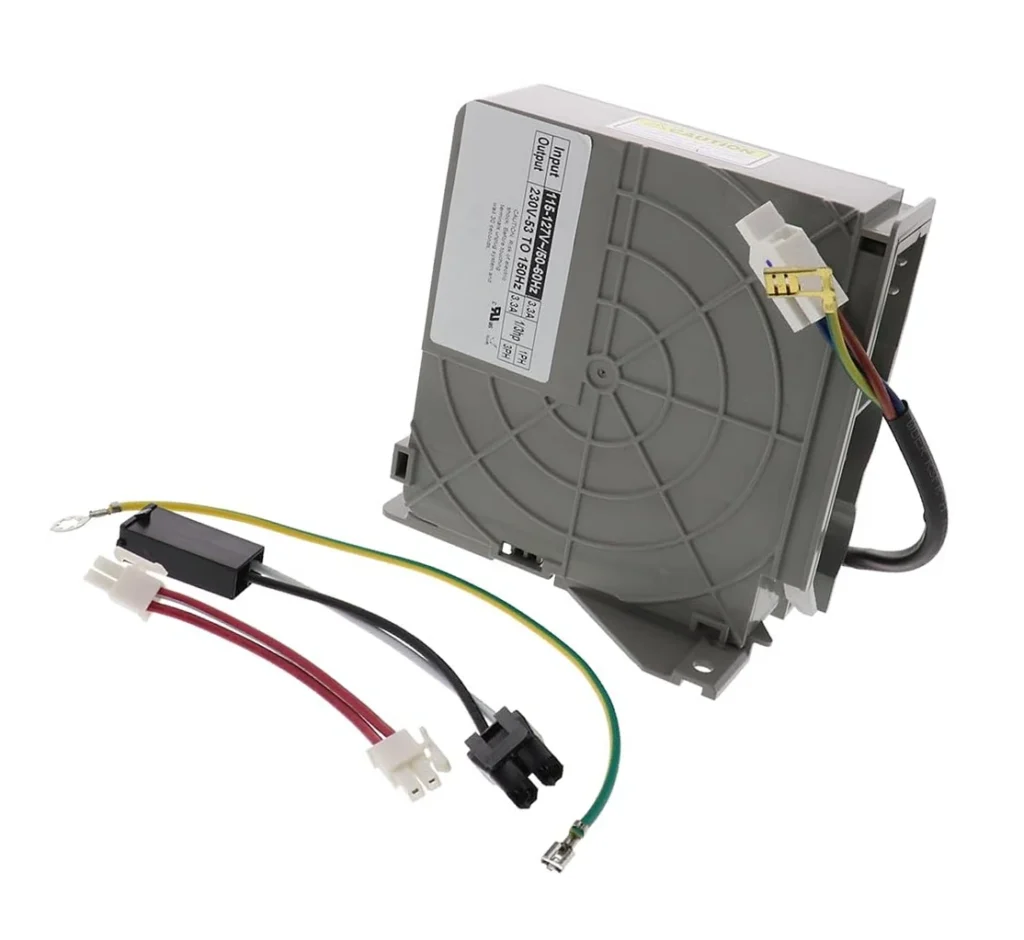
You wake up to a silent kitchen. The Whirlpool refrigerator that normally hums quietly in the background isn't running at all. No compressor noise, no fan whirring, nothing. You check the lights inside — they work fine — but the cooling system is completely dead. Before you panic about losing hundreds of dollars in food, let's walk through what's likely happening with your inverter control board.
The W10133449 inverter control board is the brain that manages compressor speed and cooling efficiency in newer Whirlpool, KitchenAid, Maytag, Kenmore, and Amana side-by-side refrigerators. When it fails, your fridge often won't start at all, even though power is reaching the unit.
Quick Symptom Check
Before you order parts, confirm these symptoms match what you're experiencing:
- Refrigerator completely silent — no compressor running, no fan sounds
- Interior lights work normally — power is reaching the unit
- Display panel functions (if equipped) — controls respond but cooling doesn't start
- No error codes displayed — or codes related to communication/control failures
- Recent power surge or outage — inverter boards are sensitive to electrical spikes
If three or more of these match your situation, the inverter control board is your most likely culprit.
Cause #1: Complete Inverter Board Failure (Most Common — 60% Probability)
The W10133449 inverter board controls variable-speed compressor operation. When it fails completely, the compressor never receives the signal to start. This is the most common failure mode.
How to diagnose:
- Unplug the refrigerator and wait 2 minutes
- Access the control board (usually mounted on the compressor or nearby on the back wall)
- Look for obvious damage: burned components, scorch marks, or capacitor bulging
- Check for corrosion on connector pins — moisture can kill these boards
- Plug back in and listen carefully at the compressor — absolutely no humming or clicking suggests board failure
The fix: Replace the W10133449 board. This part replaces earlier part numbers W10629033, 2304098, and 2997771, so if you see those numbers referenced in your manual, the W10133449 is the updated replacement. Models like the KSCS25FTMS00 KitchenAid, WRS325FDAM04 Whirlpool, and MFI2570FEZ00 Maytag commonly use this board.
Cost: $188.99 for the board, no service call needed if you're comfortable with basic wiring.
Cause #2: Power Supply Issue to the Board (25% Probability)
Sometimes the board is fine, but it's not getting proper voltage. The inverter needs clean 120V AC power to function.
How to diagnose:
- Use a multimeter to check voltage at the wall outlet — should read 115-125V AC
- Check voltage at the board's power input connector with fridge plugged in
- Inspect the wire harness for damaged insulation or loose connections
- Look at the main power board (if separate) for signs of failure
The fix: If voltage is absent or low at the board connector but good at the wall, trace the wiring. You might have a break in the harness or a failed main control board upstream. However, if voltage reaches the inverter board correctly and it still won't start the compressor, the board itself is bad.
Cause #3: Thermistor or Sensor Miscommunication (10% Probability)
The inverter board relies on temperature sensors to know when to run the compressor. If sensor wiring is damaged or connectors are corroded, the board won't start the cooling cycle.
How to diagnose:
- Locate the thermistor connectors plugged into the inverter board
- Disconnect and inspect for corrosion, bent pins, or moisture
- Test thermistor resistance with a multimeter (typically 10-15k ohms at room temp)
- Check continuity of wires running to the fresh food and freezer compartments
The fix: Clean corroded connectors with electrical contact cleaner. Replace damaged thermistors if readings are way off. But if sensors test good and connections are clean, you're back to board failure as the cause.
Cause #4: Compressor Locked Rotor Triggering Protection (3% Probability)
If the compressor itself has seized, the inverter board may sense the overcurrent condition and refuse to start as a protection measure.
How to diagnose:
- With power off, try manually rotating the compressor (there's usually no external way to do this — it's internal)
- Listen for a single click when you plug in the fridge — that's the board attempting to start
- If you hear a click followed immediately by silence (no hum at all), the board may be detecting a fault
- Check compressor resistance with a multimeter between all three terminals
The fix: If the compressor has actually failed, you're looking at a much bigger repair. But 97% of the time with these symptoms, it's just the board.
Cause #5: Software Glitch in Board Memory (2% Probability)
Rarely, the board's microcontroller gets stuck in a fault state that persists even after power cycling.
How to diagnose:
- Unplug the refrigerator completely
- Disconnect the inverter board's wire harness
- Wait 5 minutes (allows capacitors to fully discharge)
- Reconnect everything and power up
The fix: This full reset works about 2% of the time. If it doesn't, you need the new board.
When to Call a Pro
Here's my honest take: replacing the W10133449 inverter control board is a straightforward DIY job if you're comfortable working with basic wiring. It's usually 4-6 screws, a wire harness connector, and maybe 30 minutes of your time.
Call a professional if:
- You're not comfortable working with electrical components
- The compressor itself is running but very hot (suggests compressor failure, not board)
- You've replaced the board and still have no start (deeper diagnostic needed)
- Your fridge is still under warranty (parts may be covered)
Most appliance techs charge $150-250 for a service call plus parts. You'd pay roughly $340-440 total versus $189 doing it yourself.
Real-World Compatibility Note
This W10133449 board works across multiple brands because Whirlpool owns them all. I've installed this exact part in KitchenAid KSRG25FKSS00, Whirlpool WRS325SDHZ00, Maytag MFI2269VEM4, Kenmore 106.44023400, and Amana ASD2575BRS01 models. The connector and mounting holes are identical — it's literally the same refrigerator platform with different exterior styling.
Frequently Asked Questions
Why did my inverter board fail in the first place?
Power surges are the #1 killer of these boards. Even brief voltage spikes from lightning strikes or grid switching can fry the sensitive electronics. Heat is the second biggest enemy — if your fridge is in a hot garage or the condenser coils are clogged, the board runs hotter and fails sooner. Most failures happen between years 5-8 of the refrigerator's life.
Can I test the inverter board before buying a replacement?
Not really. Unlike old-style relay-start systems, these inverter boards have microcontrollers and surface-mount components that can't be easily tested with a multimeter. You can check for obvious physical damage and verify it's getting power, but true functional testing requires specialized equipment. The diagnostic approach is elimination: if power is good, sensors are good, and compressor tests okay, the board is bad.
Will replacing the board erase my temperature settings?
No. Temperature setpoints are typically stored in the main display control board (if your model has a digital display) or they're just mechanical adjustments. The inverter board only controls compressor operation, not user settings. After installation, you won't need to reprogram anything — the fridge should just start working again.
Diagnosed the problem?
W10133449 · In Stock · Fast shipping