
Honeywell Furnace Won't Ignite or Short Cycles — 7 Gas Valve Failures & Fixes
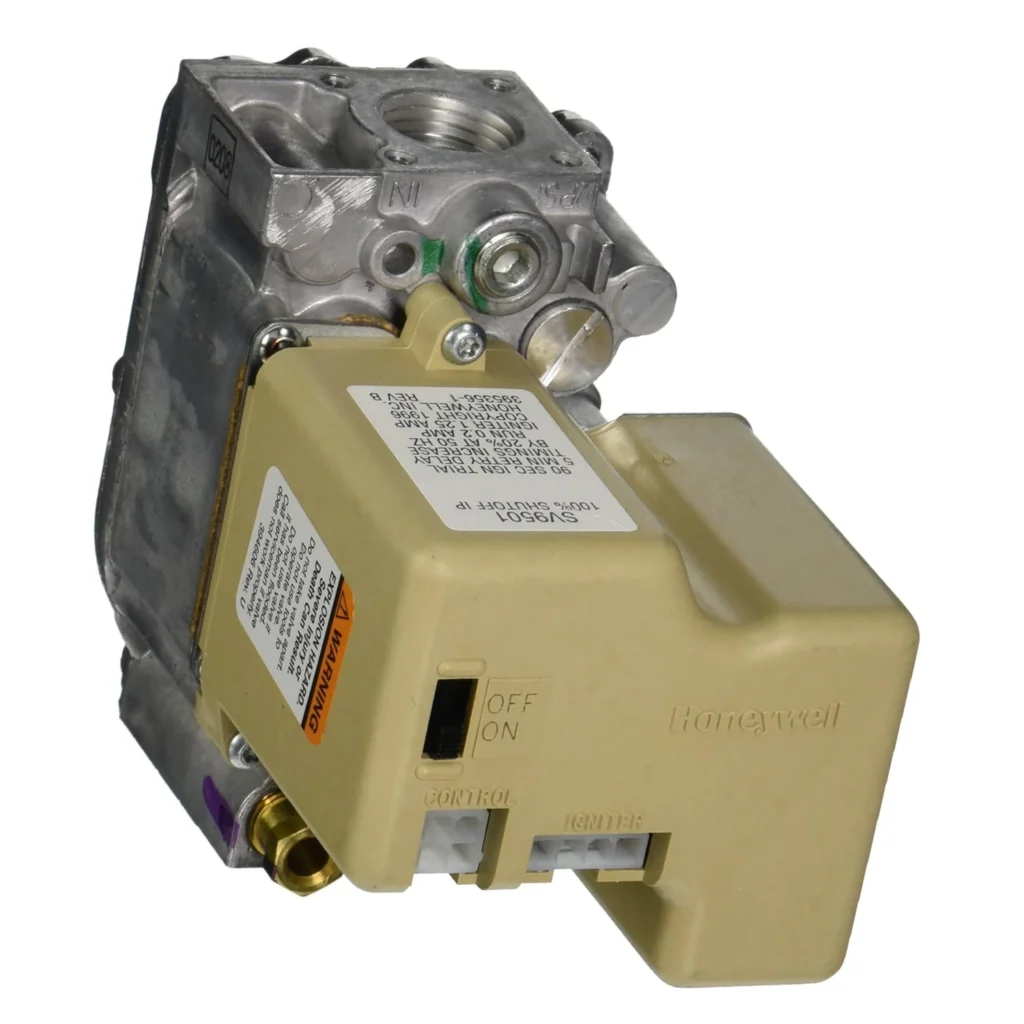
Your thermostat clicks on. The blower starts. But after 30 seconds, the furnace shuts down without ever lighting. This ignition failure pattern—especially if it happens three times before lockout—usually points straight to the gas valve assembly, specifically the SmartValve SV9501M2528 in Honeywell and Resideo systems.
This valve controls everything from gas flow to flame sensing feedback. When it fails, you'll see repeated ignition attempts, short cycling, or complete shutdown with error codes flashing on your control board.
Quick Symptom Check
- Thermostat calls for heat, igniter glows orange, but no gas flows — classic valve coil failure
- Furnace lights but shuts off after 5-10 seconds — flame sensing circuit in valve may be degraded
- Clicking sounds from valve area, no ignition — internal valve stuck or solenoid malfunction
- Error codes 33, 34 (limit switch), or 13 (limit open) — often secondary symptoms of valve cycling issues
- Works intermittently, fails when cold — valve coil resistance changing with temperature
Cause #1: Failed Gas Valve Coil (65% Probability)
The SV9501M2528 uses a two-stage valve coil that opens gas flow in sequence. When this coil fails—and it's the most common failure on units 7-12 years old—the valve simply won't open even though the igniter is glowing hot.
How to diagnose:
- Turn off gas supply and electrical power
- Use a multimeter to check valve coil resistance (should read 8-12 ohms on most Honeywell valves)
- With power restored (gas still off), check for 24VAC at valve terminals when thermostat calls for heat
- Listen closely—a working valve clicks audibly when energized
If you're getting 24VAC but no click and no gas flow, the coil is dead. The SV9501M2528 replaces older SV9501M2726 and SV9501M2718 models—all share this failure mode after enough heating cycles.
Fix: Replace entire valve assembly. Individual coils aren't serviceable on SmartValve units. Cost: $420-$470 for part, 1.5-2 hours labor.
Cause #2: Control Board Not Sending Valve Signal (20% Probability)
Sometimes the valve is fine, but the integrated furnace control (IFC) board isn't sending the 24VAC signal to open it. This happens after power surges or simply from aging solder joints on the board.
Diagnosis steps:
- Check for 24VAC between the two valve terminals during ignition sequence
- If voltage is absent or drops below 22VAC, problem is upstream
- Inspect control board for burn marks, swollen capacitors, or corrosion
- Check transformer output (should be 24-28VAC)
The D1NA024N, D1NA030N, and D1NA036N furnace models using this valve are particularly prone to board failures around year 10. If your unit cycles through three ignition attempts then locks out with the LED flashing rapidly, but the valve never energizes, suspect the board first.
Fix: Replace control board ($150-$280) or transformer if that's the weak link ($40-$65).
Cause #3: Gas Supply Issues (8% Probability)
Before blaming the valve, verify gas is actually reaching it. I've seen situations where the manual shutoff valve wasn't fully open, or the gas pressure regulator upstream failed.
Quick checks:
- Manual gas valve at furnace—must be parallel to pipe (fully open)
- Other gas appliances working normally? If water heater is also affected, call the gas company
- Gas pressure test: should be 3.5" WC (water column) for natural gas, 10-11" for propane
On York-branded furnaces using this valve (models 1SS04701, 1SP0452, 1LD0470), there's an additional inline sediment trap. Check it for debris.
Cause #4: Blocked or Faulty Pressure Switch (4% Probability)
The pressure switch must close before the control board will even energize the gas valve. If it's stuck open or the inducer motor isn't creating sufficient draft, you'll get ignition lockout.
Listen for: Inducer motor running for 30-60 seconds before ignition attempt. If the pressure switch hose is disconnected or cracked, or the switch itself is failed, the valve never gets its signal.
Fix: Clear condensate from pressure switch hoses, replace switch if faulty ($45-$85).
Cause #5: Corroded or Loose Wiring Connections (2% Probability)
The SV9501M2528 valve terminals can corrode over time, especially in humid basement installations. Loose spade connectors create intermittent contact.
Inspect: Remove wire connectors, check for green corrosion or burned contact points. Clean with contact cleaner and ensure tight connection. If wires are brittle, replace the wire leads entirely.
Cause #6: Flame Sensor Feedback Loop Failure (1% Probability)
SmartValve assemblies integrate flame sensing feedback. If the valve's internal sensor circuit degrades, it may open briefly then immediately close, creating that "lights for 5 seconds then shuts off" pattern.
This is rare but happens on units exposed to high humidity or sulfur contamination from certain gas supplies. The external flame sensor rod is usually fine—it's the valve's internal processing that's failed.
Fix: Valve replacement is the only solution.
Cause #7: Incorrect Valve for Appliance Altitude/Gas Type (0.5% Probability)
The SV9501M2528 is factory-configured for natural gas at standard altitude. If you're at elevation above 2,000 feet or converted to propane without proper valve adjustment, ignition reliability suffers.
Check the valve's data plate—there should be altitude and gas type specifications. Honeywell SmartValves can be adjusted via internal springs, but it requires specific tools and knowledge of the spring color codes.
When to Call a Pro
Gas valve work is straightforward, but there's zero margin for error. Call a licensed HVAC tech if:
- You smell gas (even faintly) around the furnace
- You're not comfortable working with 24VAC electrical systems
- The furnace is still under warranty (DIY valve replacement often voids it)
- You've replaced the valve but still have ignition failure—deeper diagnostic needed
Most techs charge $350-$550 for valve replacement including the SV9501M2528 part and labor. That's reasonable for a critical safety component.
DIY Replacement Notes
If you're tackling this yourself:
- Gas off first, always. Turn the manual valve perpendicular to the pipe.
- Take a photo of wire connections before disconnecting anything
- The SV9501M2528 mounts with two screws and connects to gas pipe via threaded union—use two wrenches to avoid torquing the gas line
- Apply pipe dope or Teflon tape to threads (check local code for which is approved)
- After installation, do a soap-bubble leak test on all connections before restoring power
- Expected install time: 45-90 minutes for experienced DIYers
This valve is compatible across dozens of Honeywell, Resideo, and York furnace models including the DAYA-F018N045C, DAYA-F024N070C, and D1NH036N07206C series. Always verify your model number matches the compatibility list before ordering.
Frequently Asked Questions
Can I just replace the gas valve coil instead of the whole SV9501M2528 assembly?
No. Honeywell SmartValve assemblies like the SV9501M2528 have integrated control electronics—the coil isn't a separate replaceable part. Attempting to disassemble the valve voids any warranty and creates serious gas leak risk. Replace the entire unit.
Why does my furnace work fine all day but fail to ignite on the coldest nights?
Cold ambient temperatures increase the resistance in failing valve coils. If the coil is marginal (say, 14 ohms instead of the spec 10 ohms), it might work at 70°F but fail when garage or basement temps drop to 40°F. This is a sign the valve is on its way out—replace it before you're without heat in a deep freeze.
What's the difference between SV9501M2528, SV9501M2726, and SV9501M2718?
They're functional equivalents with minor internal component updates across production years. The SV9501M2528 is the current superseding part number—it directly replaces both older versions. All three use the same mounting pattern, gas connections, and electrical interface. Honeywell consolidated the part numbers to simplify inventory.
Diagnosed the problem?
SV9501M2528 · In Stock · Fast shipping