
AC Compressor Hard Starting or Won't Start — 5 Causes & How to Fix
You walk outside on a 95-degree afternoon and notice your condenser unit is humming loudly but the compressor isn't running. Or maybe it stutters for a few seconds, trips the breaker, and shuts down completely. That's your compressor struggling to start — and it's not just annoying, it's burning up your system.
Hard starting happens when the compressor motor can't overcome the initial load required to spin up. Sometimes it's age. Sometimes it's worn electrical components. Either way, every failed start attempt shortens your compressor's life.
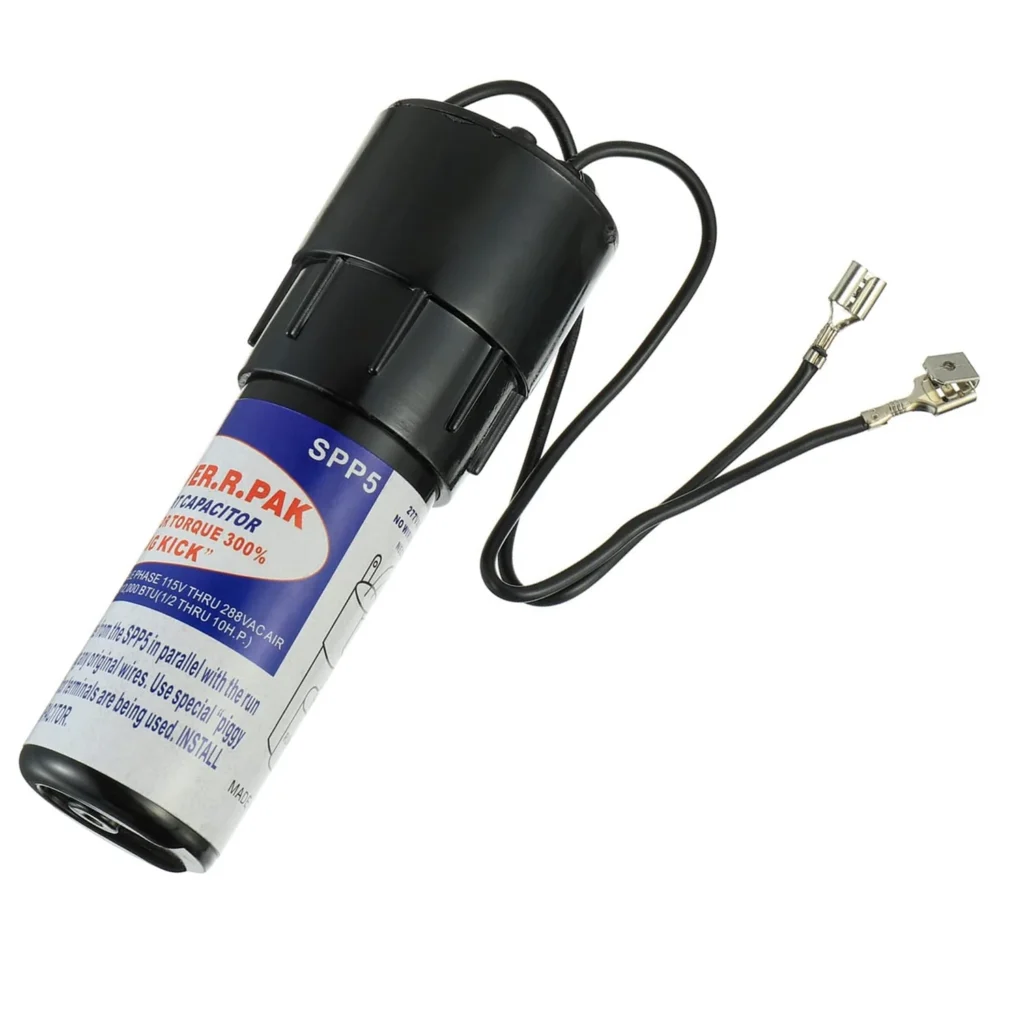
This guide covers the five most common causes of compressor hard starting in Trane, Carrier, Lennox, Goodman, and Rheem units. We'll walk through how to diagnose each one, what parts fail, and whether you need a hard start kit like the SPP5 to fix it.
Quick Symptom Check
- Compressor hums but won't start — motor is energized but can't overcome the load
- Breaker trips immediately — excessive starting current exceeds the circuit limit
- Unit starts and stops repeatedly — compressor kicks on for 2-3 seconds then shuts off
- Lights dim when AC tries to start — voltage drop from high inrush current
- Clicking sound from contactor — compressor draws too much current, contactor releases
- Compressor runs but struggles initially — takes 5-10 seconds to reach full speed
Cause #1: Weak or Failed Start Capacitor (60% of Cases)
Your start capacitor gives the compressor motor the electrical kick it needs to overcome inertia. When it weakens, the compressor doesn't have enough starting torque.
How to diagnose: Turn off power at the disconnect. Discharge the capacitor with an insulated screwdriver across the terminals. Look for a bulging top, rust around the terminals, or oil leaking from the base. Use a multimeter set to capacitance mode — if it reads 15-20% below the rated MFD printed on the label, it's failed.
Probability: This is the #1 reason compressors hard start. Capacitors naturally degrade in heat. If your unit is 5+ years old and never had the capacitor replaced, start here.
Fix: Replace the capacitor with an exact MFD rating match. On Trane 4TTB6061A, Carrier 38CKC036300, and Goodman GSX130361 models, the start capacitor typically ranges from 88-108 MFD. Don't upsize thinking it'll help — you'll burn out the compressor windings.
Cause #2: Missing or Improperly Sized Hard Start Kit (25% of Cases)
Some compressors ship without a hard start kit. Others had one that failed and was never replaced. A hard start kit (like the SPP5) provides a voltage boost during the first 0.5 seconds of startup, reducing the load on your start capacitor and contactor.
How to diagnose: Check if your compressor already has a hard start kit installed — look for a small black box near the capacitor with three wire terminals. If it's missing and your compressor is 3+ tons or you're in a hot climate where ambient temps exceed 95°F regularly, you need one.
Probability: Moderate. Hard start kits aren't always required, but they're critical for older units, undersized wiring, or compressors operating in high-ambient conditions. Goodman, Rheem, and Lennox units (like the Y8806) frequently benefit from aftermarket hard start kits.
Fix: Install an SPP5 hard start kit. It's compatible with Trane, Carrier, Lennox, Goodman, and Rheem compressors. The kit reduces starting current by 50%, which extends compressor life and prevents nuisance breaker trips. Installation takes 10 minutes — mount it near the compressor, connect the three terminals per the wiring diagram.
Cause #3: Stuck Compressor or Internal Bearing Wear (10% of Cases)
If your compressor sat idle for months — say, during winter or after a long vacancy — the internal bearings can seize. Or if refrigerant leaked and ran low, the compressor ran without proper lubrication and wore the bearings.
How to diagnose: With power off, try rotating the compressor fan manually. If it spins freely but the unit still won't start, the issue is electrical. If there's resistance or grinding, the compressor shaft is binding. You'll also see this on units that were low on refrigerant for extended periods — check the refrigerant charge and suction line temperature.
Probability: Less common but catastrophic. Once a compressor's internal bearings fail, you're looking at a full compressor replacement. This is $800-$1,500 in parts and labor.
Fix: You can attempt a hard start kit as a Hail Mary — sometimes the extra starting torque can break a compressor free. But if it's grinding or seizing repeatedly, replace the compressor. Don't throw good money at a dying motor.
Cause #4: Low Voltage or Weak Electrical Supply (3% of Cases)
Compressors need 208-240V to start. If your supply voltage drops below 200V during startup, the motor can't overcome the load. This happens with undersized wiring, loose connections, or when multiple appliances run simultaneously.
How to diagnose: Use a multimeter at the contactor while the unit attempts to start. If voltage drops below 200V, you've found it. Also check for corroded wire nuts, loose terminal screws, or oxidized disconnect contacts.
Probability: Rare unless your home has aluminum wiring, an old service panel, or a 100A main breaker trying to run central AC plus electric range plus water heater.
Fix: An electrician can install a dedicated 40A circuit with 8-gauge copper wire. If that's not feasible, a hard start kit reduces the voltage demand during startup and can compensate for marginal supply.
Cause #5: Failed Contactor or Relay (2% of Cases)
The contactor is the relay that powers the compressor. Over time, the contacts arc and pit. When they fail to close fully, the compressor doesn't receive full voltage and can't start.
How to diagnose: With power off, remove the contactor. Inspect the contacts for pitting, burning, or metal transfer. If they're not smooth and shiny, replace the contactor. Also check for a humming sound from the contactor when the thermostat calls for cooling — that means the coil is energized but contacts aren't closing.
Probability: Low. Contactors usually fail in a binary way — they either work or don't. But if yours is cycling hundreds of times per day due to a faulty thermostat, it'll wear prematurely.
Fix: Replace the contactor with a 30A or 40A rated unit (match your model's specs). On Whirlpool WED6200SW1 and Heil H4A636GKA100 models, use a Honeywell DP30 contactor.
When to Call a Pro
If you've replaced the start capacitor and added a hard start kit and the compressor still won't start, you're looking at internal compressor failure or a refrigerant issue. Both require an EPA-certified technician. Also call a pro if you're uncomfortable working inside the condenser unit — 240V can kill you instantly.
One more thing: if your compressor is 15+ years old and hard starting, consider replacement instead of repair. You're patching a sinking ship.
Frequently Asked Questions
Will a hard start kit fix a completely dead compressor?
No. A hard start kit helps a struggling compressor overcome starting load. If your compressor is electrically open (no continuity between terminals), mechanically seized, or has burned windings, a hard start kit won't help. Test the compressor windings first — you should see 3-10 ohms between common-to-start and common-to-run terminals.
How long does a hard start kit last?
Most solid-state hard start kits (like the SPP5) last 10-15 years. The older relay-style kits with a start relay and thermistor fail more frequently — expect 5-7 years. If you replace your compressor, transfer the hard start kit to the new one.
Can I install a hard start kit on any compressor?
Yes, but check compatibility. The SPP5 works with single-phase hermetic compressors from 1 to 5 tons — that covers 90% of residential units. It's compatible with Trane, Carrier, Lennox, Goodman, Rheem, York, and Heil models. Don't use it on three-phase commercial compressors or scroll compressors with factory-installed start assistance.
Diagnosed the problem?
SPP5 · In Stock · Fast shipping