
LG Front Load Washer Leaking Water — 5 Door Boot Seal Causes & Fixes
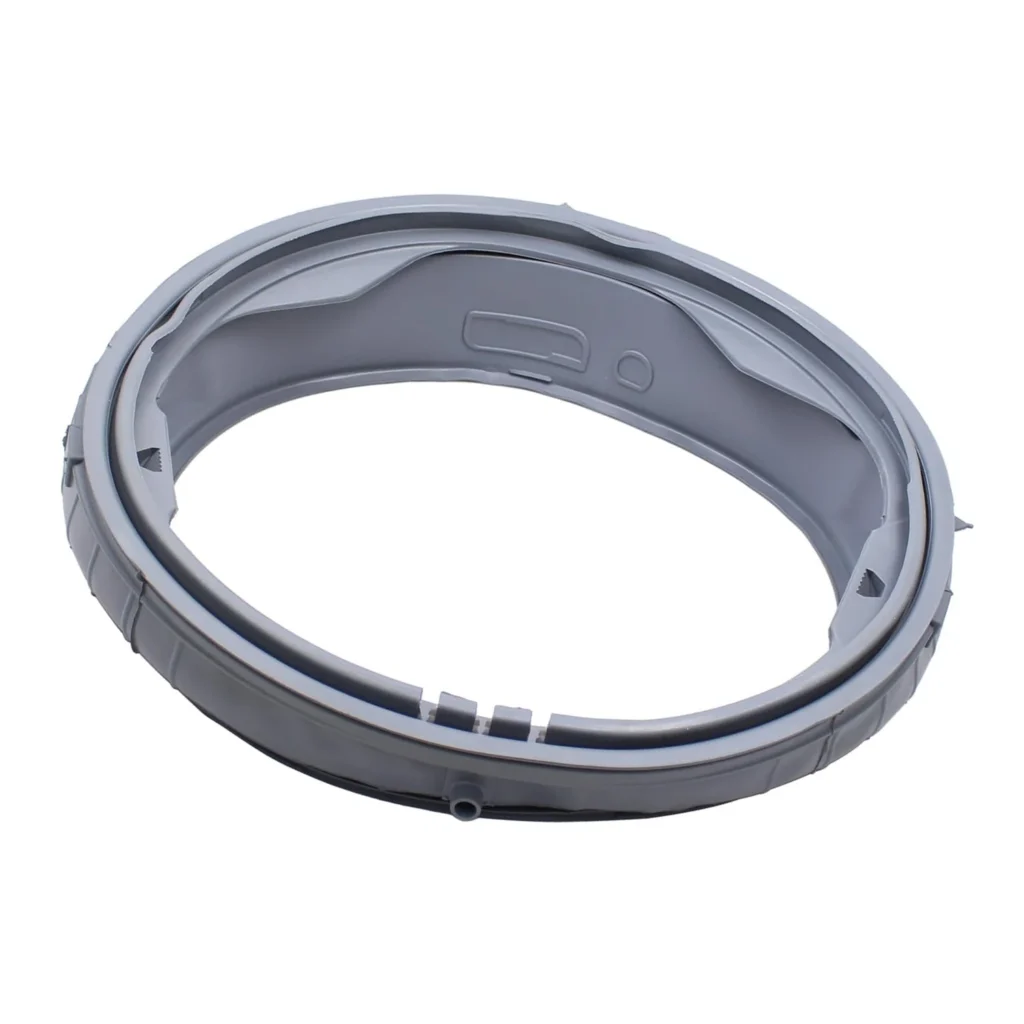
You just loaded a full wash cycle into your LG WM3370HWA, pressed start, and walked away. Twenty minutes later, you're stepping into a puddle spreading across your laundry room floor. The culprit? Nine times out of ten, it's that accordion-style rubber boot seal around the door—and it doesn't always look obviously damaged.
The door boot seal (part MDS47123602) creates the watertight barrier between your washer drum and the outer door. When it fails, water escapes during the wash or spin cycle. Sometimes it's a slow drip you don't notice until you see water stains on the floor. Other times it's a gusher that floods your laundry room mid-cycle.
Quick Symptom Check: Is Your Boot Seal Failing?
Before you order parts, confirm these telltale signs:
- Water pooling under the washer — especially during or right after the wash cycle
- Visible water dripping from the bottom front of the door
- Damp or wet clothes on the door side after a completed cycle
- Dark streaks or marks on laundry — mold or residue from a deteriorating seal
- Musty smell that won't go away even after cleaning cycles
- Visible cracks, tears, or separated accordion folds in the rubber boot
If you're seeing two or more of these, your boot seal is likely compromised.
Cause #1: Torn or Punctured Boot Seal (Most Common)
Probability: 45%
Sharp objects—coins, underwire bras, keys, hairpins—get trapped in the boot folds and puncture the rubber during the spin cycle. You won't always see the damage immediately because tears often happen in the inner accordion folds where water collects.
How to diagnose: Open the door and pull back each fold of the boot seal manually. Run your fingers along the entire circumference, especially the bottom section where water pools. Look for small holes, cuts, or punctures. Shine a flashlight behind the seal to spot light coming through tears.
The fix: Boot seals can't be patched reliably. If you find any tear or puncture, replacement is the only permanent solution. The MDS47123602 fits LG models like the WM3250HWA, WM3570HVA, WM3670HWA, and dozens of Kenmore Elite models (79641162410, 79640512900, etc.).
Cause #2: Mold and Mildew Deterioration
Probability: 30%
That black slimy buildup isn't just gross—it's eating away at your seal. Mold produces enzymes that break down rubber over time, making the boot brittle and porous. Front-loaders are especially vulnerable because water sits in the boot folds between cycles.
How to diagnose: Heavy black or orange buildup in the boot folds, accompanied by a strong musty odor. The rubber feels stiff or crumbly instead of flexible. You might see brownish stains on white or light-colored clothes—that's mold transferring during the wash.
The fix: If the mold has caused the rubber to lose elasticity or you're seeing structural breakdown, cleaning won't restore the seal. You'll need to replace it. For prevention on your new seal: wipe down the boot after every load and leave the door cracked open to air-dry.
Cause #3: Separated Boot Seal at the Clamp Points
Probability: 15%
The boot seal attaches to both the outer tub and the front panel using spring clamps or band clamps. Over thousands of cycles, these clamps can loosen or the seal can pull away from its groove, creating gaps where water escapes.
How to diagnose: With the door open, examine where the boot seal connects to the washer cabinet (outer edge) and the tub (inner edge). Try to pull the seal away gently—if it comes out of its groove easily or you see gaps, that's your leak source. Water typically runs down the front of the machine or pools at the bottom.
The fix: Sometimes you can reseat the boot and tighten the clamps, but if the rubber has stretched out or the clamp grooves are damaged, you're looking at a replacement. The MDS47123602 comes with new mounting hardware.
Cause #4: Detergent and Fabric Softener Damage
Probability: 7%
Using too much detergent—especially non-HE formulas in an HE washer—leaves residue that coats the boot seal. Combined with fabric softener, this gunk acts like a slow solvent, degrading the rubber's integrity. You'll see a sticky, waxy buildup that won't wash away.
How to diagnose: Thick, greasy residue coating the boot folds that feels tacky to the touch. The rubber underneath may appear swollen or discolored. Leaks often start small and worsen over months as the damage accumulates.
The fix: If caught early, aggressive cleaning with diluted vinegar might help, but if the rubber is already compromised, replace the seal. Then switch to HE detergent and use half the amount you think you need—seriously, these washers need less than conventional machines.
Cause #5: Normal Wear and Tear (8-12 Year Lifespan)
Probability: 3%
Boot seals aren't lifetime components. After 8-12 years of regular use, the rubber loses flexibility, develops micro-cracks, and eventually fails. If your LG WM3170CW or Kenmore Elite 79640518900 is approaching a decade old and you've never replaced the seal, age might be the only factor.
How to diagnose: The boot feels stiff rather than flexible. Surface cracking visible across multiple areas, not just one damage point. Leaking started gradually and has worsened over time without any specific incident.
The fix: Replacement. Consider it scheduled maintenance, like replacing your car's timing belt at the recommended interval.
When to Call a Pro
Replacing a front-load washer boot seal is a moderate DIY job. You'll need to remove the front panel or top panel depending on your model, disconnect clamps, and maneuver the new seal into place. It typically takes 60-90 minutes if you're methodical.
Call a professional if:
- You're not comfortable disassembling the front panel of your washer
- The washer is leaking from multiple points (suggests additional failures beyond the boot)
- You've replaced the boot seal but it's still leaking (could be outer tub or pump issues)
- Your model requires special tools or procedures you don't have access to
Expect to pay $200-$350 for professional installation, including the part. The MDS47123602 seal itself runs $91.99.
Frequently Asked Questions
Can I just seal a small tear in my boot with silicone or rubber cement?
It won't hold. The boot seal flexes constantly during operation and experiences significant water pressure during the spin cycle. Patches peel off within a few loads, and you're back to square one—except now you've wasted time and still have a leak. Bite the bullet and replace it properly.
Why does my new LG washer boot seal already have black spots after six months?
That's mold, not a defective seal. Front-loaders trap moisture in the boot folds because the door seals so tightly. After every load, wipe down the boot with a dry towel and leave the door open for at least an hour. Once a month, run a cleaning cycle with washer cleaner or white vinegar. Do this religiously and your seal will last its full lifespan.
Will the MDS47123602 fit my Kenmore Elite washer built by LG?
Check your model number against the compatibility list. Kenmore models in the 796 series (like 79641162410, 79640512900, 79640518900) are LG-manufactured and use this exact boot seal. The part replaces original numbers MDS64237201 and MDS64237202. If your washer is in the compatibility list for this article, you're good to go.
Diagnosed the problem?
MDS47123602 · In Stock · Fast shipping