
LG Washer Won't Start — Door Lock Issues & 5 Fixes That Actually Work
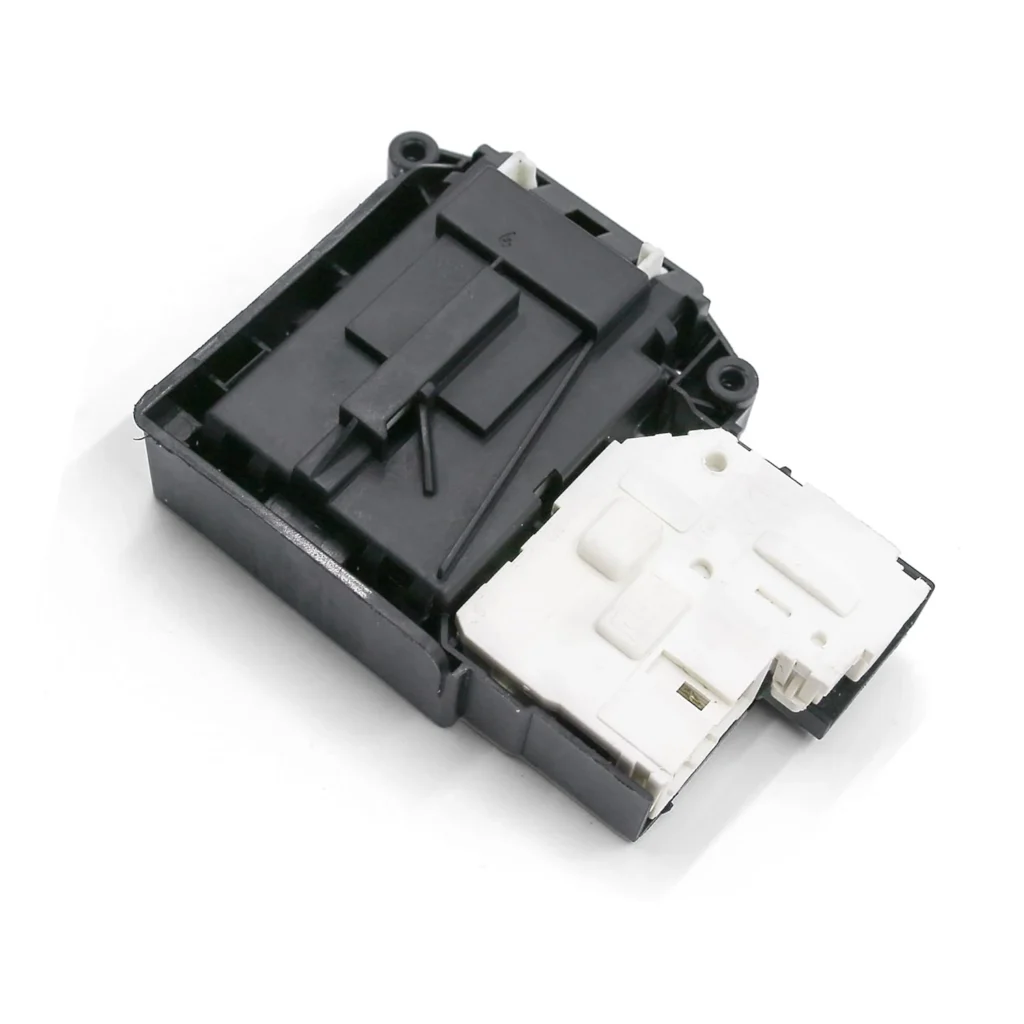
You load the washer, press start, and… nothing. The door clicks but the cycle won't begin. Or maybe you're staring at a blinking door lock light that refuses to engage. If you've got an LG front-load washer like the WM2250CW, WM2501HVA, or WM3470HWA, you're probably dealing with a failed door lock switch assembly — specifically part EBF61315801.
This component fails more than most people realize. When it does, your washer becomes a $900 laundry basket. Here's how to diagnose it yourself and decide whether it's a 20-minute fix or time to call backup.
Quick Symptom Check
Before you start taking things apart, verify you're actually dealing with a door lock issue:
- Door won't latch at all — Handle feels loose or doesn't engage with a click
- Door latches but cycle won't start — You hear a click but the machine sits idle
- Blinking door lock indicator — Light flashes continuously without locking
- dE error code on display — LG's way of saying "door problem detected"
- Intermittent starting — Works sometimes, fails other times (classic electrical contact issue)
If you've got two or more of these, the door lock assembly is your likely culprit. This part (also sold as AP6801183, EBF61315803, or EBF61315806) controls both the physical latch and the electrical signal that tells your washer it's safe to start.
Cause #1: Worn Door Lock Switch Contacts (70% Probability)
The most common failure isn't the latch mechanism itself — it's the electrical contacts inside the switch assembly. Every time you start a load, these contacts close to complete a circuit. After a few thousand cycles, they wear down or develop carbon buildup.
How to diagnose:
- Unplug the washer completely
- Open the door and locate the door lock assembly on the front panel (usually behind the rubber boot seal)
- Remove the two screws holding the lock in place
- Disconnect the wire harness and test continuity with a multimeter between the lock terminals
- With the door closed position simulated, you should see continuity (0 ohms). Open position should show infinite resistance
If the readings are erratic or show resistance when they shouldn't, the switch contacts are shot. This is especially common on models WM2801HWA, WM3001HWA, and the WM2277 series that see heavy daily use.
The fix: Replace the entire door lock assembly. Don't waste time trying to clean contacts — it's a temporary fix at best. The EBF61315801 assembly costs about $35-50 and takes 15-20 minutes to swap out.
Cause #2: Broken Door Latch Hook (15% Probability)
The physical hook that engages when you close the door can crack or break, especially if someone's slammed the door repeatedly or tried to force it open mid-cycle.
Diagnosis: With the door open, manually press the latch mechanism. It should spring back firmly. If it feels mushy, doesn't return, or you can see visible cracks in the plastic hook assembly, that's your problem.
Models with this issue most often: WM2487HWM, WM2688HWM, WM2496HWM — these higher-capacity models put more stress on the latch.
The fix: Same as Cause #1 — full assembly replacement. The latch and switch are integrated; you can't replace just the hook.
Cause #3: Misaligned Door Strike Plate (8% Probability)
Sometimes the problem isn't the lock at all. The metal strike plate on the door itself can shift position over time, especially if the washer's been moved or if mounting screws have loosened.
Check this: Close the door slowly and watch where the latch hook tries to engage. It should align perfectly with the strike plate hole. If it's off by even 3-4mm, the lock won't engage properly.
The fix: Loosen the strike plate screws (usually two Torx screws), realign so the latch seats fully, and retighten. Test before assuming you need a new lock assembly.
Cause #4: Faulty Wiring Harness Connection (5% Probability)
The wire harness that connects the door lock to the main control board can develop loose connections or corroded pins, especially in humid laundry rooms.
Inspect: With the washer unplugged, remove the door lock assembly and examine both the lock's connector and the washer's harness connector. Look for:
- Green corrosion on metal pins
- Pushed-back pins that don't make contact
- Melted plastic around terminals (sign of overheating)
If you find any of these, you might get lucky with just a connector replacement instead of the full lock assembly. But honestly? If you're already in there, replace the lock too — it's probably near end-of-life anyway.
Cause #5: Control Board Interpretation Issue (2% Probability)
Rarely, the door lock is fine but the main control board isn't reading its signal correctly. This is the least likely scenario but worth mentioning.
How to tell: If you've replaced the door lock assembly with a known-good part and still get the dE error, the control board might need replacement. This is a $200-300 repair that requires a technician.
Before going there, try a hard reset: unplug the washer for 10 minutes, then plug back in. Sometimes the board just needs to reboot.
When to Call a Pro
Look, replacing the door lock assembly is genuinely DIY-friendly if you're comfortable with basic tools. But call a tech if:
- You've replaced the lock and still get errors
- You see any signs of water damage inside the door panel area
- The wiring harness looks damaged beyond just the connector
- You're uncomfortable working around electrical components
A service call for this repair typically runs $150-200 including parts. If you're handy, the part alone is $35-50 and you'll save yourself the wait time for an appointment.
Frequently Asked Questions
Will my LG washer work with the door lock unplugged?
No. The door lock assembly completes a safety circuit that must be closed for the washer to operate. Without it, the control board won't allow the cycle to start. This is intentional — running a washer with an unsecured door is a safety hazard and can cause serious water leaks.
Are EBF61315801, EBF61315803, and EBF61315806 actually the same part?
Yes, they're interchangeable. LG updated the part number through different production runs, but the mounting holes, electrical connections, and function are identical. If you've got a WM2250CW, WM2501HWA, WM2650HRA, WM3001HPA, or any of the compatible models listed, all three part numbers will work.
How long should an LG door lock assembly last?
Typically 7-10 years or about 3,000-4,000 cycles. If you're doing 8-10 loads per week, you're looking at replacement around the 6-7 year mark. Heavy use accelerates wear on the electrical contacts. Models like the WM2801HLA and WM2901HVA that see commercial-level use in large households often fail sooner.
Diagnosed the problem?
EBF61315801 · In Stock · Fast shipping