
LG Washer Won't Start or Unlock — 5 Door Lock Failures & Fixes
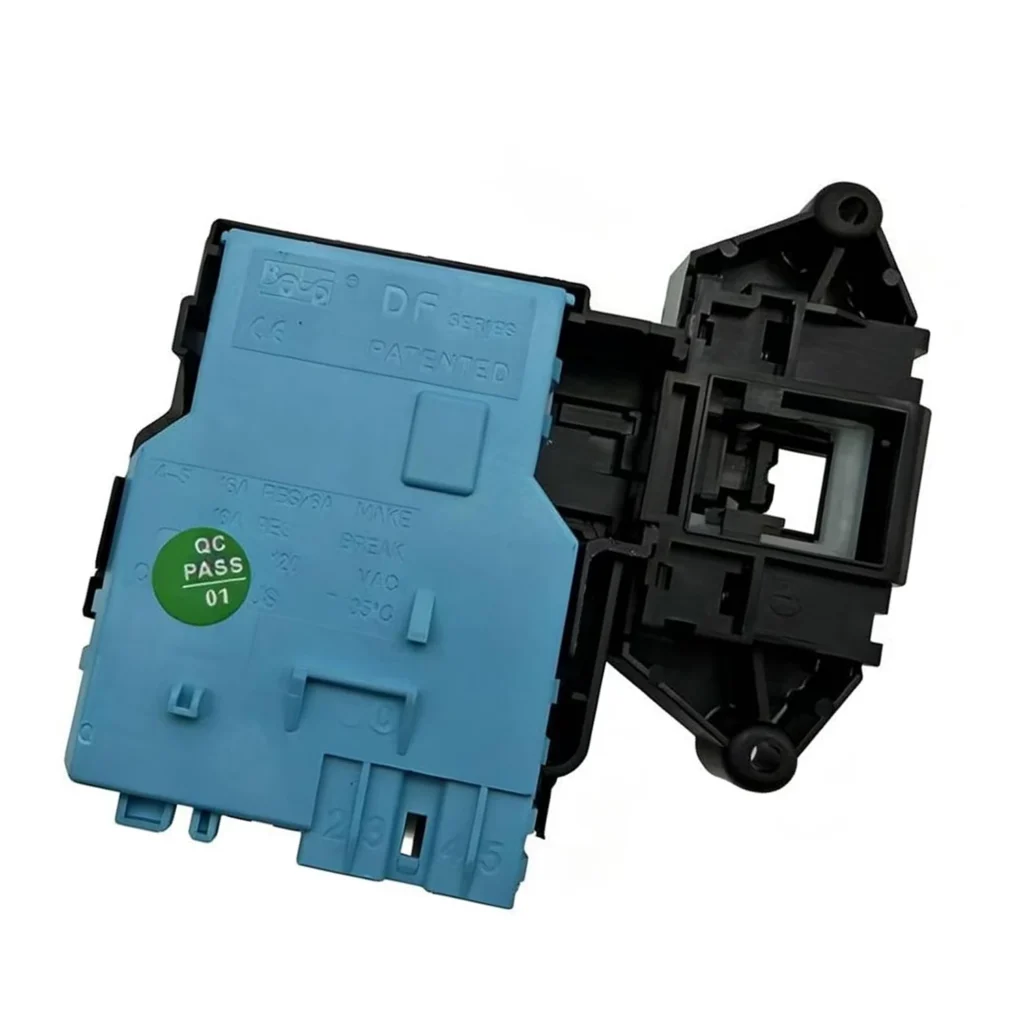
You load the washer, press start, and... nothing. The control panel lights up, but the drum won't budge. Or maybe it's the opposite problem — your LG front-loader finished the cycle two hours ago, but the door's still locked tight and you can't get your clothes out. Either way, you're staring at a door lock interlock assembly that's decided to quit on you.
The EBF49827803 door lock assembly is the gatekeeper for your LG washer. It's a safety device that prevents the door from opening mid-cycle (saving you from a floor full of soapy water) and tells the control board it's safe to start washing. When it fails, your washer becomes an expensive laundry hamper.
This assembly is compatible with dozens of LG models including the WM1480FHD, F1247TD, F1448QDP, WM2240CW, and WM2350HRC. If you've got an LG front-loader manufactured between 2008 and 2018, there's a good chance this is your part.
Quick Symptom Check
Before you start diagnosing, see which symptoms match your situation:
- Door won't unlock after cycle ends — you can hear the lock mechanism, but it stays engaged
- Washer won't start — control panel works, but pressing start does nothing
- "dE" or "dE1" error code — door error displayed on the panel
- Clicking sound when you try to start — lock attempts to engage but fails
- Door feels loose even when closed — latch doesn't catch properly
- Cycle starts but stops after 30 seconds — control board detects lock failure
Cause #1: Burned-Out Lock Mechanism (Most Likely — 60%)
The electrical contacts inside the lock assembly handle 120V every single cycle. After thousands of washes, these contacts wear down or burn out completely. When this happens, the control board can't verify the door is locked, so it refuses to start the cycle.
How to diagnose: Unplug the washer and remove the top panel (two screws at the back). Open the door and locate the lock assembly on the front right side. Unplug the wire harness and use a multimeter set to ohms. Test between the common terminal and the lock terminal — you should see 10-30 ohms. If you see infinite resistance (OL), the lock coil is dead.
The fix: Replace the entire EBF49827803 assembly. The contacts aren't serviceable separately, and attempting to clean them only works temporarily. Budget 30-45 minutes for the replacement. You'll need a T20 Torx driver and a flat-head screwdriver to release the wire harness clips.
Cost breakdown: $35-$55 for the part, $150-$220 if you hire a tech.
Cause #2: Broken Door Strike Plate (20%)
The plastic strike plate on the door itself takes a beating. Every time you close the door, it has to align perfectly with the lock mechanism. If someone slams the door repeatedly or if the door's been pulled open while locked (yes, it happens), the strike plate cracks or the metal hook inside bends.
How to diagnose: Close the door slowly and watch how the strike aligns with the lock. It should slide smoothly into the lock cavity without resistance. If you see the strike hitting the edge of the lock opening, or if the door bounces back when you close it, the alignment is off. Remove the strike plate (two screws) and inspect it for cracks around the mounting holes.
The fix: If just the strike is damaged, you can replace it separately (part of the door assembly). But if the lock mechanism itself isn't catching the strike anymore, you'll need the full EBF49827803 lock assembly. Sometimes both fail together.
Cost breakdown: $15-$25 for strike plate only, $35-$55 if lock also needs replacement.
Cause #3: Failed Thermal Sensor (15%)
Inside the EBF49827803 assembly sits a small thermal sensor that prevents the door from unlocking when the water inside is still hot. This protects you from scalding water flooding out. The sensor is a wax motor device — when it heats up, it expands and keeps the lock engaged for a few extra minutes after the cycle.
How to diagnose: If your door stays locked for 10+ minutes after a hot cycle but unlocks fine after cold cycles, the thermal sensor is likely stuck in the heated position. There's no way to test this without removing the assembly, but the symptom pattern is pretty specific.
The fix: The thermal sensor isn't sold separately from the lock assembly. You need the complete EBF49827803 replacement. Some techs try tapping the lock assembly with a screwdriver handle to free stuck wax motors — it works maybe 20% of the time and only temporarily.
Cause #4: Wiring Harness Corrosion (3%)
The wire connector going to the lock assembly sits low on the washer frame. If you've ever had a leak or if you wash in a humid basement, moisture creeps into that connector. Corrosion builds up on the terminals, creating intermittent contact. You'll get random "dE" errors that sometimes go away if you restart the washer.
How to diagnose: Unplug the washer and disconnect the wire harness from the lock. Look inside both the male and female connectors for green/white corrosion or brown discoloration. Wiggle the connector while it's plugged in (washer still unplugged) — if the terminals feel loose, corrosion has eaten away the metal.
The fix: If corrosion is minor, clean the terminals with electrical contact cleaner and a small wire brush. For heavy corrosion, you'll need to cut the connector off and splice in a new pigtail connector (available from LG or aftermarket suppliers). If the lock terminals themselves are corroded, replace the EBF49827803 assembly.
Cause #5: Control Board Communication Error (2%)
Occasionally, the lock assembly is fine but the main control board loses its ability to communicate with it. This is rare but happens after power surges or if someone's been messing with the washer settings during a cycle.
How to diagnose: If you've tested the lock assembly and it shows proper resistance, if the wiring is clean, and the strike plate aligns perfectly, the control board might be the culprit. Try running a diagnostic cycle (press Spin Speed and Temp buttons simultaneously for 3 seconds) and watch if the lock engages during the test sequence.
The fix: Control board replacement is expensive ($200-$350 for the part alone), so verify everything else first. Sometimes a simple power reset works — unplug the washer for 5 minutes, then plug it back in. This forces the control board to relearn the lock timing.
When to Call a Pro
Replacing the door lock assembly is straightforward if you're comfortable with basic hand tools and following disassembly videos. You'll need to remove the washer's top panel and access the lock from inside the front panel.
Call a tech if:
- You're getting error codes beyond "dE" or "dE1" (could indicate multiple system failures)
- The door physically won't open even after unplugging for 30 minutes (may need manual release procedure)
- You've replaced the lock but still get the same symptoms (control board issue)
- You're uncomfortable working with electrical connections
That said, most door lock failures on LG washers are straightforward. The EBF49827803 assembly is designed for homeowner installation, and you'll save $120-$170 in labor doing it yourself.
Frequently Asked Questions
How do I manually unlock my LG washer door if the lock is stuck?
Locate the small plastic cap at the bottom right of the washer door (near the filter access panel). Pop it off with a flathead screwdriver. Behind it, you'll find an orange or red pull tab. Gently pull it toward you while pushing on the door — this manually releases the lock mechanism. Only works when the washer is unplugged and drained.
Will a bad door lock drain my washer or cause other problems?
No. A failed door lock only prevents the washer from starting or keeps the door locked after a cycle. It won't affect draining, spinning, or any other function. However, if the lock fails mid-cycle, the washer will stop and may not drain automatically. You'll need to run a drain cycle manually or use the emergency drain hose.
Can I use the washer temporarily if the door lock is broken?
Absolutely not. The door lock is a safety interlock — it prevents the drum from spinning at 1000+ RPM with the door open. Even if you could bypass it (don't), running the washer without a functioning lock risks serious injury and will likely trigger constant error codes. Replace the EBF49827803 assembly before using the washer again.
Diagnosed the problem?
EBF49827803 · In Stock · Fast shipping