
Samsung Dishwasher Not Dispensing Detergent — 5 Causes & How to Fix
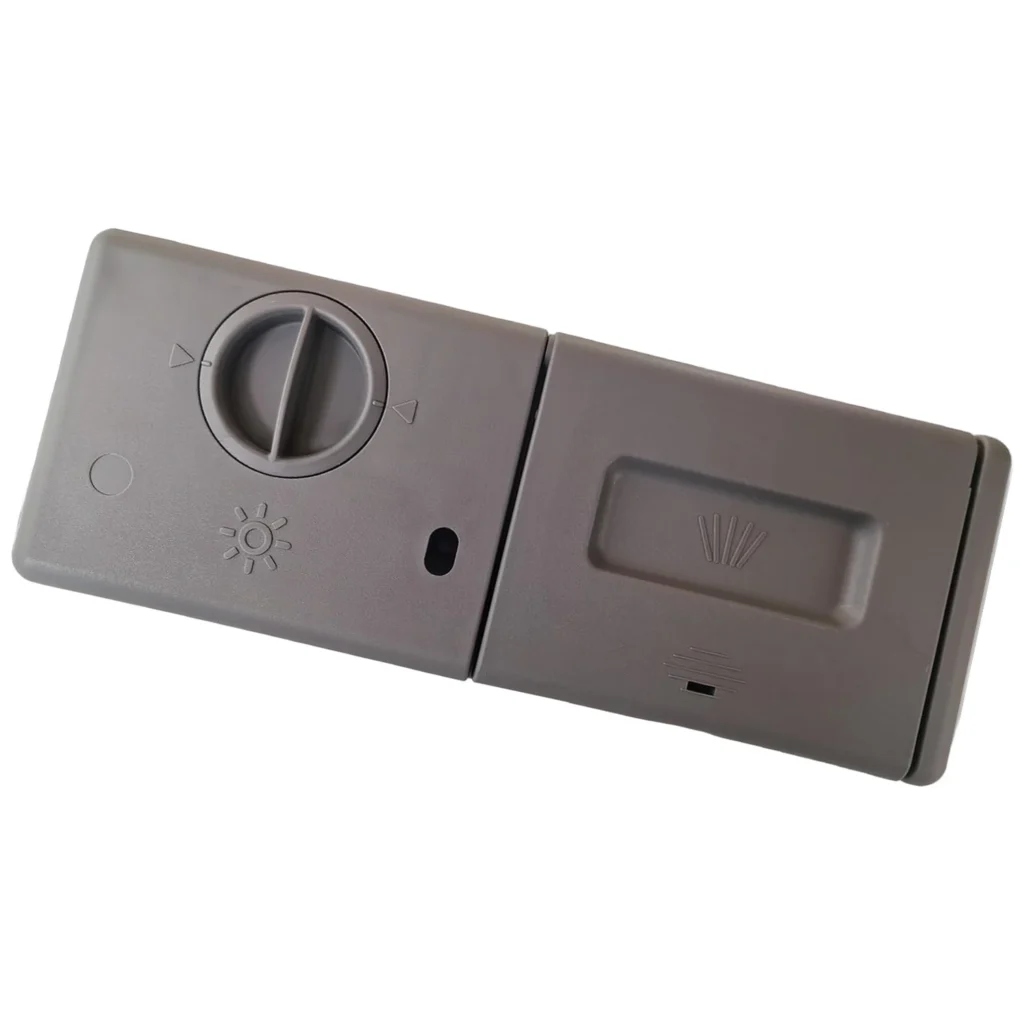
You open your Samsung dishwasher after a full cycle, expecting sparkling clean plates, and instead find the detergent cup still closed with dried soap caked inside. Or worse — the cup's open, but your dishes look like they went through a rinse cycle only.
This detergent dispenser failure is one of the most frustrating dishwasher issues because it's not immediately obvious what's wrong. The machine runs, makes all the right sounds, but skips the most important part — actually washing your dishes.
The DD59-01001A dispenser assembly controls both detergent and rinse aid release in Samsung dishwashers like the DW80F600UTB, DW80J3020US, and DMT800RHS models. When it fails, you'll waste water, detergent, and time rewashing loads.
Quick Symptom Check
Your Samsung dishwasher likely has a dispenser problem if you notice:
- Detergent cup stays closed — the latch never releases during the wash cycle
- Cup opens too early — detergent washes away during the pre-rinse
- Detergent remains in cup — door opens but soap doesn't dissolve or falls out as a clump
- Rinse aid doesn't dispense — glasses come out spotty despite a full rinse aid reservoir
- Dishes aren't actually clean — food residue remains, glasses are cloudy, or everything feels greasy
- Visible damage to dispenser door — cracks, warping, or the spring mechanism looks broken
Cause #1: Broken Dispenser Door Latch or Spring (60% of Cases)
The most common failure point is mechanical. The DD59-01001A assembly includes a spring-loaded door that's supposed to pop open when triggered by a bi-metal actuator. Over time — usually after 3-5 years of daily use — this spring weakens or the plastic latch mechanism cracks.
How to diagnose:
- Cancel any running cycle and open the dishwasher door
- Manually press the detergent cup latch to open it
- Does it spring back firmly when you release it? If it feels loose or doesn't close completely, the spring's worn out
- Look for hairline cracks around the hinge area — they're easy to miss but catastrophic
- Try closing it multiple times — inconsistent action means replacement time
If the door won't stay closed or opens with barely any pressure, the internal spring has fatigued. There's no fix except replacing the entire DD59-01001A assembly.
Probability: 60% | Fix cost: $106 part + 30 minutes labor
Cause #2: Failed Bi-Metal Actuator (20% of Cases)
Even if the door mechanism looks perfect, the actuator that triggers it might be dead. This bi-metal device uses heat from the wash cycle to bend and release the latch. When it fails, the door never gets the signal to open.
How to diagnose:
- Start a normal wash cycle and let it run for 15 minutes
- Pause the cycle and carefully open the door (steam will escape)
- Check if the dispenser cup is still closed — it should've opened by now
- Feel if the area around the dispenser is warm — if it's cold, the actuator isn't heating
- The actuator is integrated into the DD59-01001A assembly, so you can't test it separately
Unlike a broken latch you can see, actuator failure is invisible. The mechanism looks fine, but nothing happens during the cycle. This is why technicians often replace the entire assembly rather than troubleshooting individual components.
Probability: 20% | Fix cost: $106 part
Cause #3: Detergent Buildup or Rinse Aid Residue (10% of Cases)
Sometimes it's not mechanical failure — it's just crusty buildup preventing the door from opening. Powdered detergent can harden in the cup, or rinse aid can leave a sticky film that gums up the works.
How to diagnose:
- Remove any detergent from the cup
- Inspect inside the cup and around the door seal — look for white powder residue or sticky film
- Check the rinse aid compartment for leaks or overflow
- Manually open and close the door — does it feel sticky or resistant?
The fix:
- Mix equal parts white vinegar and warm water
- Use an old toothbrush to scrub all surfaces of the dispenser cup and door
- Pay special attention to the hinge and latch areas
- Rinse thoroughly with clean water
- Run an empty cycle with vinegar in the bottom of the tub to flush the system
Switch to liquid detergent or tablet pods if you've been using powder — they dissolve more completely and cause less buildup. If cleaning doesn't restore function, the buildup may have damaged the mechanism permanently.
Probability: 10% | Fix cost: $0
Cause #4: Wiring Harness or Control Board Issue (7% of Cases)
The dispenser gets its open signal from the main control board through a wiring harness. If those connections corrode or the board fails, the dispenser never receives the trigger — even if it's mechanically perfect.
How to diagnose:
- Unplug the dishwasher from power
- Remove the front panel to access the dispenser (usually 4-6 screws)
- Locate the wiring harness connected to the dispenser assembly
- Inspect the connector for corrosion, loose pins, or burn marks
- Check if the wires are damaged or have been chewed by rodents (yes, it happens)
You can test continuity with a multimeter if you're comfortable with electrical work, but most homeowners will want a technician for this diagnosis. If the harness looks damaged, you might only need a $15 connector repair. If it's the control board, you're looking at $200-400 in parts.
Probability: 7% | Fix cost: $15-400
Cause #5: Wrong Detergent Type or Overloading (3% of Cases)
Not a failure, but operator error. Some detergent tablets are too large for Samsung's dispenser cup design, especially in older models like the DW7933LRASR. The door opens, but the tablet gets wedged and doesn't fall out into the wash tub.
How to diagnose:
- If you're using tablets or pods, check their size against the dispenser cup
- Do they fit loosely with room to spare, or are they jammed in tight?
- Try switching brands to a smaller tablet format
- Make sure you're not overfilling powder detergent past the fill line
Also check your loading technique — tall items or large pots positioned directly in front of the dispenser can physically block the door from opening. Reposition your dish rack and run a test cycle.
Probability: 3% | Fix cost: $0
When to Call a Pro
Replacing the DD59-01001A dispenser assembly is genuinely straightforward — it's usually just 2-3 screws and a wiring connector. Most DIYers can handle it in 30 minutes with basic tools.
Call a technician if:
- You've replaced the dispenser but it still doesn't work (points to control board failure)
- You're not comfortable working with electrical connections
- The dishwasher is still under warranty — DIY repairs might void coverage
- You see any signs of water damage behind the front panel
Professional diagnosis typically costs $75-125, and most techs will credit that toward the repair if you proceed.
Frequently Asked Questions
Can I just throw detergent in the bottom of the dishwasher instead of using the dispenser?
You can, but you shouldn't make it a habit. The detergent will wash away during the pre-rinse cycle, so your main wash happens with plain water. You'll get poor cleaning results and wasted detergent. It's a temporary workaround while waiting for the DD59-01001A replacement part to arrive, not a permanent solution.
Will the DD59-01001A fit my specific Samsung dishwasher model?
This assembly is compatible with dozens of Samsung models including DW80F600UTB, DW80F600UTS, DW80F600UTW, DW80F800UWS, DW80J3020UB, DW80J3020US, DW80J3020UW, DW7933LRASR, DW7933LRAWW, DW7933LRABB, DMT800RHS, DMT800RHB, DMT800RHW, DMT400RHS, DMT400RHB, and DMT400RHW models. Check your dishwasher's model number (usually on a sticker inside the door frame) against the compatibility list before ordering.
Why does my rinse aid keep leaking from the dispenser?
The DD59-01001A assembly includes both detergent and rinse aid dispensing mechanisms. If rinse aid is leaking, the internal seal has likely failed — it's part of the same assembly. You can't replace just the rinse aid seal; you need the complete DD59-01001A unit. Leaking rinse aid also causes that sticky residue that can prevent the detergent door from opening properly, so it's actually creating two problems at once.
Diagnosed the problem?
DD59-01001A · In Stock · Fast shipping