
Samsung Washer Shaking Violently or Walking Across Floor — 5 Causes & How to Fix
You're washing a load of towels when your Samsung washer starts bouncing like it's trying to escape. The whole machine's walking across the laundry room floor, making sounds you didn't think were physically possible. That rhythmic banging isn't normal — and it's usually telling you that your suspension system is shot.
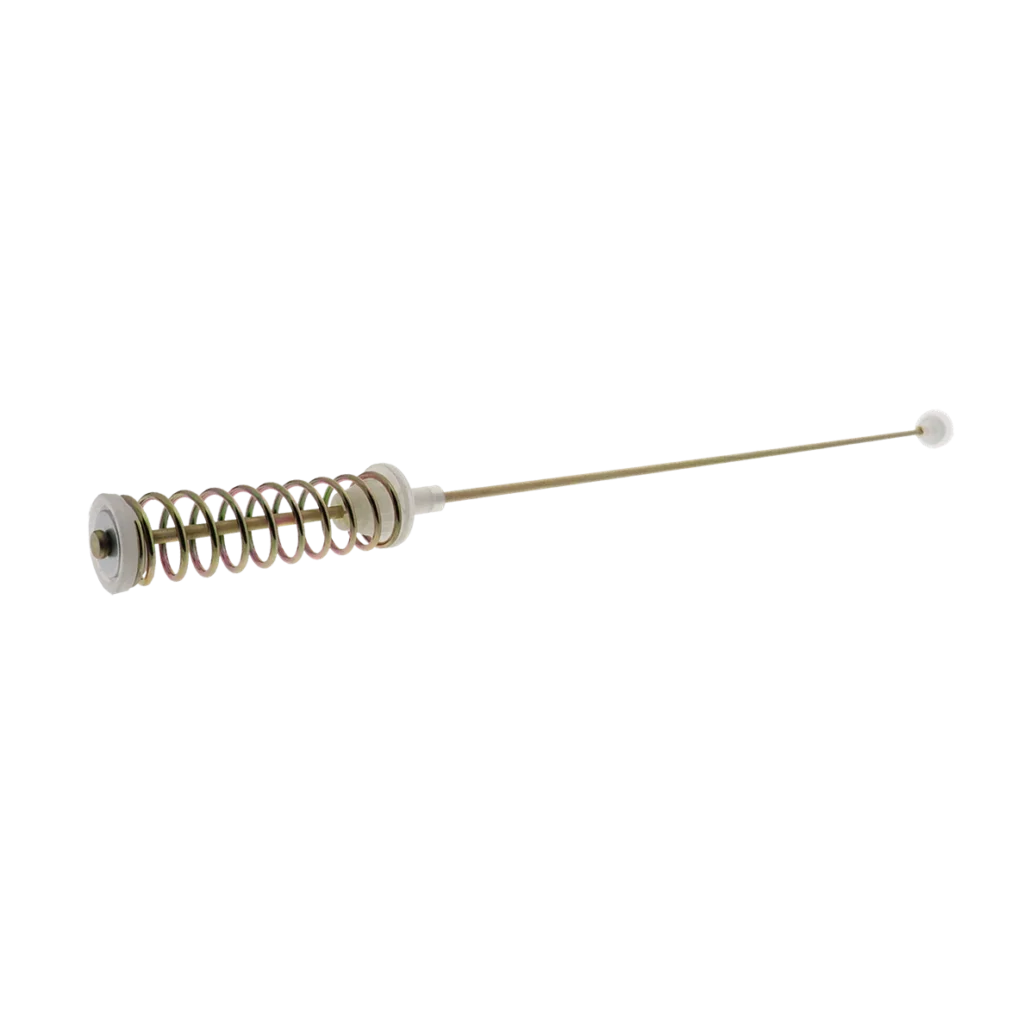
The DC97-16350E suspension rod assembly is what keeps your Samsung top-load washer stable during the spin cycle. When these rods wear out (and they do, especially on models from 2014-2020), your washer loses its ability to absorb the drum movement. Let's figure out what's causing the chaos.
Quick Symptom Check
Your washer's trying to tell you something's wrong. Here's what to watch for:
- Severe shaking during spin cycle — machine moves several inches across the floor
- Loud banging or clunking sounds — especially when transitioning to high-speed spin
- Drum tilting to one side — visible lean when you look at the tub
- Error codes UE or UB — unbalanced load errors that persist even with small loads
- Washer stops mid-cycle — safety sensor kicks in due to excessive movement
Cause #1: Worn or Broken Suspension Rods (Most Likely — 65%)
The suspension rods do the heavy lifting — literally. Each of your Samsung's four suspension rods (part DC97-16350E) connects the drum to the washer cabinet, absorbing the violent forces during spin cycles. After thousands of loads, the internal dampening mechanism wears out.
How to diagnose:
- Unplug the washer and pull it away from the wall
- Remove the top panel (usually two screws at the back corners)
- Look at each of the four suspension rods connecting to the drum
- Check for visible cracks, bent rods, or separation at connection points
- Push down on the drum — it should have firm resistance and bounce back smoothly
If the drum feels loose or drops too easily, your suspension rods are done. This is especially common on these Samsung models: WA456DRHDWR/AA, WA45H7000AW/A2, WA50R5400AW/US, and WA45T3200AW/A4.
The fix: Replace all four suspension rods at once — even if only one looks bad. They wear at similar rates, and mixing old with new creates uneven support. The DC97-16350E assembly runs about $12 per rod. Budget 45-60 minutes for the job if you're comfortable with basic tools.
Cause #2: Leveling Legs Out of Adjustment (20%)
Before you blame the suspension system, check the basics. If your washer isn't level, even perfect suspension rods can't compensate for a tilted foundation.
How to diagnose:
- Place a bubble level on top of the washer, front to back
- Rotate it 90 degrees and check side to side
- Look at each of the four leveling legs — they should all contact the floor firmly
- Check if the floor itself is level (older homes often aren't)
Your washer needs to be level within 1 degree. Any more tilt and the drum's natural rotation creates an imbalance that suspension rods can't handle.
The fix: Adjust the leveling legs by turning them clockwise to lower, counterclockwise to raise. Once level, tighten the lock nuts against the washer base. On models with self-leveling rear legs, you only need to adjust the front two legs, then tip the washer forward slightly to let the rear legs auto-adjust.
Cause #3: Broken Shock Absorbers (10%)
Some Samsung models use shock absorbers in addition to suspension rods. These are typically mounted at the bottom of the tub and work with the rods to dampen movement. They're less common failure points, but when they go, the symptoms are dramatic.
How to diagnose:
- Tilt the washer back and look underneath
- Locate the shock absorbers (if your model has them) — they look like car shocks
- Check for fluid leaks, which indicate a blown seal
- Test by compressing the shock manually — it should have firm, consistent resistance
Models like the WA456DRHDSU/AA and WA45H7200AW/A2 use both rods and shocks. If you've got leaking shocks, that's your problem.
Cause #4: Worn Drum Bearings (3%)
If you hear a grinding noise along with the shaking, your drum bearings might be failing. This is less common but more expensive to fix.
How to diagnose:
- Open the washer lid and manually rotate the drum
- Listen for grinding, scraping, or rumbling sounds
- Check for excessive play — grab the drum and try to move it up and down
- Look for rust stains on the drum exterior (indicates water's gotten to the bearings)
Bearing replacement on these Samsung top-loaders is a major job. You're looking at $200-300 in parts and 3-4 hours of labor if you DIY it.
Cause #5: Loose or Broken Mounting Hardware (2%)
Sometimes the suspension rods are fine, but the brackets they connect to have loosened or cracked. This is especially common if someone's moved the washer roughly or it's been shaking for months without repair.
How to diagnose:
- Inspect where each suspension rod connects to the cabinet
- Look for cracked plastic mounting brackets
- Check if mounting bolts have loosened (common on models WA50R5200AW/US and WA45N3050AW/A4)
- Wiggle each connection point — there should be zero play
Tighten any loose bolts to manufacturer specs. Replace cracked brackets — they're usually available as separate parts.
When to Call a Pro
Suspension rod replacement is a solid DIY project if you're mechanically inclined. But call a tech if:
- You're diagnosing bearing failure — that's a complex repair requiring drum removal
- The washer's still under warranty (don't void it)
- You find structural damage to the cabinet or tub
- Multiple error codes appear beyond just UE/UB
A pro charges $150-250 for suspension rod replacement, including parts. If you're paying that, have them inspect the shocks and bearings while they're in there.
Frequently Asked Questions
Can I replace just one suspension rod instead of all four?
You can, but you shouldn't. Suspension rods wear at similar rates since they all handle the same load cycles. Installing one new rod alongside three worn ones creates uneven support, which means your washer will still shake — just differently. Replace all four DC97-16350E rods as a set for $48 total and save yourself from doing this job twice.
Why does my Samsung washer shake only with certain loads?
Heavy items like comforters or towels create more centrifugal force during spin cycles, which exposes worn suspension components. If your washer handles small loads fine but goes crazy with large ones, your suspension rods are partially worn — they can't handle peak stress anymore. It'll get progressively worse until they fail completely.
How long do Samsung washer suspension rods typically last?
Expect 5-7 years with normal use, which translates to roughly 2,000-3,000 wash cycles. If you regularly wash heavy loads (like bedding or work clothes), they'll wear faster. Models from 2014-2017 (like the WA456 and WA45H series) seem to have higher failure rates around the 5-year mark based on service patterns.
Diagnosed the problem?
DC97-16350E · In Stock · Fast shipping