
Samsung Washer Won't Fill or Overfills — 5 Causes & How to Fix
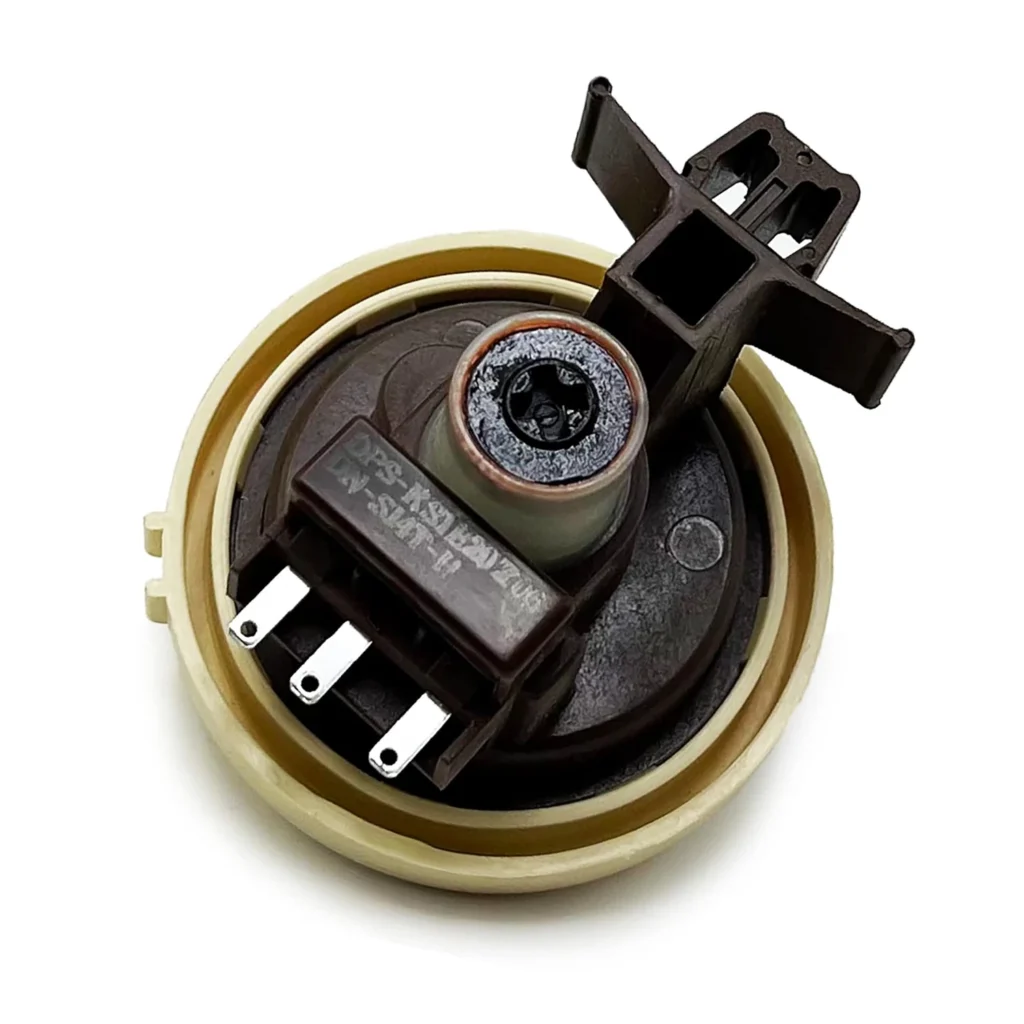
You start a load of laundry, walk away, and come back 20 minutes later to find your Samsung washer sitting there with barely an inch of water at the bottom. Or worse — you hear it running and running, and suddenly water's creeping toward the top of the drum. Both problems point to the same component: the water level pressure switch.
This little switch (part DC96-01703B) tells your washer's control board exactly how much water is in the tub. When it fails, your washer either can't detect water at all or thinks the tub is empty when it's actually full. It's a common failure point on Samsung front-loaders from the WF209ANW through the WF457 series.
Quick Symptom Check
Your pressure switch is likely failing if you notice:
- Washer won't fill at all — cycle starts but no water enters, or fills for 2-3 seconds then stops
- Underfilling — barely covers the bottom of the drum, clothes stay dry on top
- Overfilling — water keeps coming even after drum is full, doesn't advance to wash cycle
- 4E or 4C error code — Samsung's "water supply" error, even though your valves are open
- Runs forever without starting — stuck in fill mode, timer doesn't advance
Cause #1: Failed Pressure Switch Diaphragm (Most Likely — 60%)
The DC96-01703B switch contains a small rubber diaphragm that flexes as water pressure increases in the tub. Over time — usually 5-8 years — this diaphragm cracks, tears, or becomes stiff. When that happens, the switch can't accurately sense water level changes.
How to diagnose: Unplug the washer and remove the top panel (two screws at the back). The pressure switch is mounted on the right side, about 6 inches from the front. It's a round plastic component about 2 inches in diameter with a clear or gray air tube attached. Gently blow into the tube — you should hear a distinct click as the switch activates. No click? The diaphragm's shot.
The fix: Replace the entire switch assembly. The diaphragm isn't sold separately. This repair runs $73.99 for the part and takes about 20 minutes if you're comfortable with basic tools.
Why this happens: Detergent residue and humidity work their way into the switch housing over years of use. The rubber gets brittle and eventually fails.
Cause #2: Clogged or Kinked Air Tube (25%)
The pressure switch doesn't actually touch water. Instead, it connects to a small air tube that runs down to the bottom of the outer tub. As water fills, air pressure builds in this tube and triggers the switch. If the tube gets clogged with lint, detergent gunk, or gets pinched during a previous repair, the switch never receives the pressure signal.
How to diagnose: Follow the clear tube from the pressure switch down to where it connects at the bottom of the tub (you'll need to pull the washer out and tip it back slightly). Disconnect both ends and blow through it. Air should pass freely. Look for soap buildup, lint clogs, or any kinks in the tubing.
The fix: If clogged, flush the tube with warm water and a little vinegar. If kinked, you can try to reshape it, but replacement tubing is cheap ($5-10) and a better long-term fix. Make sure when you reinstall everything that the tube has a clear path with no sharp bends.
Prevention tip: Use HE detergent only, and use less than you think you need. Excess suds contribute to residue buildup throughout the system.
Cause #3: Corroded Switch Contacts (10%)
Inside the pressure switch are small metal contacts that complete an electrical circuit when the diaphragm moves. These contacts can corrode — especially in humid laundry rooms or if the washer has experienced any flooding or leak issues.
How to diagnose: With the washer unplugged, disconnect the wire harness from the pressure switch. Use a multimeter set to continuity mode. Test between the common terminal and each of the other terminals while manually triggering the switch (blow into the air tube). You should see continuity change as the switch clicks. Erratic readings or no change means corroded contacts.
The fix: You can't clean these contacts reliably — the switch is sealed. Replacement is the only real solution. The DC96-01703B runs $73.99 and fits dozens of Samsung models including the WF330ANW, WF337AAL, and WF350ANR series.
Cause #4: Faulty Control Board Reading (3%)
Occasionally, the pressure switch itself is fine, but the main control board misinterprets the signal. This is rare but worth mentioning because it'll drive you crazy replacing switches that aren't actually broken.
How to diagnose: If you've verified the switch clicks properly, the air tube is clear, and you're still getting fill errors, the control board may be the culprit. This typically comes with other weird symptoms — error codes that don't match the problem, cycles that start and stop randomly, or the display acting erratically.
The fix: Control board replacement is expensive ($200-400) and complex. Before going there, try a hard reset: unplug the washer for 5 minutes, then plug it back in. Sometimes the board just needs to clear its memory.
Cause #5: Mechanical Obstruction in Tub Pressure Port (2%)
Where the air tube connects to the outer tub, there's a small port that can get blocked by fabric fibers, coins, or hardened detergent. It's uncommon but worth checking if everything else tests good.
How to diagnose: You'll need to access the bottom of the outer tub (tip the washer back). Find where the air tube connects — it's usually a small barbed fitting. Disconnect it and shine a flashlight into the port opening. Look for any obstructions.
The fix: Use a small piece of wire or a pipe cleaner to carefully clear any blockage. Don't push debris deeper into the tub — pull it out. Flush with water if needed.
When to Call a Pro
This is honestly a good DIY repair if you're comfortable pulling panels off and have basic hand tools. The pressure switch is accessible, and replacement is straightforward on most Samsung models. Call a technician if:
- You've replaced the switch and cleared the air tube, but symptoms persist (likely a control board issue)
- You're not comfortable working with the washer tipped back (required to access the air tube connection)
- Your washer is still under warranty — don't void it for a $74 part
Labor for this repair typically runs $150-220 if you hire it out, so DIY saves you about half.
Frequently Asked Questions
Can I bypass the pressure switch to test if it's bad?
Not safely. Bypassing the switch will cause the washer to overfill, potentially flooding your laundry room. The proper test is to remove the switch, blow into the air tube, and listen for the click. If it clicks, test continuity with a multimeter. If it passes both tests, the switch is probably fine — look elsewhere.
Why does my Samsung washer work sometimes but not others?
Intermittent fill problems usually mean the pressure switch diaphragm is on its way out but hasn't completely failed yet. Temperature and humidity affect how the rubber flexes, so it might work fine on a dry day and fail when it's humid. Replace it before it leaves you with a tub full of wet clothes that won't drain because the cycle never started properly.
Will using the wrong detergent cause this problem?
Indirectly, yes. Non-HE detergent creates excess suds that leave residue throughout the water system, including the air tube and pressure port. Over years, this buildup can clog the tube or coat the switch diaphragm, leading to failure. Stick with HE detergent and use about half what the bottle recommends — these washers need way less soap than you think.
Diagnosed the problem?
DC96-01703B · In Stock · Fast shipping