
Samsung Refrigerator Not Cooling in Freezer — 5 Causes & How to Fix
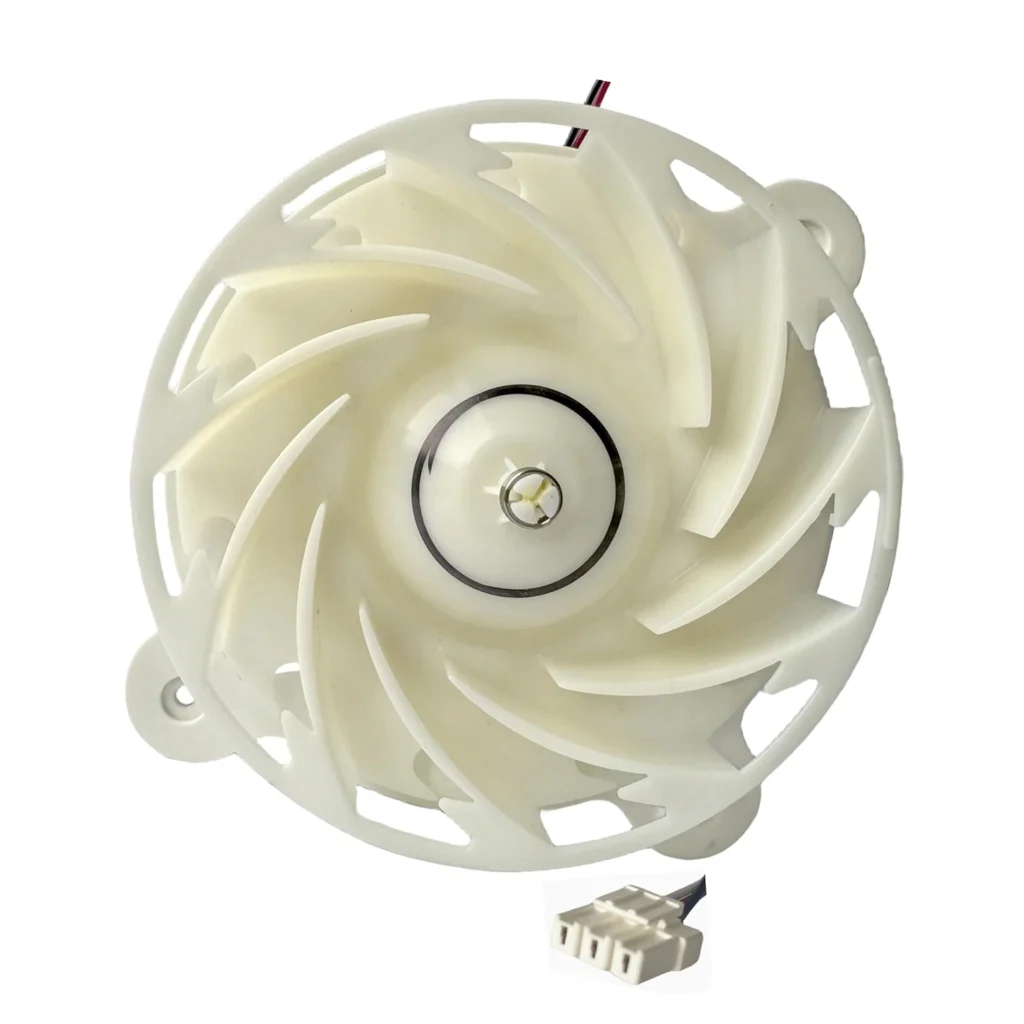
You walk up to your Samsung RS27T5200SR, grab the freezer handle, and immediately know something's wrong. Ice cream's soft. The ice maker stopped days ago. Your hand touches the back wall—it's barely cold. Meanwhile, the fridge section below is working fine, milk's cold, vegetables are crisp. That temperature split? It's almost always pointing to one component: the evaporator fan motor.
The DA31-00342A evaporator fan is what moves cold air from the freezer coils through both compartments. When it fails, your freezer becomes a slow-motion disaster while your fresh food section keeps chugging along on residual cooling. Let's diagnose this systematically.
Quick Symptom Check
Your Samsung is telling you the evaporator fan motor has failed if you're seeing:
- Freezer temperature climbing to 20-35°F (should be 0-5°F)
- Fridge section still somewhat cold but warmer than normal
- No air blowing from vents inside freezer compartment
- Ice buildup on back wall of freezer (frost pattern)
- Compressor running constantly trying to compensate
- Unusual sounds—grinding, squealing, or complete silence where you used to hear airflow
Before you do anything else: open the freezer door and listen carefully near the back panel. On models like the RS27T5200SG, RS22T5201SR, and RS27T5561SR, you should hear a steady fan hum within 30 seconds of closing the door. Nothing? Keep reading.
Cause #1: Evaporator Fan Motor Failure (70% of Cases)
Probability: Very High
The DA31-00342A fan motor itself burns out after 5-8 years of constant operation. The bearings seize, the windings fail, or the blade catches on ice buildup and the motor gives up. This is the most common failure point in Samsung side-by-side and French door models from 2018-2023.
How to diagnose: Remove the freezer contents and unscrew the back panel inside the freezer (usually 4-6 Phillips screws). You'll expose the evaporator coils and the fan assembly. Try spinning the fan blade by hand—if it doesn't turn freely or feels gritty, the motor bearings are shot. Use a multimeter to test continuity across the motor terminals (should read 100-300 ohms). No continuity? Motor's dead.
The fix: Replace the DA31-00342A motor assembly. It's a direct plug-in replacement—disconnect the wire harness, remove the mounting screws, swap the new motor in. Takes 20-30 minutes once you have the panel off. Cost: $120.99 for OEM-quality replacement.
Cause #2: Ice Buildup Blocking Fan Blade (15% of Cases)
Probability: Moderate
If your defrost system is malfunctioning (bad defrost heater, defrost thermostat, or control board), ice accumulates on the evaporator coils and eventually locks the fan blade in place. The motor tries to run, can't spin, and either burns out or trips a thermal protector.
How to diagnose: With the back panel removed, look for excessive ice coating the coils and fan blade. A thin frost layer is normal after a cooling cycle; a solid ice block isn't. If the motor tests good electrically but the blade won't spin due to ice, this is your problem.
The fix: Force defrost the system (unplug for 6-8 hours, towels on the floor), then address the defrost system failure—usually the defrost heater or thermostat. If you've got ice buildup AND a failed fan motor, you'll need to replace both components and fix the defrost issue to prevent recurrence.
Cause #3: Wiring Harness Damage or Loose Connection (8% of Cases)
Probability: Low to Moderate
The wire connector feeding power to the evaporator fan can corrode, come loose from vibration, or get damaged by ice. On RS27T and RS22T series models, this connector is behind the evaporator cover and exposed to temperature swings and moisture.
How to diagnose: Inspect the wire harness connector at the fan motor. Look for frost damage, corrosion on the pins, or a loose fit. Wiggle the connector while someone listens—if the fan momentarily starts, you've found the issue. Check for voltage at the connector with the door closed (should read 120V AC when compressor is running).
The fix: Clean corroded connections with electrical contact cleaner. If the connector itself is damaged, you'll need to either replace the harness section or hardwire a new connector. Not a beginner fix, but an experienced DIYer can handle it.
Cause #4: Main Control Board Fan Relay Failure (5% of Cases)
Probability: Low
The main control board sends power to the evaporator fan motor via a relay. If that relay fails stuck-open, the fan never receives power even though the motor itself is fine. This is rare but happens on units that have experienced power surges.
How to diagnose: If the motor tests good, spins freely, and the wiring is intact but you're not getting voltage to the motor connector, suspect the control board. You can test by running a jumper wire directly from a power source to the motor (with the fridge unplugged for safety prep)—if the motor runs, the board's the culprit.
The fix: Main control board replacement. This is a $200-400 part plus labor, so triple-check your diagnosis first. Boards are located behind the control panel on the front (French door models) or behind the fridge section on side-by-sides.
Cause #5: Fan Blade Obstruction from Food Packaging (2% of Cases)
Probability: Very Low (But Easy to Check)
Sometimes a piece of plastic wrap, a grocery bag fragment, or an ice chunk gets sucked into the fan compartment and jams the blade. The motor hums, tries to spin, and eventually the thermal protector shuts it down.
How to diagnose: Visual inspection with the evaporator cover removed. You'll see the obstruction immediately if it's present.
The fix: Remove the debris, confirm the motor still works. If the motor burned out trying to fight the obstruction, you'll still need the DA31-00342A replacement.
When to Call a Pro
This repair is DIY-friendly if you're comfortable with basic tools and can safely work around electrical components. The evaporator panel removal is straightforward on Samsung models—no refrigerant lines to worry about, no compressor work. However, call a tech if:
- You're not comfortable testing electrical components with a multimeter
- You discover refrigerant leaks (oily residue, hissing sounds)
- The control board needs replacement and you're unsure about wire routing
- Your unit is still under warranty (DIY repair may void it)
Professional diagnostic fee runs $100-150; full evaporator fan motor replacement typically costs $250-350 including labor. The DA31-00342A part itself is $120.99, so you're paying $130-230 for 45 minutes of work if you hire out.
Frequently Asked Questions
How long does the DA31-00342A evaporator fan motor last?
Typically 5-8 years under normal operating conditions. Units in hot garages, constantly opened doors, or homes with voltage fluctuations may see shorter lifespan. The motor runs almost continuously when the compressor is on, so it's a wear item.
Can I run my Samsung refrigerator with a failed evaporator fan temporarily?
Not recommended beyond 24-48 hours. Without airflow, the freezer won't maintain safe food storage temperature (0°F), and the fridge section will slowly warm as cold air isn't circulating. You'll also stress the compressor, which runs nonstop trying to compensate. Move perishables to a cooler with ice and fix it ASAP.
Is the DA31-00342A compatible with my specific RS27T or RS22T model number?
This motor fits Samsung side-by-side and French door models from roughly 2018-2023, including RS27T5200SG, RS27T5200SR, RS27T5201SR, RS27T5561SG, RS27T5561SR, RS22T5201SR, and RS22T5561SR series (all dash number variations). Always verify your model number against the compatibility list—Samsung used this motor across dozens of configurations, but there are exceptions in earlier and later production years.
Diagnosed the problem?
DA31-00342A · In Stock · Fast shipping