
Samsung Refrigerator Temperature Imbalance — 5 Causes & How to Fix
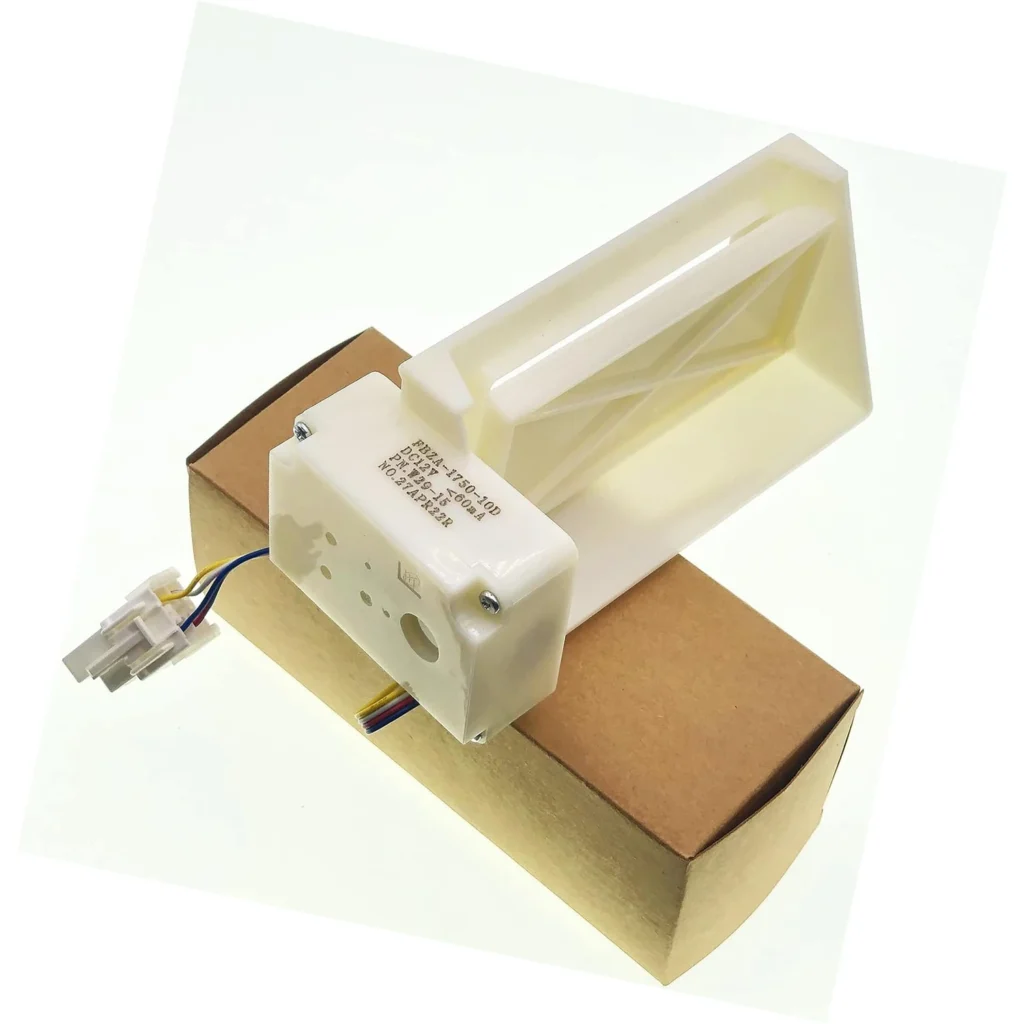
Your Samsung fridge is running, the compressor sounds fine, but the freezer's rock-solid at -5°F while the fresh food section is sitting at 45°F. You've got groceries going bad and ice cream that could double as a brick. This temperature split—where one compartment works perfectly while the other doesn't—points directly to airflow problems, and the DA31-00043F air damper assembly is usually the culprit.
The air damper is your fridge's traffic controller. It opens and closes to allow cold air from the freezer into the fresh food section, maintaining that perfect 37°F in your fridge while keeping the freezer at 0°F. When it fails, you lose that balance completely.
Quick Symptom Check
Before you start diagnosing, verify you're dealing with a damper issue:
- Freezer works perfectly, fridge too warm — Classic damper stuck closed
- Fridge too cold, items freezing — Damper stuck open or control failure
- Temperature fluctuates wildly — Damper opening/closing erratically
- Ice buildup around damper housing — Seal failure allowing moisture in
- Clicking or buzzing from upper fridge area — Motor trying to move but damper jammed
This part is compatible with over 200 Samsung models including the RF series (RF220DCTAS8, RF220NCTABC, RF27T5501SR), RB series (RB10FSR4ESR, RB12A300631, RB33A307001), and French door models like the RFG297HDRS.
Cause #1: Damper Motor Failure (65% of Cases)
The small motor that opens and closes the damper blade runs constantly throughout the day. After 5-7 years, these motors burn out—usually stuck in whatever position they were in when they died.
How to diagnose:
- Locate the damper assembly—it's typically in the upper back wall of the fresh food section
- Remove the cover panel (usually held by 2-3 screws)
- Listen closely when the compressor is running—you should hear a faint motor sound every few minutes
- Manually try to rotate the damper blade—if it moves freely but you hear no motor sound, the motor's dead
- Check for 12V DC power at the damper connector using a multimeter
The fix: Replace the entire DA31-00043F assembly. The motor isn't sold separately, and attempting to repair it isn't cost-effective. Budget 30-45 minutes for replacement.
Cause #2: Frozen Damper Blade (20% of Cases)
Ice buildup prevents the blade from moving even when the motor's working fine. This happens when humid air reaches the cold damper housing, usually from a degraded door gasket or someone leaving the door open too long.
How to diagnose:
- Remove the damper cover
- Look for ice crystals or frost around the blade mechanism
- Try to manually move the blade—if it's stuck or moves with resistance, ice is the problem
The temporary fix: Defrost the fridge completely (24 hours unplugged with doors open). If the damper works after defrosting but freezes again within days, you've got a humidity problem—check door gaskets first, then look at the defrost system.
The permanent fix: If ice keeps returning, the damper seals are compromised. Replace the DA31-00043F assembly and inspect door gaskets.
Cause #3: Broken Damper Blade or Linkage (8% of Cases)
The plastic blade or its connecting linkage can crack from repeated temperature cycles. You'll hear the motor running, but the blade doesn't move because the mechanical connection is broken.
How to diagnose:
- Remove the damper cover
- Watch the damper while someone changes the temperature setting
- Listen for motor sound—if you hear it but see no movement, something's broken
- Inspect the blade edges and pivot points for cracks (use a flashlight)
The fix: Complete assembly replacement. Individual components aren't available, and plastic welding never holds up in freezing temperatures.
Cause #4: Control Board Communication Failure (5% of Cases)
The damper receives signals from the main control board telling it when to open and close. If that communication breaks down—loose connector, corroded pins, or board failure—the damper won't respond even though it's mechanically fine.
How to diagnose:
- Unplug the damper connector
- Inspect pins for corrosion or bent contacts
- Check for 12V DC power at the connector when the fridge calls for cooling
- Reconnect and wiggle the harness—if the damper suddenly works, you've got a loose connection
The fix: If the connector's corroded, replace the damper assembly (it includes a new connector). If the wiring harness is damaged, you'll need to trace it back to the control board—this is when you might want a technician.
Cause #5: Sensor Failure Sending Wrong Commands (2% of Cases)
The fresh food thermistor tells the control board what temperature the compartment is at, which determines damper operation. A failed sensor sends bogus readings, so the board opens or closes the damper at the wrong times.
How to diagnose:
- Locate the thermistor (usually clipped near the damper or on the back wall)
- Disconnect it and measure resistance with a multimeter
- At 32°F, it should read approximately 16,600 ohms (check your model's service manual)
- If it reads open (infinite ohms) or significantly off, it's failed
The fix: Replace the thermistor (different part, usually $15-30). If that doesn't solve it and the damper itself tests good, you're looking at a control board issue—that's a $200-400 job.
When to Call a Pro
Most damper replacements are straightforward DIY jobs—you're removing screws, unplugging a connector, and reversing the process. Call a technician if:
- You've replaced the damper but still have temperature problems (points to control board or sealed system)
- You're not comfortable working with the fridge plugged in (some testing requires power)
- Your model requires extensive disassembly to access the damper (some built-in units)
- You see refrigerant oil around the evaporator coils (sealed system leak, different issue entirely)
A service call for damper diagnosis and replacement typically runs $200-350 including parts. The DA31-00043F assembly alone is $145.99, so you're paying $55-200 for labor and expertise.
Frequently Asked Questions
Can I test the damper motor without removing it?
Partially. You can listen for motor operation and check for power at the connector, but you can't see if the blade is actually moving without removing the cover panel. Ice buildup or mechanical failure might let the motor run while accomplishing nothing. Visual inspection is essential for accurate diagnosis.
Why does my fridge work fine for a few days after defrosting then fail again?
You've got a moisture infiltration problem, not a damper problem. The damper works when ice-free but freezes up again when humid air reaches it. Check door gaskets first—they're the most common moisture source. Also inspect the defrost drain tube; if it's clogged, water backs up and creates humidity. The damper might need replacement eventually, but fix the moisture source first or you'll be in the same situation in two weeks.
Will a failed damper damage other refrigerator components?
Indirectly, yes. When the damper fails closed and the fresh food section warms up, the compressor runs longer trying to compensate—which it can't do since cold air isn't getting where it needs to go. This extended runtime shortens compressor life and increases your electric bill. A damper stuck open causes the fridge to over-cool, potentially freezing the evaporator coil solid and triggering defrost system problems. Replace a failed damper promptly to avoid these cascade failures.
Diagnosed the problem?
DA31-00043F · In Stock · Fast shipping