
LG Washer Not Filling with Cold Water — 5 Causes & How to Fix
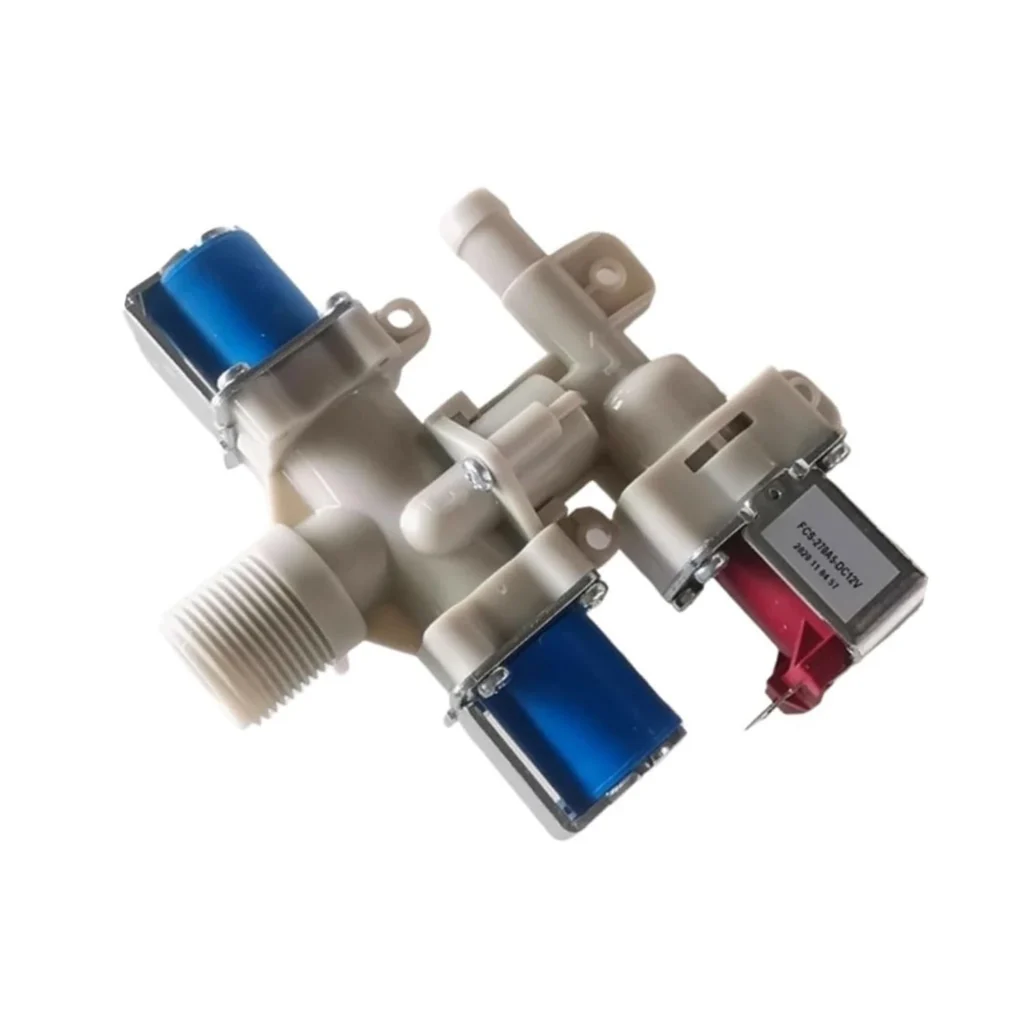
You start a load of laundry, walk away, and come back 20 minutes later to find your LG top loader sitting there with barely any water in the tub. The machine's running, you hear it humming, but the drum's practically dry. If only hot water's coming in — or nothing at all — your cold water inlet valve is the prime suspect.
The AJU72911001 water inlet valve controls cold water flow into LG top load washers like the WT-H550 and WTG6534W series. When it fails, you'll notice partial fills, extended cycle times, or cycles that never start because the washer's waiting for water that never comes.
Quick Symptom Check
Before you grab tools, confirm what you're seeing:
- No cold water enters the drum — hot works fine, but cold inlet stays dry
- Very slow fill on cold cycles — takes 10+ minutes to reach proper level
- Washer stops mid-cycle with error code IE — water inlet error on display
- Hissing or buzzing from valve area — electrical coil vibrating but valve stuck closed
- Leaking from inlet connection — water dripping where hoses attach to valve body
Cause #1: Failed Inlet Valve Solenoid (70% Probability)
The AJU72911001 has an electromagnetic coil that opens the valve when energized. After a few thousand cycles, these coils burn out or the internal diaphragm gets clogged with mineral deposits.
How to diagnose: Unplug the washer and remove the top panel (two screws at the back). Locate the valve where cold water hose connects. With a multimeter, test resistance across the solenoid terminals — you should read 500-1500 ohms. Infinite resistance means the coil's dead. Zero resistance means it's shorted.
Even if resistance tests okay, the valve mechanism itself can stick. If you hear the solenoid click but no water flows, the internal rubber diaphragm has failed.
Fix: Replace the entire AJU72911001 assembly. Individual solenoids aren't sold separately. Shut off both hot and cold supply lines, disconnect hoses (have a towel ready), remove two mounting screws, unplug the wire harness, and reverse the process with the new valve. Total time: 15-20 minutes.
Cause #2: Clogged Inlet Screen (15% Probability)
There's a tiny mesh filter inside the valve where your cold water hose connects. Sediment, rust particles, and mineral chunks from your home's plumbing accumulate here and choke off flow.
How to diagnose: Shut off water, disconnect the cold inlet hose, and look inside the valve port with a flashlight. You'll see a small screen — if it's brown, crusty, or has visible debris, that's your problem.
Fix: Use needle-nose pliers to carefully extract the screen. Clean it under running water with an old toothbrush. If it's permanently clogged or damaged, you'll need a new valve anyway since replacement screens aren't available separately for this model.
Cause #3: Low Water Pressure on Cold Line (8% Probability)
LG washers need minimum 20 PSI to fill properly. If your cold water supply pressure's weak — maybe from a partially closed shutoff valve or corroded pipes — the valve opens but water barely trickles in.
How to diagnose: Disconnect the cold inlet hose and turn on the shutoff valve with a bucket underneath. Water should blast out with serious force. If it dribbles weakly, you've got a supply pressure issue, not a valve problem.
Fix: Check that the cold shutoff valve behind the washer is fully open (turn counterclockwise until it stops). If pressure's still weak, you might have a corroded supply line or a problem with your home's main water pressure. Test other cold faucets in your house to confirm.
Cause #4: Faulty Water Level Pressure Switch (5% Probability)
The washer monitors water level using an air pressure switch connected to a tube at the tub bottom. If this switch fails or the tube gets clogged with detergent residue, the control board thinks the tub's full when it's empty — so it never signals the valve to open.
How to diagnose: Access the pressure switch (usually mounted on the left side behind the control panel). Disconnect the air tube and blow through it gently — you should feel minimal resistance. If it's clogged, water won't trigger the switch properly. Test the switch itself with a multimeter while manually applying air pressure to see if contacts change state.
Fix: Clean or replace the air tube if clogged. If the switch is defective, it's a separate part (not included with the inlet valve). Models WT-H550W1 and WTG6534W use the same pressure switch design.
Cause #5: Control Board Not Sending Voltage (2% Probability)
In rare cases, the main control board fails to send the 120V signal that energizes the inlet valve solenoid. This usually happens after a power surge or moisture infiltration in the control box.
How to diagnose: With the washer in a fill cycle, carefully measure voltage at the valve's wire connector using a multimeter set to AC volts. You should read around 120V when the washer's supposed to be filling. No voltage means a control board or wiring issue.
Fix: Check wire connections first — corrosion or loose terminals are easier fixes than a $200 control board. If wiring's solid and you're getting no voltage output, the board needs replacement. That's getting into professional repair territory unless you're comfortable with washer electronics.
When to Call a Pro
Replacing the inlet valve itself is straightforward — two screws, a couple hose connections, and a wire harness plug. If you can swap out a garden hose, you can handle this repair.
Call a technician if:
- You've replaced the valve but still have no cold water flow
- The control board isn't sending voltage and you're not comfortable diagnosing electrical circuits
- You're seeing error codes beyond IE (like OE, UE, LE) that suggest multiple system failures
- There's visible wiring damage or burn marks around the valve area
Kenmore models 79571602013, 79571603014, and 79571604015 (which are LG-manufactured) use this same valve assembly, so these diagnostics apply across brands.
Frequently Asked Questions
Can I run the washer with only hot water if the cold valve fails?
Technically yes, but you'll ruin your clothes. Modern washers mix hot and cold to achieve proper wash temperatures. Running hot-only will shrink fabrics, set stains, and potentially violate the washer's temperature safety limits. Replace the valve — don't work around it.
Why does my LG washer take forever to fill even with a new valve?
Check your inlet hose screens at the connection point on the back of the washer (not just the valve screen). These external filters catch debris before it reaches the valve and get clogged over time. Also verify your home's water pressure is at least 20 PSI — weak municipal supply will slow fill times regardless of valve condition.
How long should the AJU72911001 inlet valve last?
Expect 5-8 years with normal use. Hard water accelerates failure because mineral deposits clog the valve mechanism. If you're replacing this valve every 2-3 years, install a whole-house water softener or at least an inline filter on your washer's supply lines.
Diagnosed the problem?
AJU72911001 · In Stock · Fast shipping