
LG Dishwasher Not Draining Water — 5 Causes & How to Fix
You open your LG dishwasher expecting clean, dry dishes, but instead find a pool of murky water sitting at the bottom. You've already checked the disposal connection and cleared the filter — nothing. When you run a cycle, you hear the dishwasher working, but that water just won't go anywhere. Sound familiar?
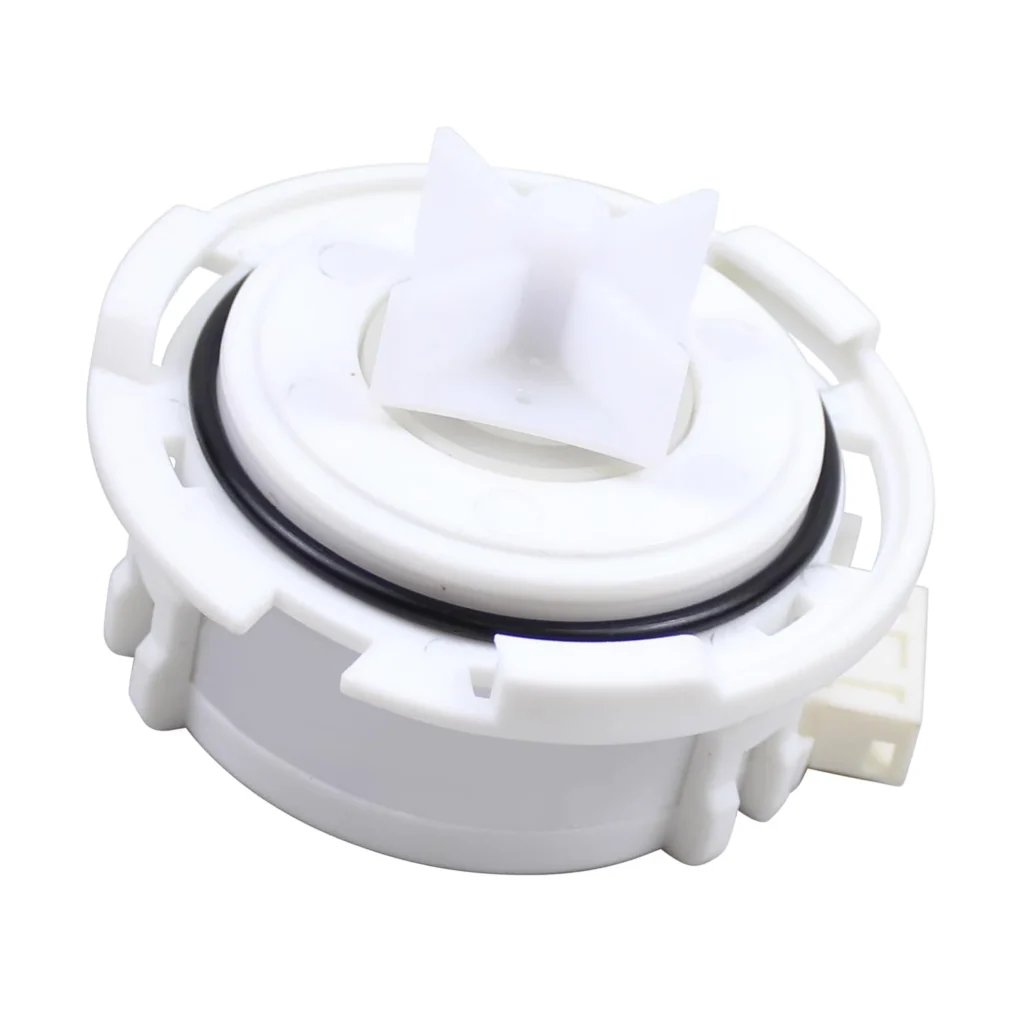
This standing water issue affects dozens of LG models including the LDF5545ST, LDP6797BD, and LDFN4542W. The problem usually traces back to the drain pump assembly (part ABQ75742501), but before you spend $117.99 on a replacement, let's diagnose exactly what's causing your drainage headache.
Quick Symptom Check
Your LG dishwasher might have a drain pump problem if you're experiencing:
- Standing water in the tub after cycle completes — anywhere from an inch to several inches
- Grinding or humming noises during drain cycle — pump motor running but not moving water
- Squealing sound when pumping out water — indicates worn bearings or damaged impeller
- Visible leaks around the pump area — usually underneath the dishwasher on the left side
- Error codes on display — OE, LE, or E1 codes related to drainage
Cause #1: Failed Drain Pump Motor (Most Likely — 45% of Cases)
Here's the most common culprit: the pump motor itself burns out or seizes. One user described it perfectly: "My dishwasher squeals each time it pumps out water." That squealing? It's the death rattle of a pump motor with failed bearings.
How to diagnose:
- Run a drain cycle and listen carefully — you should hear a strong, consistent humming
- If you hear humming but no water movement, the motor's running but the impeller isn't turning
- Pull the dishwasher out and access the pump underneath (left side, usually)
- Use a multimeter to test for 120 VAC at the pump connector during drain cycle
- If you've got 120V but no pump action, the motor's toast
As one technician confirmed: "Check to see if there is 120 vac to the drain pump when the unit is supposed to drain. If there is 120 Vac to the drain but no operation then this will be a faulty pump."
Fix difficulty: Moderate. You'll need to pull the dishwasher out and work underneath.
Cost: $117.99 for the complete pump assembly (ABQ75742501)
Cause #2: Cracked or Damaged Pump Case (30% of Cases)
The pump case itself can develop hairline cracks from age, water pressure, or getting hit by a hard object during loading. These cracks cause two problems: water leaks onto your floor and loss of pumping pressure.
Diagnosis steps:
- Look for water pooling under the dishwasher, especially on the left side
- Remove the lower access panel and inspect the pump housing with a flashlight
- Check for white mineral deposits or water stains around the pump case
- Run a cycle and watch for active dripping during the drain phase
Physical damage like cracks in the case means you're replacing the entire assembly. LG doesn't sell the case separately — trust me, people have asked: "We need just the gasket on the pump assembly is it possible to just that." Answer? Nope. The gasket and case only come with the complete pump.
Cost: $117.99 (full assembly replacement required)
Cause #3: Worn Gaskets and Seals (15% of Cases)
The rubber gasket between the pump and the dishwasher housing deteriorates over time. Hot water, detergent chemicals, and constant pressure cycles take their toll. After 5-7 years, these gaskets harden, crack, and lose their seal.
Signs of gasket failure:
- Small amounts of water on the floor after each cycle (not a flood, just dampness)
- Pump runs normally but water drains slowly
- Visible gaps or compression marks on the gasket when inspected
Unfortunately, as noted earlier, LG doesn't sell the gasket separately. It's integrated into the pump assembly design. This feels wasteful, but it's how they've engineered it.
Cause #4: Jammed or Damaged Impeller (7% of Cases)
Sometimes the pump motor's fine, but the impeller — the spinning blade that actually moves water — is jammed or broken. This happens when small debris (toothpicks, bottle cap pieces, broken glass) gets past the filter and wedges into the impeller housing.
Testing procedure:
- Disconnect power completely
- Access the pump from underneath
- Try rotating the impeller by hand through the pump inlet
- It should spin freely with slight resistance
- If it's seized, won't budge, or has visible damage, that's your problem
One owner described this exact scenario: "The dishwasher cycles and leaves water at the end. I've check the disposal connections, hose, clamps, screens, and nothing blocked, broke or loose. Then I checked the drain pump, because it makes slight noise. It doesn't have any blockage or debris. Motor runs with 120 volts applied."
In that case, the motor tested fine with 120V applied directly, but the impeller had internal damage preventing proper water movement. Sometimes you can't see the problem until you disassemble the pump completely.
Cause #5: Control Board Not Sending Power (3% of Cases)
Least common but still possible: the main control board fails to send power to the pump. Everything else works — wash cycle runs, lights function — but the drain cycle gets skipped or doesn't energize the pump.
Diagnostic approach:
- Test for 120 VAC at the pump connector during drain cycle
- No voltage present? The control board's not triggering the pump
- Check for error codes — LE codes often indicate control issues
- Try a hard reset (unplug for 5 minutes, plug back in)
As the earlier troubleshooting advice stated: "If there is no power then the issue will be a faulty control board."
Control board replacement runs $150-300 depending on the LG model, so you'll want to be absolutely certain before going that route.
Which LG Models Does This Apply To?
The ABQ75742501 drain pump assembly works across a huge range of LG and Kenmore-branded LG dishwashers, including:
- LDF5545 series (LDF5545BB, LDF5545BD, LDF5545SS, LDF5545ST, LDF5545WW)
- LDF5678 series (LDF5678BD, LDF5678SS, LDF5678ST)
- LDP6797 series (LDP6797BB, LDP6797BD, LDP6797BM, LDP6797SS, LDP6797ST, LDP6797WW)
- LDP6809 and LDP6810 series
- LDFN series (LDFN3432T, LDFN343LS, LDFN4542W)
Check your model number inside the door frame or on the side of the tub to confirm compatibility.
When to Call a Pro
Look, replacing a dishwasher drain pump isn't rocket science, but it's not beginner-level either. You're working with 120V electrical connections, water lines, and tight spaces underneath the dishwasher. Call a professional if:
- You're not comfortable working with electrical connections
- Your dishwasher is built-in and you can't easily pull it out
- You've tested the pump and control board, and both seem fine (might be a wiring harness issue)
- You see water damage to the subfloor or cabinetry (need to assess structural issues)
A pro will charge $200-350 for this repair including the part. That's reasonable for the expertise and warranty on the work.
Frequently Asked Questions
How long does an LG dishwasher drain pump typically last?
You'll usually get 7-10 years from the original pump. Homes with hard water or heavy dishwasher use (more than 5 loads per week) tend to see failures closer to the 5-7 year mark. The pump motor bearings wear out from constant cycling and exposure to hot, mineral-laden water.
Can I just replace the gasket instead of the whole pump assembly?
No. LG designs the ABQ75742501 as a complete sealed unit. The gasket is permanently attached to the pump case and isn't sold separately. Several customers have asked about this — it's frustrating, but that's how they've engineered it. If your gasket fails, you're buying the full assembly.
Why does my LG dishwasher make a squealing noise during the drain cycle?
That squealing typically means the drain pump bearings are worn out or the impeller is scraping against the housing due to a damaged seal. It's the pump equivalent of a car with worn brake pads — it still works, but not for much longer. If you're hearing that squeal, plan on replacing the pump within the next few months before it fails completely and leaves you with standing water.
Diagnosed the problem?
ABQ75742501 · In Stock · Fast shipping