
Whirlpool Range Knob Won't Turn or Falls Off — 5 Causes & How to Fix
You're halfway through preheating the oven for dinner when you reach for the temperature knob — and it spins freely without engaging, or worse, pops right off in your hand. The burner won't light or the oven won't heat because the control shaft isn't getting the signal. This is one of those repairs that feels more frustrating than it actually is.
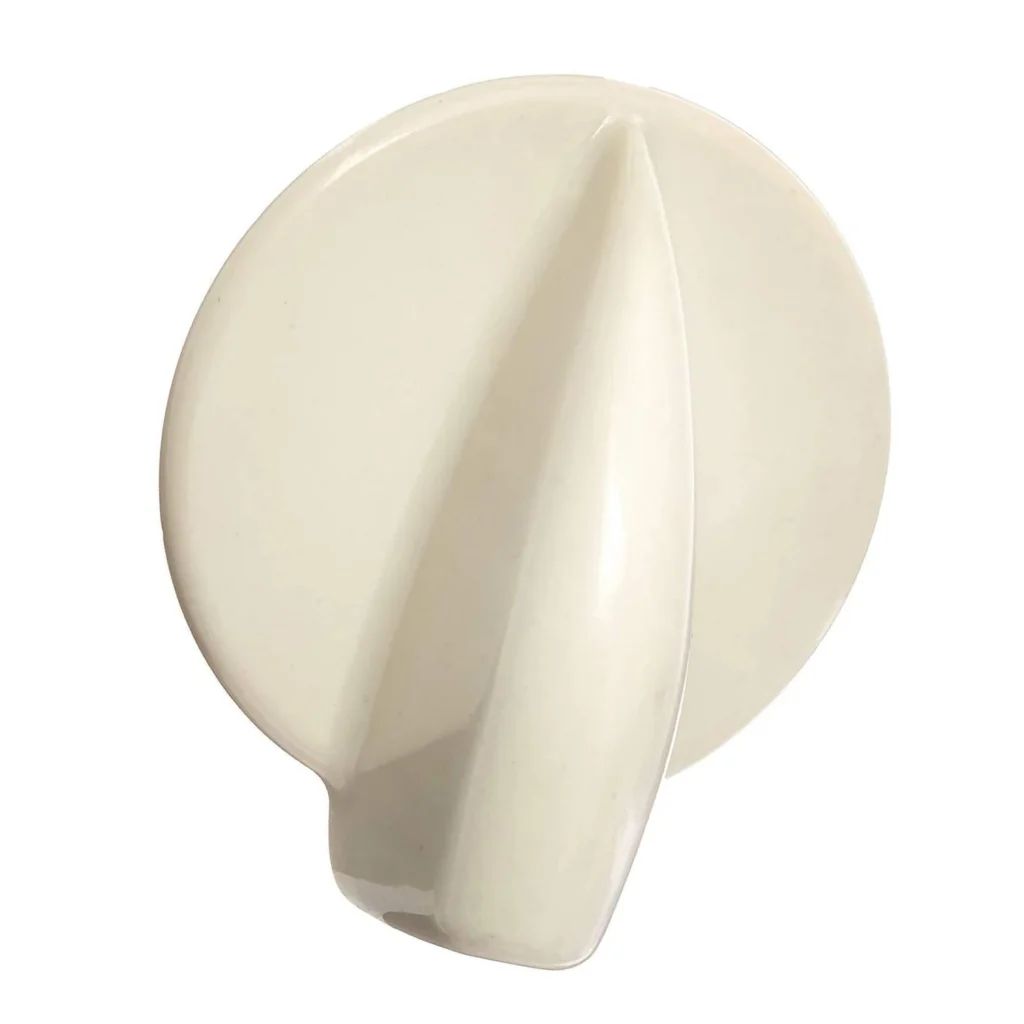
The 8182049 control knob (bisque) fits Whirlpool and Kenmore ranges including models like the GEW9200LL1, GEW9200LW2, GEW9250PW0, and dozens of others. It's a simple D-shaped plastic knob that slides onto the valve stem, but when it fails, your range becomes unusable. Let's walk through what actually goes wrong and how to fix it.
Quick Symptom Check
- Knob spins 360° without stopping at any position
- Knob falls off when you try to turn it
- Knob is cracked, melted, or missing the D-shaped insert
- You can turn the valve stem with pliers but not with the knob
- Burner or oven won't respond to knob position
Cause #1: Stripped or Worn D-Shaped Insert
This is the most common failure. Inside each control knob is a D-shaped plastic insert that matches the flat side of the valve stem. Over years of daily use — especially if someone's been forcing the knob or turning it roughly — this insert wears down or cracks completely.
Diagnosis: Remove the knob by pulling it straight off. Look at the back side where it connects to the stem. You'll see a D-shaped hole. If the flat edge is rounded off, cracked, or missing entirely, that's your problem. The knob can't grip the stem anymore.
Fix: Replace the knob with part 8182049. This takes under 15 minutes and requires zero tools. Just pull off the old knob and push the new one onto the valve stem until it seats firmly. Make sure the flat side of the stem lines up with the flat side of the knob's insert. One user said it perfectly: "I got the parts and to perform the task was as easy as pie."
Probability: 85% — This is almost always why range knobs fail.
Cause #2: Cracked or Heat-Damaged Knob Body
If your knob is near the oven vent or you've had a grease fire, the plastic can melt or crack from heat exposure. You'll see discoloration, warping, or visible cracks running through the knob body.
Diagnosis: Inspect the knob under good light. If it's yellowed, bubbled, or has stress cracks radiating from the center, heat damage has compromised the structural integrity. Even if it still turns now, it'll fail soon.
Fix: Replace with 8182049. No repair possible here — melted plastic doesn't regain strength.
Probability: 10% — Common on ranges with poor ventilation.
Cause #3: Wrong Knob Installed
Not all range knobs are universal. If someone previously replaced this knob with a generic part or pulled one from a different model, the D-shaft dimensions might not match your valve stem.
Diagnosis: Does the knob wobble side-to-side when installed? Does it feel too loose or require force to push on? Check the part number on the back of your existing knob. If it's not 8182049 or WP8182049, you've got the wrong part.
Fix: Order the correct OEM replacement. The 8182049 is specifically designed for the valve stem diameter and shaft profile on your Whirlpool or Kenmore model.
Probability: 3% — Rare but happens after DIY repairs.
Cause #4: Valve Stem Damage
Less common but possible: the metal valve stem itself is damaged. If someone over-tightened the knob with pliers or forced it while misaligned, the flat edge of the D-shaft can get rounded off or bent.
Diagnosis: Remove the knob and look directly at the valve stem. Run your finger along the flat edge. If it feels rounded or you see metal shavings, the stem is damaged. Try installing a new knob — if it still spins freely, the stem needs replacement.
Fix: This requires replacing the valve assembly behind the control panel. That's a more involved repair involving screwdrivers, disconnecting the range from power, and removing the front panel. If you're not comfortable with that, call a tech.
Probability: 2% — Usually only after forced installation.
When to Call a Pro
If replacing the knob doesn't solve the problem and you suspect valve stem damage, that's when you call someone. The knob itself? That's genuinely one of the easiest appliance repairs you'll ever do — no tools, no power disconnect, no risk. You pull off the old one and push on the new one. Takes longer to open the package than install the part.
But if you're dealing with gas line work, electrical issues behind the control panel, or the valve assembly needs replacement, get a qualified tech. Gas ranges especially shouldn't be DIY'd beyond basic parts like knobs.
Frequently Asked Questions
Will any control knob fit my Whirlpool range?
No. Ranges use model-specific knobs with different shaft sizes, colors, and markings. The 8182049 fits specific Whirlpool and Kenmore models like the GEW9200 and GEW9250 series. Always match your model number to the compatible parts list before ordering.
Can I use the range if the knob is broken?
Technically yes — you can turn the valve stem with pliers in an emergency. But it's dangerous because you can't see position markings, you might over-rotate and damage the stem, and you risk gas leaks or electrical issues if you're not precise. Replace the knob before using the range normally.
Why did my knob turn yellow or brittle?
Heat exposure from the oven vent or nearby burners degrades the plastic over time. UV exposure if your range is near a window can also cause discoloration. It's cosmetic at first, but eventually the plastic becomes brittle and cracks. Once you see yellowing, plan to replace within 6-12 months.
Diagnosed the problem?
8182049 · In Stock · Fast shipping