
LG Dryer Won't Heat or Overheats — 5 Causes & How to Fix It
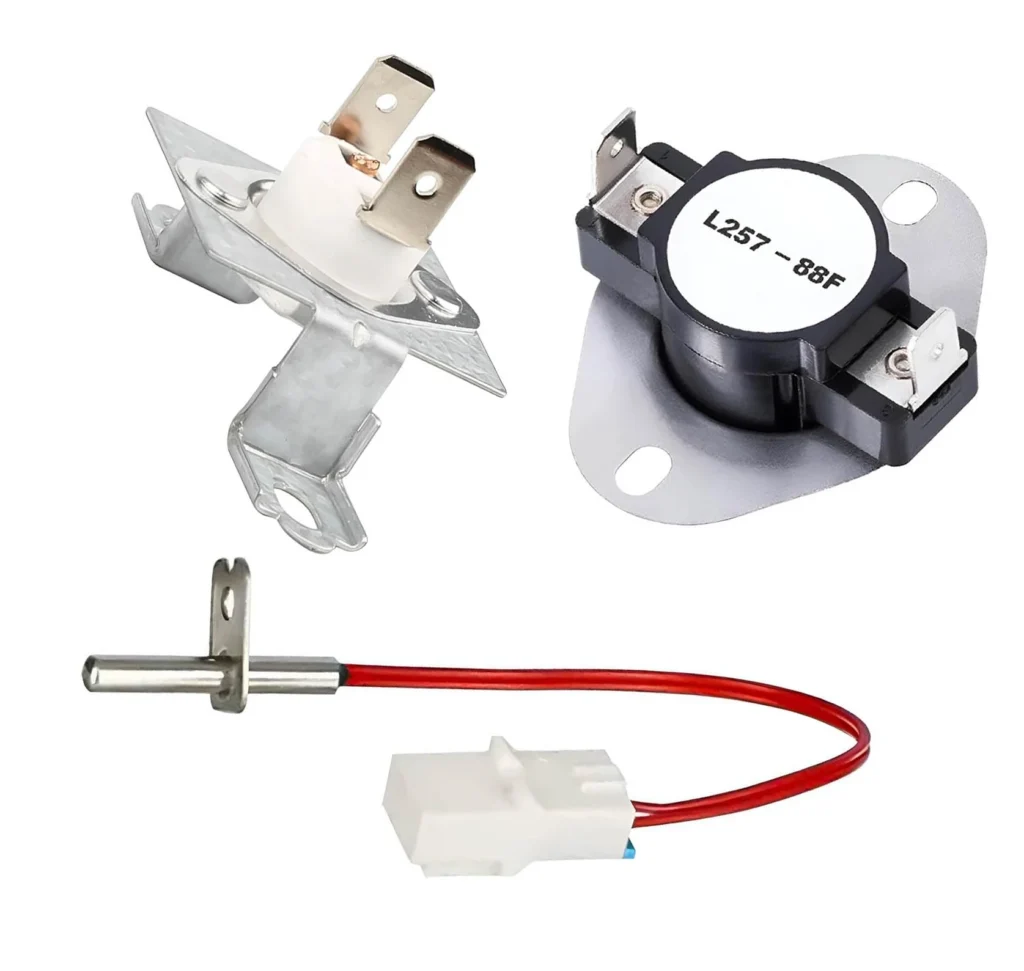
You toss a load of wet clothes into your LG dryer, hit start, and come back an hour later to find everything still damp. Or maybe the opposite — your dryer's running so hot you're worried it'll melt the buttons off your favorite shirt. Both scenarios point to the same culprit: a failed high-limit thermostat like the 6931EL3001E.
This $39 safety component isn't just annoying when it fails — it's actually doing its job by shutting down a dangerous situation. Let's figure out what's causing your heating issue and whether you need a new thermostat or something else entirely.
Quick Symptom Check
Before you grab your multimeter, identify exactly what your dryer's doing:
- No heat at all: Drum spins normally, but clothes come out cold and wet
- Intermittent heat: Sometimes heats, sometimes doesn't — totally unpredictable
- Overheating: Clothes come out scorching hot, or you see a thermal cutoff error
- Stops mid-cycle: Shuts off after 10-15 minutes, won't restart until it cools down
- Takes forever to dry: Eventually dries, but cycles run 2-3 times longer than normal
If you're seeing any combination of these, keep reading. The high-limit thermostat is designed to blow when your dryer exceeds 280°F — and once it blows, it's done forever.
Cause #1: Blown High-Limit Thermostat (Most Likely — 40% of Cases)
The 6931EL3001E high-limit thermostat is a one-time fuse. When your dryer overheats past its safety threshold, this component sacrifices itself to prevent a fire. Once it blows, you get zero heat — period.
How to diagnose: Unplug the dryer, pull off the top panel (two screws in back), and locate the thermostat on the heating element housing. It's a small disc with two wire terminals. Set your multimeter to ohms and test for continuity. You should see 0-1 ohms. If it reads infinite (OL), it's blown.
The catch: Don't just replace it and call it done. The thermostat blew for a reason — usually restricted airflow. If you don't fix the underlying cause, the new one will blow in a week.
Repair difficulty: Easy | Cost: $38.99 | Time: 20 minutes
Cause #2: Clogged Lint System (Primary Root Cause — 60% of Cases)
Here's the thing — the high-limit thermostat doesn't fail randomly. It blows because your dryer's overheating, and 9 times out of 10, that's because hot air can't escape. Lint builds up in three places:
- Lint screen housing: Pull the screen and look down into the slot with a flashlight. See a felted layer of lint? That's your problem.
- Blower wheel: Lint wraps around the fan blades, reducing airflow by 50% or more
- Exhaust vent: The duct running from your dryer to outside can pack solid with lint over years
The test: Go outside while the dryer's running. Hold your hand near the vent opening. You should feel strong, hot airflow. Weak puff? Clogged system.
How to fix: Vacuum out the lint screen housing with a crevice tool. Remove the front panel and pull out the blower wheel — clean it thoroughly. If you haven't cleaned your exhaust vent in over a year, hire a duct cleaning service or buy a vent brush kit and do it yourself.
Cost: $0-$150 (DIY to professional vent cleaning)
Cause #3: Failed Heating Element (20% of Cases)
Sometimes the heating element itself develops a short or breaks. When coils touch the metal housing, they can cause localized overheating that trips the high-limit thermostat even though the dryer as a whole isn't too hot.
Diagnosis: Visual inspection. With the dryer unplugged and the front panel off, look at the heating element coils inside the metal canister. They shouldn't touch each other or the housing. Also test for continuity — you should see 10-50 ohms across the element terminals.
Models like the DLE5977W, DLEX7177WM, and DLE2512W are particularly prone to element failures after 7-10 years of heavy use.
Repair difficulty: Moderate | Cost: $40-$80 | Time: 45 minutes
Cause #4: Bad Cycling Thermostat (15% of Cases)
The cycling thermostat (different from the high-limit) regulates normal drying temperature. When it fails stuck-closed, the heating element runs continuously until the high-limit thermostat blows to prevent a fire.
How to spot it: If your dryer was overheating before it stopped heating entirely, and the high-limit thermostat tested bad, the cycling thermostat is likely the root cause. Test it at room temperature — it should show continuity. Heat it with a hairdryer and it should open (no continuity).
Repair difficulty: Easy | Cost: $15-$30 | Time: 20 minutes
Cause #5: Thermal Fuse Blown (Secondary Safety — 10% of Cases)
LG dryers have multiple thermal safety devices. The thermal fuse (usually rated for 250°F) can blow before the high-limit thermostat if there's severe overheating. It's typically located on the blower housing.
Test it the same way: continuity test with a multimeter. No continuity = blown fuse.
Important: Like the high-limit thermostat, thermal fuses are one-time-use. And they blow because of restricted airflow, so clean your vent system before installing a new one.
Repair difficulty: Easy | Cost: $10-$20 | Time: 15 minutes
When to Call a Pro
Most homeowners can replace a high-limit thermostat — it's two wire connections and one or two screws. But call a professional if:
- You're uncomfortable working with a multimeter
- Your dryer uses 220V and you're not confident around electrical work
- You've replaced the thermostat twice and it keeps blowing (something else is wrong)
- You smell burning plastic or see scorch marks inside the dryer cabinet
A good appliance tech charges $150-$250 for diagnosis and repair, which includes cleaning the internal lint system — often worth it for the peace of mind.
Frequently Asked Questions
How do I know if my LG dryer high-limit thermostat is bad?
Unplug the dryer and test the thermostat with a multimeter set to ohms. A functioning high-limit thermostat shows 0-1 ohms of resistance (continuity). If your meter reads OL or infinite resistance, the thermostat has blown and needs replacement. The 6931EL3001E is located on the heating element housing, accessible after removing the dryer's top or front panel depending on your model.
Can I bypass the high-limit thermostat to test my dryer?
Technically yes, but absolutely don't. The high-limit thermostat prevents fires by cutting power when your dryer exceeds safe temperatures. Bypassing it means your dryer could overheat to 500°F+ and ignite lint buildup. If you bypass it for testing, watch the dryer continuously and have a fire extinguisher ready — then immediately reinstall a working thermostat.
Why does my high-limit thermostat keep blowing?
The thermostat keeps blowing because your dryer is repeatedly overheating, usually from restricted airflow. Check three things: clean the lint screen housing thoroughly, remove and clean the blower wheel (it gets packed with lint), and inspect your entire exhaust vent from dryer to outside. On models like the DLE5932W and DLEX8377WM, a clogged vent is the cause in 90% of repeated thermostat failures.
Diagnosed the problem?
6931EL3001E · In Stock · Fast shipping