
Frigidaire Dryer Not Heating — 5 Causes & How to Fix
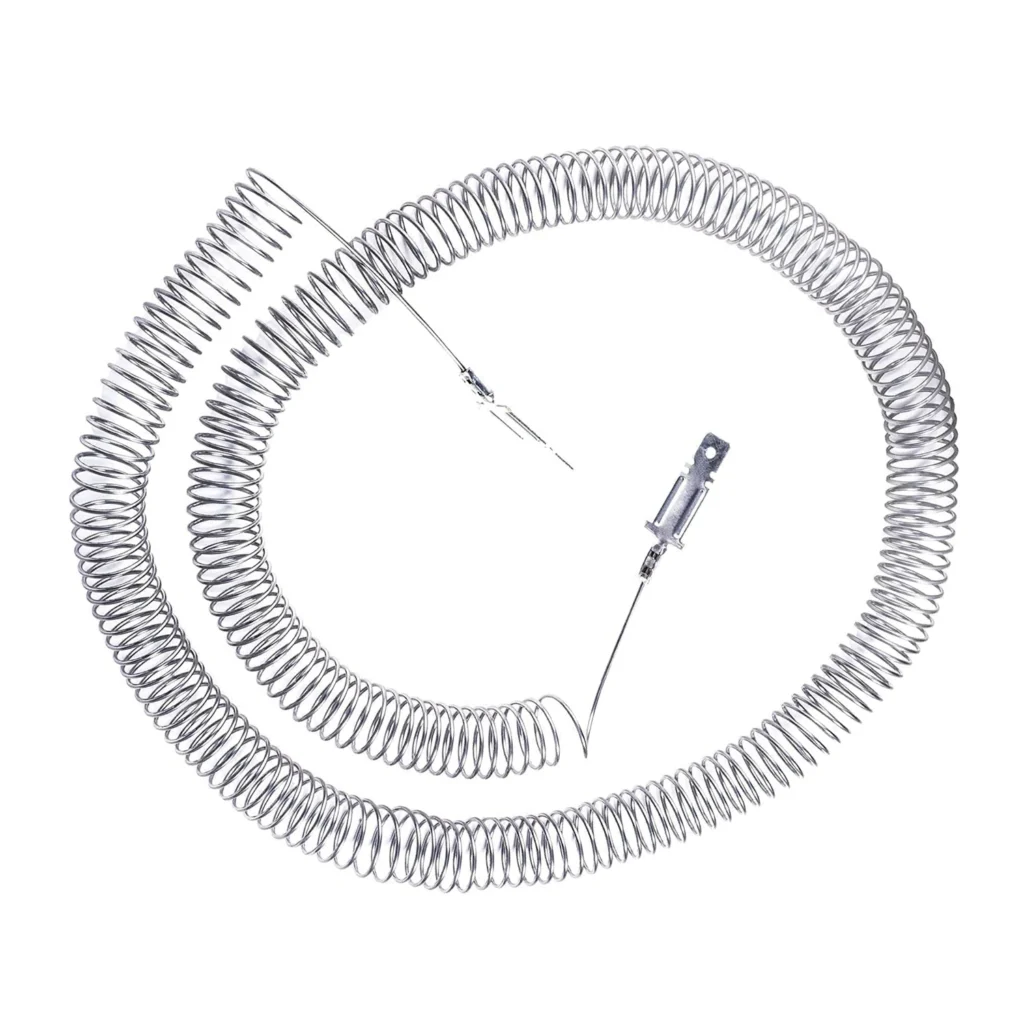
You toss a load of wet towels into your Frigidaire dryer, hit start, and come back an hour later to find them still damp and cold. The drum's tumbling just fine, but there's zero heat. If you've got a model like the FDE747GES0 or FDE7970EW1, you're likely dealing with a failed heating element — the most common culprit in electric dryers that run but won't heat.
Before you spend money on parts or service calls, let's walk through what's actually going wrong. The heating element in your Frigidaire is a coiled wire (like a giant toaster element) that glows red-hot when electricity flows through it. When it burns out — which happens after years of thermal cycling — your dryer becomes nothing more than an expensive clothes tumbler.
Quick Symptom Check
Your Frigidaire dryer is experiencing a heating problem if you notice:
- Dryer runs but produces no heat at all — drum spins, timer advances, but clothes stay cold
- Takes multiple cycles to dry one load — some warmth present but not enough to dry efficiently
- Heat works intermittently — sometimes hot, sometimes not, unpredictable performance
- Thermal fuse has blown — dryer won't start or runs cold after a fuse failure
- Burning smell preceded the no-heat condition — element may have shorted before failing completely
Cause #1: Burned Out Heating Element (Probability: 65%)
The heating element itself is the most frequent failure point. These coils get hammered with extreme temperature swings — from room temp to 180°F and back down, cycle after cycle, year after year. Eventually, the metal fatigues and breaks.
How to diagnose: Unplug the dryer and remove the lower front panel (two screws typically). The heating element assembly is usually on the right side in a metal housing. Pull the element out and visually inspect the coil. You're looking for breaks, burn marks, or sections that have separated. If the coil looks intact, test it with a multimeter set to ohms — you should see 10-50 ohms of resistance. Infinite resistance means it's open (broken).
The 5300622032 heating element fits models like the FDE336RES1, FDE546RES1, FDE847GES0, and dozens of other Frigidaire, Gibson, Kelvinator, and Westinghouse dryers. It's a restring coil design, which means you're replacing just the element wire, not the entire housing.
Fix cost: $39 for the part, about 45 minutes of your time. Way better than the $250-350 a service call would run you.
Cause #2: Blown Thermal Fuse (Probability: 20%)
The thermal fuse is a one-shot safety device that kills power to the heating circuit if the dryer overheats. It's usually mounted on the blower housing or the heating element housing itself. When it blows, the dryer will often still run, but the heating element gets no power.
How to diagnose: Locate the thermal fuse (small white or beige component with two wires). Disconnect the wires and test for continuity with a multimeter. No continuity? It's blown. Here's the thing though — thermal fuses don't just blow randomly. If yours is blown, you've got an underlying problem: restricted airflow from a clogged vent, a blocked lint screen, or a failing blower wheel.
Critical point: Replacing the fuse without fixing the airflow problem will just blow the new fuse. Clean your entire vent system, check the outside vent hood, and inspect the blower wheel for lint buildup before buttoning everything back up.
Cause #3: Faulty High-Limit Thermostat (Probability: 10%)
This thermostat is another safety device, but unlike the thermal fuse, it's designed to cycle on and off to prevent overheating. When it fails in the open position, it cuts power to the heating element permanently.
How to diagnose: The high-limit thermostat is usually a small disc mounted near the heating element. At room temperature, it should show continuity. If it's open at room temp, it's bad. Sometimes these fail intermittently, which explains why your dryer heats sometimes but not others.
Cause #4: Defective Cycling Thermostat (Probability: 3%)
The cycling thermostat regulates the dryer's operating temperature by turning the element on and off during the cycle. When it sticks open, no heat. When it sticks closed, you overheat and possibly blow the thermal fuse.
How to diagnose: This one's trickier because it's supposed to open and close during normal operation. You'll need to test it at room temperature (should be closed/continuous) and then monitor it during a heat cycle with a multimeter. If it never closes, or never opens, it's toast.
Cause #5: Broken Timer or Control Board (Probability: 2%)
Rarely, the timer or electronic control board fails in a way that prevents the heating circuit from energizing. You'll still get drum rotation and maybe lights on the panel, but the element never gets the signal to heat.
How to diagnose: This is a diagnosis of elimination. If you've tested the element, both thermostats, and the thermal fuse — and they're all good — the control board is the likely suspect. You should see voltage at the heating element terminals when the dryer's running. No voltage? Control problem.
When to Call a Pro
Here's my honest take: if you're comfortable with a screwdriver and a multimeter, replacing a heating element is totally doable. It's not a complex repair. However, call a pro if:
- You're dealing with a gas dryer (different beast entirely, involves gas valves and flame sensors)
- You've replaced the element and thermal fuse but still have no heat (possible wiring or control board issue)
- You smell gas at any point (shut off the gas valve and call immediately)
- The dryer is less than two years old and might still be under warranty
The 5300622032 element works across a massive range of Frigidaire models — from the FDE216RES0 to the FDE7977EW0 and everything in between. Gibson, Kelvinator, and Westinghouse branded dryers often use the exact same element too, since they're all part of the same manufacturing family.
Frequently Asked Questions
How long should a Frigidaire dryer heating element last?
Typically 8-12 years with average use (6-8 loads per week). Heavy use or frequent overloading can shorten that to 5-7 years. If your element's failing after only 2-3 years, you've likely got a ventilation problem causing it to overheat and burn out prematurely.
Can I run my dryer without a heating element to test it?
Sure, but it won't tell you much beyond confirming the motor and drum still work. The whole point is to dry clothes, which requires heat. Better to test the element with a multimeter than to run cycles that won't accomplish anything.
Why does my dryer heat for a few minutes then stop?
This is classic cycling thermostat or high-limit thermostat behavior. One of them is opening too early in the cycle, cutting power to the element. Could also be early-stage element failure where part of the coil has high resistance and causes the safety thermostats to trip. Check your vent system first — restricted airflow causes exactly this symptom.
Diagnosed the problem?
5300622032 · In Stock · Fast shipping