
LG Washer Won't Fill With Water — 7 Causes & How to Fix
You threw in a load of laundry, pressed start, and... nothing. The drum sits empty while your LG washer hums along pretending everything's fine. You peer inside expecting to see water rushing in, but it's bone dry. This isn't just annoying — it's one of the most common failures on LG front-loaders like the WM3700HWA and Kenmore Elite 796.41782710.
Here's the thing: when your washer won't fill, you're usually looking at either a failed inlet valve assembly or something blocking water from reaching it. Let's diagnose this step-by-step.
Quick Symptom Check
- No water enters the drum at all — complete silence or just the motor running
- Extremely slow fill — takes 15+ minutes to reach wash level
- Only hot or only cold water — one temperature works, the other doesn't
- Error codes displayed — IE, 1E, or water inlet error on the panel
- Humming or buzzing from behind the washer when cycle starts
- Water leaking from inlet connections — pooling behind the machine
Cause #1: Failed Inlet Valve Assembly (70% Probability)
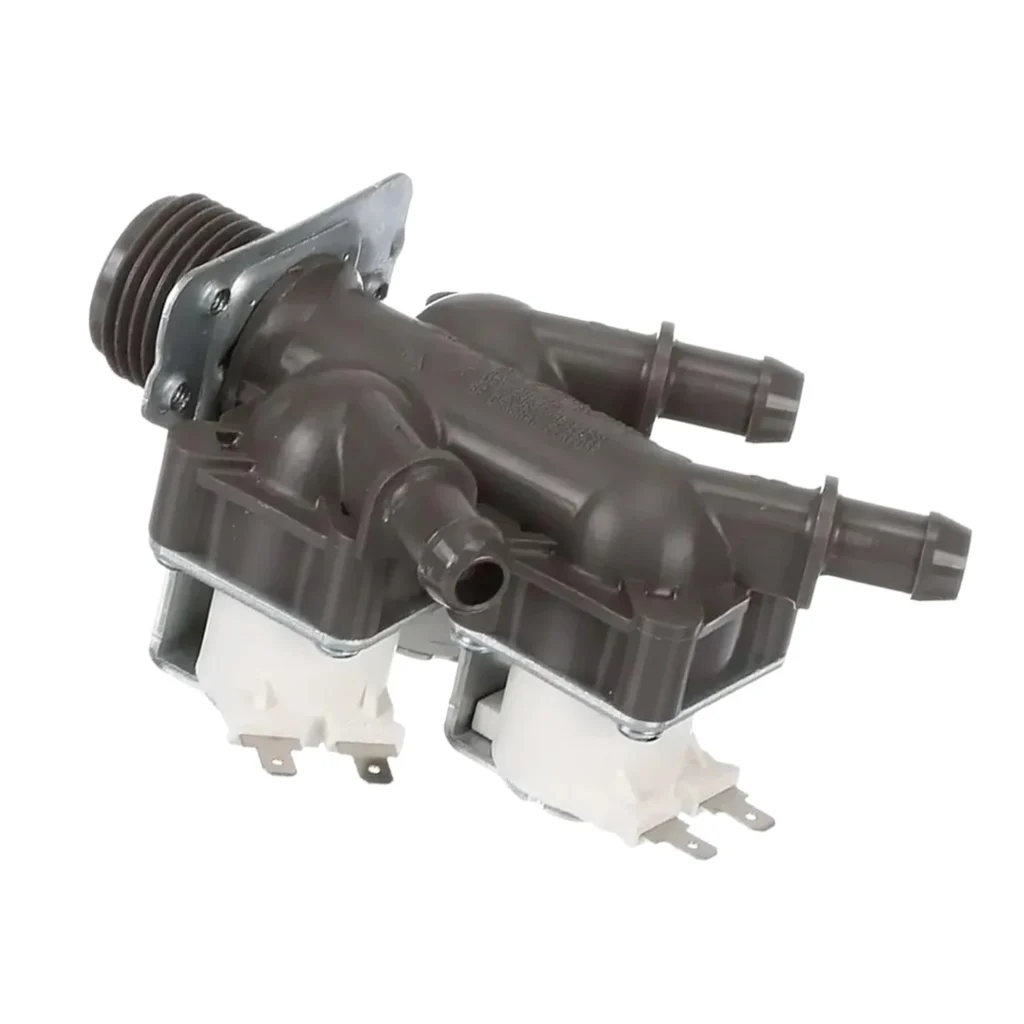
The 5221ER1003M inlet valve is basically two electronic gates that open when your washer calls for water. After 5-7 years of constant use, the solenoid coils inside burn out or the rubber diaphragms harden and crack. You'll still hear a faint click when the cycle starts, but no water flows.
How to diagnose: Unplug the washer, shut off both water supply valves, and pull the machine forward. Remove the top panel (two screws at the back). The inlet valve sits in the upper-right corner where hoses connect. Disconnect the wiring harness and use a multimeter to check resistance across each solenoid terminal — you should read 500-1500 ohms. If it's infinite or zero, the valve's dead.
Most common on models: WM3700HWA, WM3600HVA, WM8900HBA, and Kenmore Elite 796.41782810.
Fix: Replace the entire valve assembly. The 5221ER1003M includes both hot and cold solenoids pre-assembled. Takes about 30 minutes and requires only a screwdriver and pliers. Cost: around $98 for the OEM part.
Cause #2: Clogged Inlet Screens (15% Probability)
Tiny mesh screens sit inside each hose connection at the valve to catch sediment. If your home has hard water or older pipes, these screens pack solid with mineral deposits and rust particles. Water pressure drops to a trickle or stops completely.
How to diagnose: Turn off water supply, disconnect both fill hoses from the back of the washer (have a towel ready — water will drip). Look inside each inlet port with a flashlight. See brown buildup or crusty white calcium? That's your problem.
Fix: Use needle-nose pliers to carefully extract each screen. Soak them in white vinegar for 20 minutes, scrub with an old toothbrush, and reinstall. If they're corroded beyond cleaning, the 5221ER1003M valve assembly comes with new screens included.
Cause #3: Low Water Pressure (8% Probability)
LG washers need minimum 20 PSI to fill properly. If your home pressure runs low — common in older houses or upper-floor apartments — the valve opens but water barely dribbles in.
How to diagnose: Disconnect one fill hose and aim it into a bucket. Turn the supply valve on full. Does water gush out forcefully or just trickle? If it's weak, check whether other fixtures in your house also have low pressure.
Fix: Install a water pressure booster pump at your main line, or if the issue is washer-specific, check that the supply valves are fully open (they should be perpendicular to the pipes, not parallel).
Cause #4: Control Board Not Sending Signal (4% Probability)
Sometimes the valve is fine but the washer's main control board fails to energize it. This often follows power surges or happens on models like the WM3500CW with known board issues.
How to diagnose: With the washer in diagnostic mode (press Spin Speed and Soil Level simultaneously, then Power), manually command a fill cycle. Listen for clicking at the valve. If nothing happens and you've confirmed the valve has power at the harness, the board's likely bad.
Fix: Control board replacement runs $200-400 in parts alone. Honestly? This is when you call a pro or consider whether a 10-year-old washer is worth the repair cost.
Cause #5: Kinked or Frozen Supply Hoses (2% Probability)
You'd be surprised how often hoses get pinched when someone pushes the washer back against the wall. Or in cold garages, hoses can freeze solid in winter.
How to diagnose: Trace both hot and cold hoses from the wall to the washer. Feel for any spots that are flattened or bent at sharp angles. In freezing conditions, disconnect and flex the hoses — frozen ones stay rigid.
Fix: Straighten kinks if possible, or replace damaged hoses. Use stainless steel braided hoses — they resist kinking better than rubber. Cost: $15-25 for a pair.
Cause #6: Faulty Water Level Pressure Switch (1% Probability)
The pressure switch tells your washer when it's filled to the right level. If it's stuck thinking the tub is already full, the inlet valve never gets the command to open.
How to diagnose: This one's tricky without schematics. You'd need to remove the top panel and locate the pressure switch (round component with a small air tube). Gently blow into the tube — you should hear distinct clicks as the switch actuates. No clicks? It's failed.
Fix: Replace the pressure switch. Part costs $30-50, but accessing it requires significant disassembly. Probably worth hiring a tech unless you're comfortable with appliance internals.
Cause #7: Electronic Control Lock Engaged
Okay, this one's embarrassing but happens more than you'd think. The control lock (usually activated by holding the Temp button for 3 seconds) disables all functions including water fill. The display shows a little padlock icon.
How to diagnose: Look at your control panel. See a lock symbol?
Fix: Hold the Temp button for 3 seconds until you hear a chime and the lock disappears. Yeah, that's it.
When to Call a Pro
DIY is great for inlet valve replacement and cleaning screens — straightforward jobs with clear results. But call a technician if:
- You've replaced the valve and still have no fill
- Error codes persist after parts replacement
- You suspect control board issues (diagnostic testing requires specialized knowledge)
- Water leaks from internal connections you can't access without full disassembly
Expect to pay $150-250 for a service call plus parts. Get quotes from at least two local appliance repair shops.
Frequently Asked Questions
How long does the 5221ER1003M inlet valve typically last in an LG washer?
Most OEM LG inlet valves last 6-9 years with normal use (8-10 loads per week). Hard water shortens this to 4-5 years because mineral buildup stresses the solenoids. If you're replacing an original valve in a WM3700HWA from 2015-2017, you're right on schedule for expected lifespan.
Can I use aftermarket inlet valves instead of the OEM 5221ER1003M?
You can, but quality varies wildly. Generic valves often use weaker solenoids and thinner diaphragms that fail within 18-24 months. The 5221ER1003M is the exact part LG installs at the factory — it's engineered for the high water pressure and rapid cycling these front-loaders demand. Save yourself the hassle of doing this job twice.
Why does my LG washer fill with hot water when I select cold?
The inlet valve has two separate solenoids — one for hot, one for cold. If the cold solenoid fails closed and the hot one works, you'll get hot water regardless of temperature selection. Sometimes this happens when internal diaphragms stick. Replacing the valve assembly fixes it. Also verify you didn't accidentally swap the hot and cold hoses when you last moved the machine — happens more often than you'd think.
Diagnosed the problem?
5221ER1003M · In Stock · Fast shipping