
LG Front-Load Washer Leaking Water — 5 Causes & How to Fix
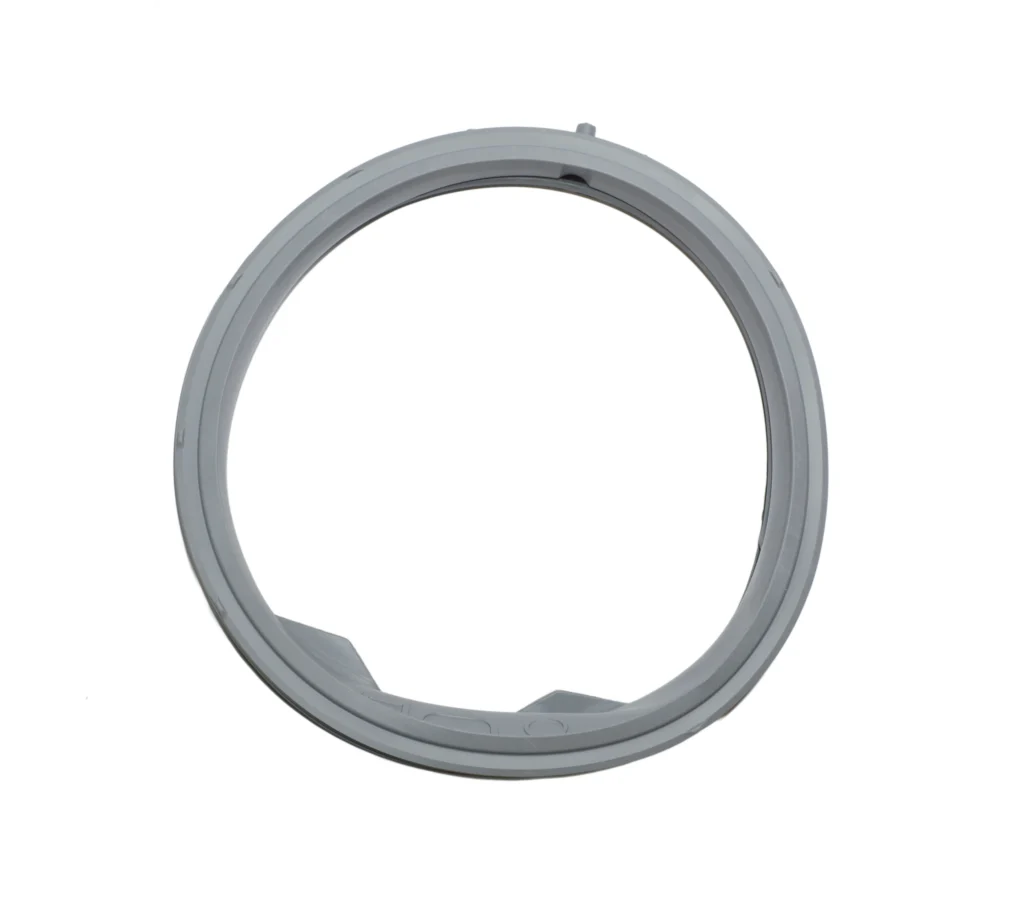
You've just pulled a load of towels from your LG front-loader and noticed a small puddle spreading across your laundry room floor. Not a massive flood — just enough water to make you wonder if you're looking at a $500 repair bill or something you can handle yourself. The good news? Most LG washer leaks come from predictable failure points, and the door boot seal (part 4986ER0004F) is usually the first suspect.
Before you start pulling parts, let's figure out exactly where that water's coming from. LG front-loaders like the WM2050CW, WM2455HW, and WM2677HBM models have a few weak spots that develop over time.
Quick Leak Location Check
- Water pooling at the front base during wash cycle — likely door boot seal
- Visible tear or crack in rubber door gasket — confirms boot seal failure
- Leak only during spin cycle — could be door boot or drain pump
- Water dripping from detergent dispenser area — dispenser gasket or boot connection
- Moisture inside door glass between cycles — boot seal deterioration
Cause #1: Torn or Cracked Door Boot Seal (70% of Cases)
Probability: Very High
The door boot is that thick rubber gasket forming a watertight seal between the washer drum and the door. On LG models using the 4986ER0004F seal, the most common failure happens at the bottom fold where water pools. Here's what kills it: overloading. When you cram that king-size comforter into a washer rated for 4.5 cubic feet, the drum puts constant stress on the boot seal. Over months, that rubber develops tiny cracks that turn into visible tears.
How to diagnose: Open the door and peel back the rubber boot seal. Run your fingers along the entire circumference, especially the bottom section. You're looking for:
- Visible tears or punctures (even pinhole-sized)
- Cracks in the rubber that weren't there when new
- Soft, degraded sections that feel different from the rest
- Mold or mildew buildup in folds (indicates standing water from poor seal)
If you find damage, replacement is your only option. The boot can't be patched reliably. The 4986ER0004F replaces the original LG part and fits models from the WM2101HW through the WM2650HRA series. One critical note from LG's service data: some models use a door boot without a drain port. Check your original part before ordering to ensure you're getting the correct configuration.
Cost to fix: $64 for the part, $180–280 if you hire someone
Cause #2: Loose or Misaligned Boot Clamp (15% of Cases)
Probability: Moderate
The door boot seal attaches to both the outer tub and the front panel using wire clamps. If someone previously replaced the boot and didn't seat these clamps properly, or if they've just loosened over time from vibration, water escapes during the wash cycle even though the boot itself looks fine.
How to diagnose: With the machine unplugged, open the door and inspect where the boot meets the tub opening. Look for:
- Visible gaps between boot and metal housing
- Clamp sitting unevenly or not in the groove
- Rust on the clamp (indicates moisture escaping)
Try gently pulling the boot away from the tub. If it moves more than a quarter-inch with light pressure, the clamp needs retensioning. You'll need to access the front panel and properly reseat the clamp using a clamp tool or large pliers. This is a moderate difficulty repair — doable, but requires patience.
Cost to fix: $0 if you just retighten, $15–25 if you need a new clamp
Cause #3: Clogged or Damaged Drain Pump Filter (8% of Cases)
Probability: Low to Moderate
If your leak appears at the front lower corner and only happens during the drain cycle, you might not have a boot seal problem at all. The drain pump filter housing on LG front-loaders can crack or develop a bad seal, especially if it's been removed and reinstalled multiple times for cleaning.
How to diagnose: Locate the small access panel at the bottom front (usually lower right). Open it and check:
- Is the filter cap cracked or cross-threaded?
- Does the rubber O-ring on the filter look compressed or damaged?
- Is there debris preventing a tight seal?
Remove the filter completely (have towels ready — water will come out). Inspect the housing threads and the filter cap threads for damage. Clean everything thoroughly and reinstall. If the leak stops, you just saved $60.
Cost to fix: $0–18 depending on whether you need a new filter cap
Cause #4: Detergent Dispenser Overflow (5% of Cases)
Probability: Low
Using too much detergent or the wrong type creates excessive suds. In LG washers, this can cause water to back up in the dispenser drawer and leak out the front, making it look like a door seal problem when it's actually a user error.
How to diagnose: Run an empty cycle with no detergent. If the leak doesn't occur, your boot seal is probably fine. LG recommends using only HE (High Efficiency) detergent, and about half what the detergent bottle suggests. If you see suds in the drum after the rinse cycle, you're using too much.
Here's what happens: excess suds create back-pressure that forces water through the dispenser drawer seal or the boot connection points. The machine can't rinse it all away, so water finds the path of least resistance — usually down the front panel.
Cost to fix: $0 — just adjust detergent usage
Cause #5: Deteriorated Boot Due to Mold/Mildew (2% Direct Cause)
Probability: Very Low as Direct Cause
While mold and mildew don't usually cause leaks directly, they're a symptom of a bigger problem: standing water in the boot folds. That standing water accelerates rubber degradation, turning what should be a 10-year part into a 4-year failure. If your LG washer smells musty even after cleaning, and you've got visible black mold in the boot folds, you're looking at advanced deterioration.
LG service techs recommend using Affresh washer cleaner tablets once a month to prevent this buildup. But if the damage is already done and the boot feels slimy or has lost its firmness, it's replacement time.
Cost to fix: $64 for the boot seal replacement, $8 for Affresh tablets going forward
When to Call a Pro
Most door boot seal replacements are DIY-friendly if you're comfortable removing the front panel of your washer. You'll need basic hand tools and about 90 minutes. However, call a technician if:
- The leak is coming from behind the washer (likely tub seal or pump)
- You're seeing error codes along with the leak
- The outer tub shows cracks or damage
- You've replaced the boot and it's still leaking (alignment issue)
A good appliance repair tech will charge $180–280 for boot seal replacement on LG models like the WM2233HD or WM2301HR, which includes the part and labor. That's reasonable — it's a fiddly job that requires removing the door and front panel.
Preventing Future Boot Seal Failures
Once you've fixed the leak, here's how to make the new boot last:
- Don't overload the washer — the single biggest cause of boot seal damage according to LG service data
- Wipe the boot dry after each use — takes 10 seconds, prevents mold
- Leave the door cracked open between loads — allows moisture to evaporate
- Run monthly cleaning cycles — use Affresh or a cup of white vinegar
- Remove coins, keys, and sharp objects — these puncture the boot from inside
The 4986ER0004F boot seal is designed for models spanning the WM2050CW through WM2650HWA series. If you're on an older LG front-loader showing any signs of door seal wear, addressing it now prevents water damage to your flooring and subfloor — which is exponentially more expensive than a $64 rubber seal.
Frequently Asked Questions
Can I keep using my LG washer if the door boot seal has a small tear?
Not recommended. Even a small tear will grow rapidly as the drum spins and puts stress on the compromised rubber. You're also risking water damage to your floors every time you run a load. Small tears become big tears within a few weeks of normal use. Replace the boot as soon as you spot damage.
Why does my washer boot seal keep tearing in the same spot?
If you've replaced the boot seal and it's failing again in the same location, you're either overloading the washer or something's misaligned. Check that the drum spins freely without wobble and that you're not exceeding the weight capacity. Repeatedly replacing a boot that tears in the same spot means addressing the underlying cause, not just swapping parts.
Will any LG door boot seal work on my model?
No. The 4986ER0004F fits specific LG and Kenmore front-load models (WM2xxx and WM26xx series primarily). Some models use a boot with a drain port, others don't. Check your existing boot configuration before ordering. The part number replaces AP4439003, 4986ER0004J, 4986ER0004K, 4986ER0004N, and 4986ER0004M if those are listed for your model.
Diagnosed the problem?
4986ER0004F · In Stock · Fast shipping