
Whirlpool Ice Maker Not Making Ice — 6 Causes & How to Fix (WRT318FMDB02, WRF560SEHZ)
You open the freezer expecting a full bin of ice for tonight's dinner party, and there's nothing. Maybe a couple of sad, half-formed cubes rattling around. Your Whirlpool refrigerator's been running fine otherwise — the fridge is cold, the lights work — but the ice maker's gone silent.
This is one of the most common refrigerator complaints we see. The good news? Most ice maker failures on models like the WRT318FMDB02, WRF560SEHZ, and KSCS25FKSS02 come down to a handful of fixable issues. Let's walk through what's actually going wrong.
Quick Symptom Check — What's Your Ice Maker Doing?
Before you start, identify exactly what's happening:
- Completely silent, no ice at all — Most likely electrical or water supply
- Making some ice but very little — Probably water flow or fill issues
- Leaking water into the bin or freezer — Fill valve or assembly seal problem
- Won't dispense ice through the door — That's a different system (dispenser motor/auger)
- Making too much ice, overflowing the bin — Shutoff arm or optical sensor failure
- Won't start after installation or power outage — Needs reset or has a wiring issue
Now let's dig into what's causing your specific problem.
Cause #1: Water Supply Line Is Blocked or Shut Off (40% of Cases)
This is the most common cause, and it's almost embarrassing how often it gets overlooked. If your ice maker's getting zero water, it can't make ice. Period.
How to diagnose:
- Check the water shutoff valve behind or under the fridge — someone might've bumped it during cleaning
- Look for a kinked water line in the back where the fridge meets the wall
- Feel the water line going into the freezer — if it's rock-solid, it's frozen
- Listen carefully when the ice maker cycles — you should hear water flowing for about 7-8 seconds
The fix: If the line's frozen (common when the freezer's too cold or after a door's been left open), turn off the ice maker and use a hairdryer on LOW to thaw the fill tube. Don't blast it — you'll crack the plastic. If the valve's shut, open it. If the line's kinked, straighten it out and give the fridge a couple inches more clearance from the wall.
Probability this is your issue: Very high if you're getting zero ice and the freezer's been colder than usual.
Cause #2: The Ice Maker Assembly Itself Has Failed (30% of Cases)
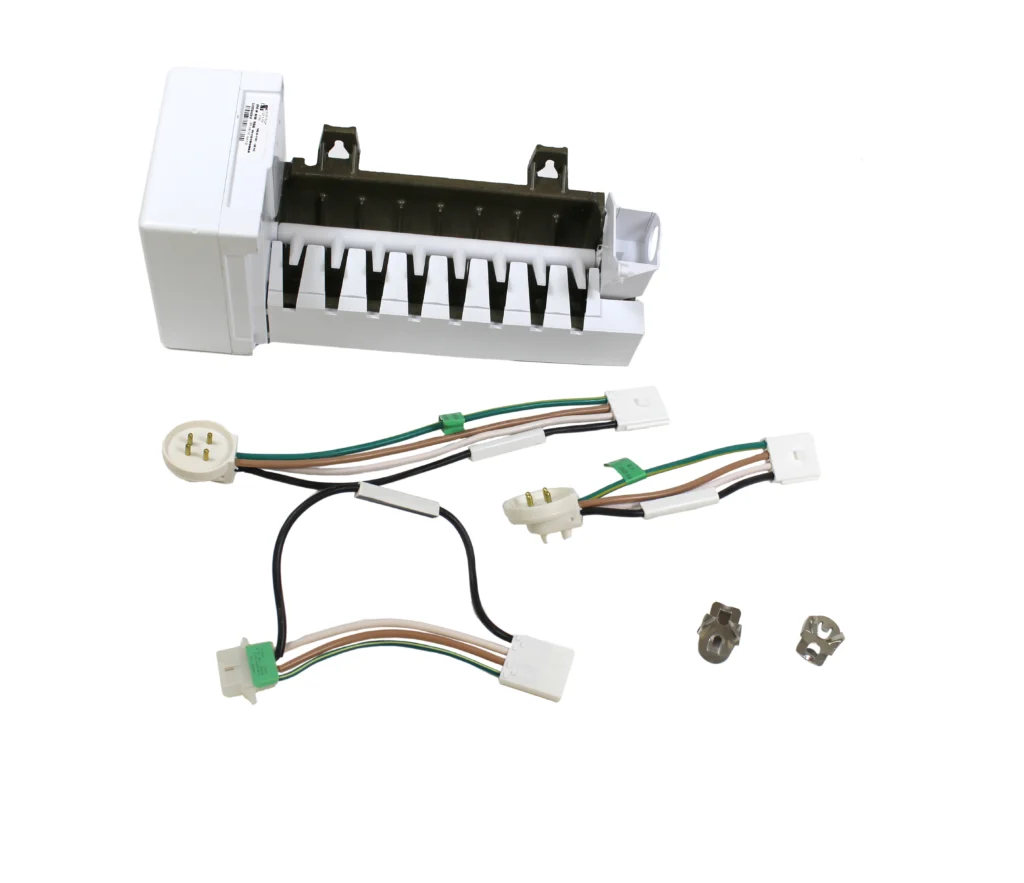
The 4317943 ice maker assembly contains the mold, heater, thermostat, motor, and shutoff arm in one unit. When any of these internal components fail, you're usually better off replacing the whole assembly than trying to diagnose which tiny part died.
How to diagnose:
- Listen for the motor trying to cycle — if it's humming but not ejecting ice, the motor's struggling
- Check if the shutoff arm moves freely — if it's stuck up, the ice maker thinks the bin's full
- Look for frost buildup around the mold — suggests the heater element isn't working to release the cubes
- Manual test: on most Whirlpool models, you can advance the cycle by rotating the gear or pressing the test button (if equipped) — if nothing happens, the assembly's dead
The fix: Replace the entire assembly with part 4317943. It's a 20-minute job. Unplug the fridge, remove the ice bin, unscrew the two mounting screws, unplug the wire harness, and reverse for the new one. Don't forget to turn the shutoff arm to the DOWN position before you walk away.
Probability this is your issue: High if the ice maker's been slowly making less ice over weeks, or if you hear clicking/humming but see no results.
Cause #3: Water Inlet Valve Is Clogged or Weak (15% of Cases)
The inlet valve controls water flow to both the ice maker and the water dispenser. It needs at least 20 psi of water pressure to open properly. If your home has low water pressure or the valve's screens are clogged with sediment, you'll get a slow trickle — or nothing.
How to diagnose:
- Test your water dispenser — if it's also slow or not working, the valve's the likely culprit
- Turn off the water, disconnect the inlet valve (back lower section of the fridge), and check the screens for debris
- Use a multimeter to test the valve solenoids — you should see 200-500 ohms of resistance
The fix: Clean the screens if they're clogged. If the valve tests bad electrically or won't open even with good pressure, replace it. The valve's a separate part — you don't need the whole ice maker assembly for this.
Probability this is your issue: Moderate if you also notice weak water dispenser flow or if you're on well water.
Cause #4: Freezer Temperature Is Too High (10% of Cases)
Ice makers need a freezer temp of 0-5°F to function correctly. If your freezer's running at 15°F or higher — maybe due to a bad defrost system, door seal, or overloading — the ice maker won't cycle because it never reaches the temperature trigger point.
How to diagnose:
- Put a freezer thermometer in there for 24 hours — don't trust the display
- Check the door seal by closing the door on a dollar bill — if you can pull it out easily, the seal's shot
- Look for frost buildup on the back wall or evaporator fan area
The fix: Address the root cause. Replace the door gasket if it's torn or loose. If the evaporator fan's not running, replace it. If the defrost system's failed (you'll see a solid ice block on the back wall), that's a bigger repair involving the defrost heater, thermostat, or timer.
Probability this is your issue: Moderate if your frozen foods are softer than they should be or if you're constantly dealing with frost.
Cause #5: Ice Maker Is Leaking and Not Filling Properly
If you're finding water in the ice bin, puddling under the crisper drawers, or frozen in a sheet on the bottom of the freezer, the ice maker's overfilling or the fill tube's misaligned.
How to diagnose:
- Watch a fill cycle — water should shoot directly into the mold, not spray everywhere
- Check if the fill tube (the small tube that delivers water to the mold) is cracked or not seated properly
- Look for cracks in the ice maker mold itself
The fix: If the fill tube's loose, reseat it. If it's cracked or if the mold's cracked, you'll need to replace the ice maker assembly (4317943 includes everything). If the inlet valve's stuck open and continuously flowing, replace the valve.
Probability this is your issue: High if you're seeing physical evidence of water where it shouldn't be.
Cause #6: Ice Maker Won't Start After Installation or Power Loss
Brand new ice maker or just had a power outage? Sometimes the unit needs a manual kickstart or the shutoff arm's in the wrong position.
How to diagnose:
- Make sure the shutoff arm is in the DOWN position — up means off
- Verify the wire harness is fully seated — listen for the click
- On some models, the ice maker has a small reset button or a gear you can manually turn to start the first cycle
The fix: Push the shutoff arm down, ensure it's plugged in correctly, and wait 24 hours. If still nothing, manually advance the cycle or check for 120V at the harness with a multimeter.
Probability this is your issue: High if this is a new installation or you've just replaced the part.
When to Call a Pro
If you've checked the water supply, tested the inlet valve, confirmed the freezer's at the right temp, and replaced the ice maker assembly but you're still not getting ice — you've got a control board issue or a wiring problem. That's when it makes sense to call a tech. Also, if you're not comfortable working with water lines or electrical testing, there's no shame in handing this off. A service call will run $150-250 depending on your area, but you'll have a definitive answer.
Frequently Asked Questions
How long should I wait after installing a new ice maker before it makes ice?
Give it 24 hours. The ice maker needs to go through a few cycles, and the water line needs to purge any air. Your first batch might have smaller cubes or odd shapes — that's normal. By the second fill cycle, you should see normal ice production. If you're at 48 hours with nothing, start troubleshooting.
Why is my ice maker making ice but not dispensing it through the door?
That's a separate system. The ice maker assembly (4317943) makes and dumps the ice into the bin. The dispenser system uses an auger motor and chute to push it out. If ice is in the bin but won't dispense, check for a jammed auger, broken dispenser motor, or ice clumped together from a freeze-thaw cycle. Try breaking up the ice with a wooden spoon and see if that fixes it.
Can I leave the old ice maker in place and just install a new one on top?
No. Remove the old one completely. Leaving it in creates clearance issues and you won't be able to mount the new assembly securely. Plus, you'll confuse yourself six months from now when you're troubleshooting and forget there are two units in there. Just unbolt the old one — it takes two minutes — and start fresh with the 4317943.
Diagnosed the problem?
4317943 · In Stock · Fast shipping