
Frigidaire Oven Won't Heat Up — 5 Causes & How to Fix It
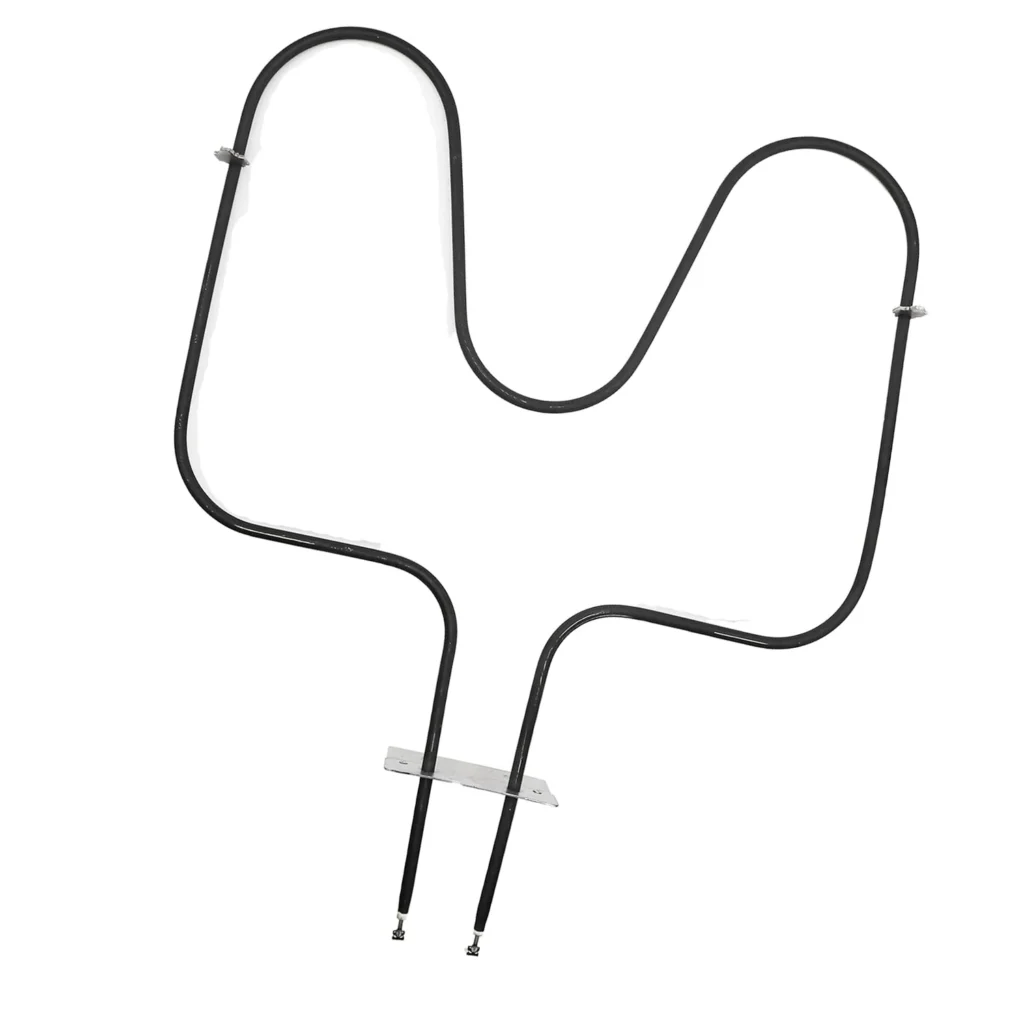
You preheated your Frigidaire oven for 20 minutes, opened the door expecting that familiar blast of heat, and... nothing. The control panel lights up, the clock works fine, but your casserole's sitting in what might as well be a metal box. Before you start pricing new ovens, there's a 70% chance this is a simple bake element failure — and you can fix it yourself.
The bake element is that exposed coil sitting on your oven floor. When it's working, it glows cherry red and generates the bottom heat that actually cooks your food. When it fails — which happens on models like the FEB24S2ABA, PLEB30S9DCB, and FFEF3054TSA after 8-12 years — your oven becomes an expensive light box.
Quick Symptom Check
Your oven has a dead or dying bake element if:
- Element doesn't glow at all when you set the oven to bake mode
- Partial glow — only one section lights up, usually near the connection point
- Visible damage — blistering, bubbling, or an actual break in the coil
- Broiler works fine but baking doesn't (confirms it's the bake element, not the control board)
- Breaker trips when you turn on bake mode (indicates element is shorting)
Set your oven to 350°F and watch the element through the door for 3-4 minutes. A healthy element glows bright orange-red across its entire length. No glow? You've found your problem.
Cause #1: Burned-Out Element (70% Probability)
The 318255101 bake element is essentially a giant resistor. Electricity flows through the coil, resistance creates heat, heat cooks your food. After thousands of heating cycles, the metal fatigues and eventually fails — usually at the coldest point, which is where the element connects to the oven cavity.
How to diagnose: Unplug the oven or flip the breaker. Pull out the bottom rack. Remove the two screws holding the element bracket (usually 1/4" hex head). Gently pull the element forward to expose the wire terminals. Use a multimeter set to resistance (ohms). Touch one probe to each terminal. A working element reads 15-30 ohms. Infinite resistance (OL on your meter)? It's dead.
The fix: The 318255101 replacement element fits over 800 Frigidaire, Electrolux, Gibson, Tappan, and Kenmore models. Disconnect the two wire terminals (they just pull off — no tools needed). Remove the old element. Position the new one, reconnect the wires, and secure with the mounting screws. Total time: 15 minutes.
Cost: $115.99 for the OEM-quality part. A service call runs $200-300 for the same repair.
Cause #2: Loose Wire Connection (15% Probability)
The bake element connects via two push-on terminals at the back of the oven cavity. Over years of expansion and contraction, these connections can work loose. You'll see intermittent heating or no heating at all.
How to diagnose: With power off, pull the element forward and inspect the wire terminals. Look for discoloration (brown or black marks), corrosion, or looseness. Try wiggling the wires — if they move easily, that's your problem.
The fix: If the terminals are just loose, push them firmly back onto the element prongs. If you see burn marks, the terminals are compromised. You'll need to cut the wires back 1/2", strip fresh copper, and install new high-temp terminals (available at any hardware store for $3-5). If the wires themselves are damaged, call a pro — that's internal wiring work.
Cause #3: Tripped Thermal Fuse (8% Probability)
Frigidaire ovens have a one-time thermal fuse that blows if the oven overheats (usually above 400°F when it shouldn't be). This protects against fires, but it's a permanent failure — once it blows, it doesn't reset.
How to diagnose: The thermal fuse is typically located behind the back panel of the oven cavity or attached to the bake element bracket. You'll need to remove the back access panel (unplug first). Test continuity across the fuse with your multimeter. No continuity = blown fuse.
The fix: Replace the thermal fuse (part typically runs $15-30). But here's the critical part: figure out why it blew. Did the oven run away to 500°F? That's a control board or thermostat issue. Just replacing the fuse without addressing the root cause means it'll blow again.
Cause #4: Failed Temperature Sensor (5% Probability)
The oven temperature sensor is a thin probe that extends into the oven cavity, usually in the upper back corner. It tells the control board the actual temperature so it knows when to cut power to the elements. If it fails and reads incorrectly, the board might think the oven is already hot and never send power to the bake element.
How to diagnose: At room temperature (70°F), the sensor should read about 1,080-1,100 ohms on your multimeter. As temperature increases, resistance increases. If you get a wildly different reading or infinite resistance, it's failed.
The fix: Replace the temperature sensor (typically $25-50). It usually just clips in and has a quick-disconnect plug. But if the sensor tests fine and you still have no heat, the issue is likely the control board interpreting the signal incorrectly.
Cause #5: Faulty Control Board (2% Probability)
The electronic control board is the brain of your oven. It receives input from the temperature sensor and user controls, then decides when to send power to the bake element. Board failures are rare but devastating — and expensive.
How to diagnose: If the element tests good, connections are solid, thermal fuse is intact, and the sensor reads correctly, but you still have no heat, the control board isn't sending power. You can verify this with a multimeter by checking for voltage at the element terminals when the oven should be heating (dangerous — power is live). Honestly, at this point, call a tech.
The fix: Control board replacement runs $250-400 in parts alone, plus labor. For many ovens over 10 years old, this is where you start considering replacement rather than repair.
When to Call a Pro
DIY the bake element replacement if you're remotely handy — it's literally two screws and two wire connections. But call a professional if:
- The breaker trips repeatedly (electrical short that needs proper diagnosis)
- You smell burning plastic or see melted wire insulation
- The element replacement doesn't fix the problem
- You're uncomfortable working with the power fully disconnected
- Your oven is still under warranty
If your oven is 15+ years old and needs a control board, do the math. A new basic oven costs $500-700. Major repairs on old appliances don't make financial sense.
Frequently Asked Questions
How long should a Frigidaire bake element last?
Typical lifespan is 8-12 years with normal use (1-2 hours of baking per day). Heavy users might see failure at 5-7 years. If your element is failing after just 2-3 years, you likely have an electrical issue causing overcurrent — check your home's voltage or have an electrician verify your oven's dedicated circuit.
Can I use my oven with just the broiler if the bake element is dead?
Technically yes — the broiler element still works. But you're cooking with heat from above only, which means burning the top of everything while the bottom stays raw. Not recommended for anything beyond toast or a quick cheese melt. Plus, running the broiler constantly is harder on that element and will shorten its life.
Will the 318255101 element fit my Kenmore oven?
If your Kenmore model number starts with 790 (which indicates it's made by Frigidaire), yes. This element fits Kenmore models like 79049513310, 79049519411, and hundreds of others. Check the compatibility list on the product page or measure your old element — this one is approximately 16 inches wide by 16 inches deep. If your old element matches those dimensions and has the same bracket hole pattern, you're good to go.
Diagnosed the problem?
318255101 · In Stock · Fast shipping