
Frigidaire Oven Not Heating Properly — 7 Causes & How to Fix
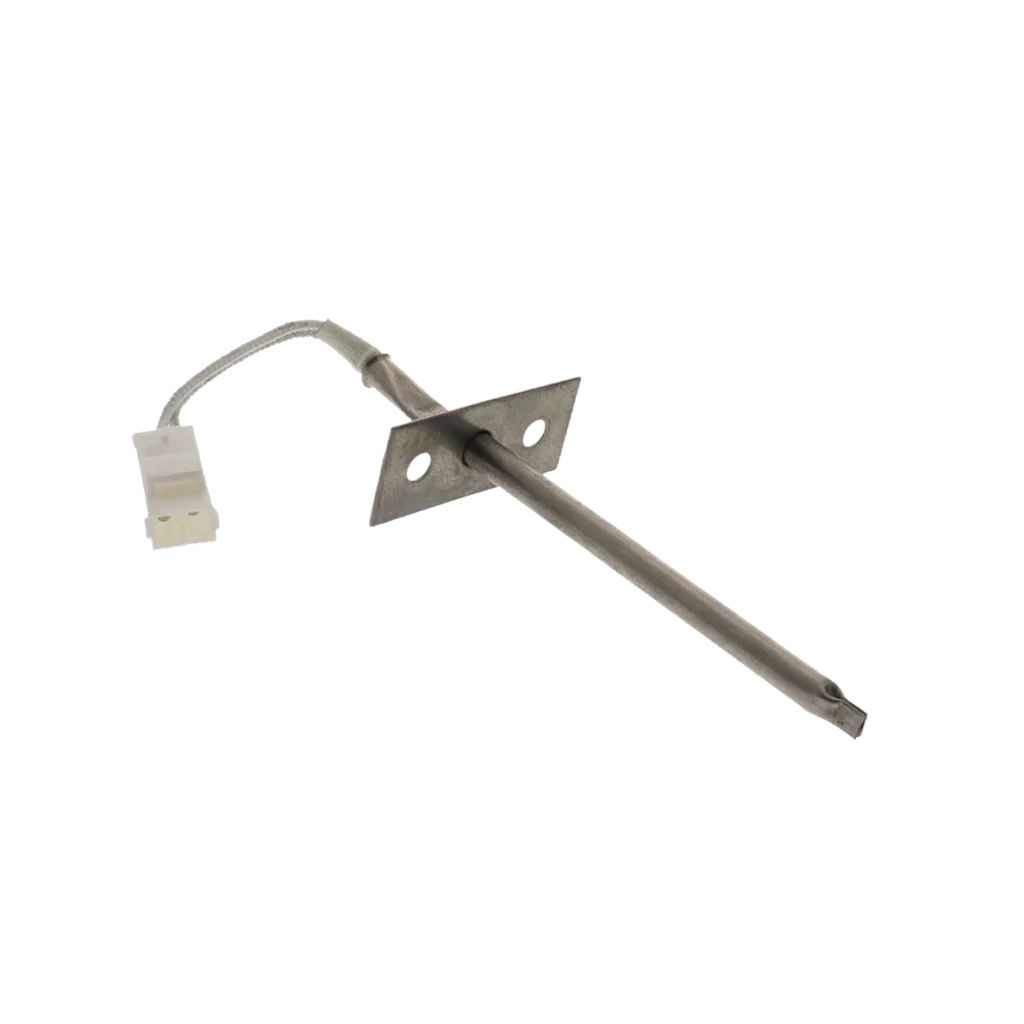
You preheated your Frigidaire oven for 20 minutes, stuck your hand inside, and... barely warm. The display says 350°F, but your cookies would take an hour to bake at this rate. This is one of the most common oven failures, and in most cases, it's a $24 fix you can do yourself in under 30 minutes.
The temperature sensor probe (part 316233902) is the brain's thermometer — when it fails, your oven either won't heat at all, heats way too hot, or cycles on and off erratically. Let's walk through the diagnosis process so you don't replace parts you don't need.
Quick Symptom Check
Your oven is likely dealing with a failed temperature sensor if you're seeing:
- Little to no heat when baking — element glows but oven stays cold
- Oven heating unevenly — hot spots on one side, raw food on the other
- Oven running too hot — burns everything even on low settings
- Element won't heat at all — no glow, no warmth, nothing
- Gas igniter glows but won't light — (gas models only) weak or failing sensor
- F10 or F11 error codes — runaway temperature detected
If you're getting zero heat and the display won't even turn on, that's a different issue — likely the control board or a tripped breaker. But if the oven acts like it's heating without actually doing it? That's your sensor 90% of the time.
Cause #1: Failed Temperature Sensor Probe (85% of cases)
What it does: This thin metal probe sticks into the oven cavity and measures the actual air temperature. It sends resistance readings back to the control board, which uses that data to cycle the heating element on and off. When the sensor drifts out of spec or breaks internally, the board gets bad data and makes bad decisions.
How to test it:
- Unplug the oven or flip the breaker — you're going to be touching wires
- Open the oven door and locate the sensor probe — it's usually on the upper left or right back wall, looks like a thin metal tube about 3 inches long
- Remove the two screws holding the bracket, gently pull it out an inch
- Disconnect the wire harness from the back (you might need to open the rear panel)
- Set your multimeter to ohms and test across the two terminals — you should see 1,080 to 1,100 ohms at room temperature (70°F)
If you're reading open circuit (infinite resistance) or anything below 1,000 ohms, the sensor is toast. If it's borderline (1,050-1,080), test it again after warming it with a hair dryer — resistance should drop as temperature rises. If it doesn't change or jumps erratically, replace it.
The fix: Sensor replacement on Frigidaire ranges like the FFEF3052TSG or CFEF3052TWD takes about 15 minutes. The 316233902 probe is a direct fit for most Frigidaire, Kenmore, and Electrolux models from 2008-2023. One heads-up from a real customer: "The part was great unfortunately it didn't work it has a different connection than what I have on my stove." Some older models use a different connector style. If yours doesn't match, you'll need to cut the old connector off and splice the wires together with high-temp porcelain wire nuts (included with most sensor kits).
Cost: $23.99 for the sensor
Difficulty: Easy — no special tools needed beyond a screwdriver and multimeter
Cause #2: Corroded or Loose Sensor Wiring (8% of cases)
Even if the sensor itself tests fine, the wiring connection behind it can fail. These ovens run hot, and over years the terminals oxidize or the spade connectors loosen. You'll see the exact same symptoms as a bad sensor — inconsistent heating, runaway temps, or no heat at all.
How to check: With the sensor removed, inspect the wire terminals. Look for:
- Green or white crusty buildup (corrosion)
- Burnt or melted plastic around the connector
- Wires that pull out of the connector easily
- Blackened or discolored metal terminals
If you find any of this, clean the terminals with fine sandpaper or a wire brush, then reconnect firmly. If the connector housing is melted, you'll need to replace the wire harness or splice in a new connector.
The fix: Clean and reconnect if minor. For damaged connectors, cut back to clean wire and use high-temp butt connectors rated for 450°F+.
Cost: Free to $5 for connectors
Difficulty: Easy
Cause #3: Faulty Oven Control Board (5% of cases)
If the sensor tests good and the wiring is clean, the control board might be misinterpreting the signal. This is rare but happens — especially after power surges or if the board has visible burn marks.
How to test: There's no easy home test for this. If you've replaced the sensor and verified all wiring, and the oven still won't regulate temperature correctly, the board is the next suspect. Professional diagnosis runs $100-150, and board replacement is $200-400 depending on your model.
The fix: Control board replacement requires pulling the range out, removing the back panel, and swapping the circuit board. Not hard mechanically, but you're working with 240V connections. If you're not comfortable with that, call a pro.
Cost: $180-350 for the board + labor
Difficulty: Moderate (electrical risk)
Cause #4: Worn Heating Element (Gas Models: Weak Igniter)
On electric ovens, the bake element itself can fail even if the sensor is fine. You'll typically see it glow red in spots but not uniformly, or it won't glow at all. On gas models, a weak igniter will glow orange but not draw enough current to open the gas valve — same symptom as a bad sensor.
How to test (electric): Turn on the oven and watch the bake element. It should glow bright red evenly across its length within 90 seconds. If part of it stays dark, or it glows dull orange, it's failing.
How to test (gas): Watch the igniter. It should glow white-hot and click the gas valve open within 90 seconds. If it glows orange/yellow for 2+ minutes without lighting, it's weak.
The fix: Element replacement (electric) or igniter replacement (gas). Both are separate repairs from the sensor.
Cost: $30-80 for the part
Difficulty: Easy to moderate
Cause #5: Oven Not Preheating Long Enough (User Error)
I'll be honest — sometimes the oven is fine and we're just impatient. Frigidaire ovens, especially the FFEF3011 and FFGF3011 series, take 12-15 minutes to reach 350°F. If you're opening the door repeatedly or loading a cold casserole dish before it's fully preheated, it'll feel like it's not heating properly.
The test: Let the oven preheat fully until the display beeps and the preheat light goes off. Then use a separate oven thermometer (the $6 kind from any hardware store) and check the actual temp after 5 more minutes. If it reads within 25°F of your setting, the oven is working correctly.
The fix: Patience, or recalibrate the oven's temperature offset in the settings menu (check your manual).
Cost: Free
Difficulty: None
Cause #6: Blocked or Restricted Venting
Ovens need airflow to regulate temperature. If the vent (usually along the top back of the range) is blocked by foil, a griddle, or too many pots, heat builds up and the sensor can give false readings.
The fix: Clear anything blocking the vent area. Don't store stuff on top of the range.
Cost: Free
Difficulty: None
Cause #7: Calibration Drift Over Time
Even a working sensor can drift slightly out of calibration after years of use. If your oven runs 25-50°F off consistently (always too hot or always too cold), but does maintain that offset steadily, it's likely just miscalibrated rather than broken.
The fix: Most Frigidaire ovens let you adjust the temperature offset by ±35°F through the control panel. Press and hold the Bake button for 5 seconds, then use the +/- buttons to adjust. Check your model's manual for exact steps.
Cost: Free
Difficulty: None
When to Call a Pro
Call a technician if:
- You've replaced the sensor and checked all wiring, but symptoms persist
- You're seeing error codes like F10, F11, F30, or F31 repeatedly
- The oven trips the breaker when you turn it on
- You smell gas and the igniter won't light (shut off gas, evacuate, call a pro immediately)
- You're not comfortable working with 240V electrical connections
For a straightforward sensor replacement on models like the FFEF3052TBD or CFEF317GSB? That's absolutely a DIY job. But if the diagnosis points to the control board or gas valve, the $150 service call is worth it to avoid creating a bigger problem.
Frequently Asked Questions
How do I know if my oven sensor is bad without a multimeter?
Visual inspection can help — if the sensor probe is cracked, corroded, or the metal sheath is kinked or broken, it's definitely bad. But for an internal failure (most common type), you really need a meter to test resistance. You can buy a basic multimeter for $15-20 at any hardware store, and it'll pay for itself on the first repair. If you absolutely can't test it, try this: if your oven is completely unresponsive to temperature changes (stays cold no matter what, or runs full blast and won't turn off), there's a 90% chance the sensor is the culprit.
Will a bad oven sensor cause an error code?
Sometimes yes, sometimes no. A completely open (broken) sensor will usually trigger an F10 or F11 error code on Frigidaire models — that's the control board saying "I'm not getting a temperature reading." But if the sensor is just drifting out of range slowly, you might not see any error code at all. You'll just notice the oven isn't heating right over time. Error codes are helpful when they appear, but their absence doesn't mean the sensor is fine.
Can I use a universal oven sensor instead of the 316233902?
Technically yes, but I wouldn't recommend it. Universal sensors are designed to "fit most models" by having adjustable length probes and generic connectors. The problem is oven sensors are calibrated to specific resistance curves — your Frigidaire control board expects to see 1,080 ohms at 70°F and a predictable resistance drop as temps rise. A universal sensor might be close, but "close" means your oven could run 30-40°F off target. For a $24 OEM part that you know will work correctly, it's not worth the gamble. The only exception: if you're in a pinch and need to limp the oven along until you can get the right part, a universal can work temporarily.
Diagnosed the problem?
316233902 · In Stock · Fast shipping