
Bosch Dishwasher Not Draining Completely — 5 Causes & How to Fix
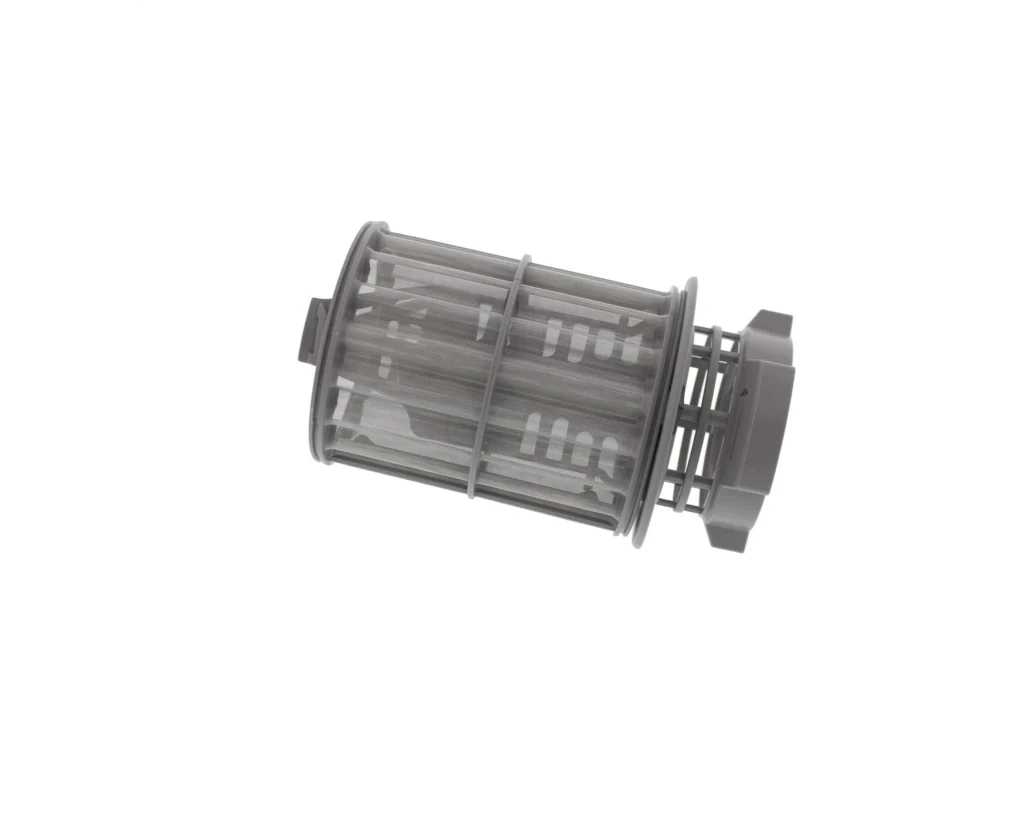
You run your Bosch dishwasher overnight, and the next morning there's a puddle of murky water sitting in the bottom. The cycle finished, the machine beeped, but somehow the water didn't go anywhere. If you've got a Bosch model like the SHX3AR55UC, SHE3AR56UC, or SHX4AP02UC, the culprit is often the micro pump filter — a small but critical component that fails more often than Bosch likes to admit.
This part (00645038) sits between your circulation pump and drain system, catching debris before it clogs the pump. When it fails or gets blocked, water backs up with nowhere to go.
Quick Symptom Check
- Standing water in the tub bottom after cycle completes
- Partial drainage — dishes are wet but some water remains
- Gurgling or humming sound during drain cycle
- Error code E24 or E25 on display
- Water drains very slowly (takes 5+ minutes)
- Clean light flashing in a pattern
If you've got two or more of these, keep reading. We'll walk through the causes from most to least likely.
Cause #1: Clogged Micro Pump Filter (Probability: 65%)
The micro pump filter (part 00645038) is a fine mesh screen that traps food particles, broken glass, and mineral deposits. Over time, it gets packed solid with gunk — especially if you're in a hard water area or you scrape but don't rinse dishes.
How to diagnose:
- Turn off power at the breaker
- Remove the lower rack
- Unscrew the cylindrical filter assembly in the tub bottom (turn counterclockwise)
- Pull out the fine mesh filter screen — if it's caked with white mineral deposits or food debris, you've found your problem
The fix: You can try cleaning it with vinegar and a soft brush, but honestly? If it's been running like this for months, the mesh is probably damaged. Replacement takes 10 minutes. The OEM part is 00645038, and it fits virtually every Bosch 300, 500, and 800 series from the last decade — including SHE3AR52UC, SHX3AR52UC, SHE4AM15UC, and SHX4AT55UC models.
Cost: $31.99 for the part, $0 for your labor.
Cause #2: Drain Pump Impeller Jam (Probability: 20%)
Even if the filter looks clean, something small — a toothpick fragment, a twist tie, a seed — can slip past and jam the drain pump impeller. You'll hear the pump trying to run (a low hum), but nothing moves.
How to diagnose:
- Access the filter area (same as above)
- Shine a flashlight into the pump cavity below the filter housing
- Look for any debris blocking the impeller blades
- Try spinning the impeller with a finger (power off!) — it should rotate freely
The fix: Remove whatever's blocking it. Needle-nose pliers work well. If the impeller is cracked or the pump motor hums but won't spin even when clear, you need a new drain pump assembly (separate part, usually $80–$120).
Cause #3: Kinked or Clogged Drain Hose (Probability: 10%)
Your dishwasher's drain hose runs from the pump to either your garbage disposal or a standpipe under the sink. If it's kinked, pinched behind the machine, or clogged with grease buildup, water can't exit no matter how well the pump works.
How to diagnose:
- Pull the dishwasher forward a few inches (you may need to remove the toe kick panel first)
- Trace the ribbed drain hose from the pump to the sink connection
- Check for sharp bends or pinch points
- Disconnect the hose at the disposal/sink end and blow through it — air should pass freely
The fix: Straighten any kinks. If the hose is clogged, disconnect both ends and run hot water + dish soap through it, or just replace it ($15 part).
Cause #4: Clogged Air Gap or Disposal Knockout (Probability: 3%)
If your installation includes an air gap (the chrome cylinder on your countertop), it can get clogged with food debris. Or if your drain hose connects to a garbage disposal, the knockout plug might still be in place — a rookie installation mistake that blocks drainage completely.
How to diagnose:
- Air gap: Pop off the chrome cap and check for debris inside
- Disposal: Shine a light into the dishwasher inlet on your disposal — you should see a clear opening, not a plastic plug
The fix: Clean the air gap with a bottle brush. If the disposal knockout is still there, use a hammer and screwdriver to punch it out from inside the disposal (turn off the disposal first, obviously).
Cause #5: Faulty Drain Pump or Control Board (Probability: 2%)
Least likely but possible: the drain pump motor has burned out, or the control board isn't sending power to the pump. This usually comes with error codes (E24, E25) or a completely silent drain cycle — no hum, no attempt to pump.
How to diagnose: Use a multimeter to check if the pump is getting 120V during the drain cycle. If yes and it's not running, pump motor is dead. If no voltage, control board issue.
The fix: Replace the drain pump ($80–$120) or control board ($200–$400). Honestly, at control board prices, consider calling a pro or evaluating if a new dishwasher makes more sense for a 10+ year old unit.
When to Call a Pro
If you've checked the filter, cleared the pump, inspected the hose, and verified the air gap/disposal connection, and it's still not draining? That's a control board or wiring issue. Unless you're comfortable with a multimeter and reading wiring diagrams, call a tech. Expect $150–$250 for a service call plus parts.
For everything else on this list? You can do it yourself with basic tools and save $200.
Frequently Asked Questions
How often should I replace the Bosch micro pump filter?
There's no official replacement interval, but if you've never changed it and your dishwasher is 5+ years old, it's probably due. Most techs recommend inspecting it every 2–3 years and replacing if cleaning doesn't restore full flow. Hard water areas may need replacement more often due to mineral buildup that permanently clogs the fine mesh.
Will using rinse aid help prevent filter clogs?
Rinse aid helps with drying and spot prevention, but it won't stop food debris from clogging the filter. What does help: scraping plates before loading (you don't need to rinse, but big chunks should go in the trash), running hot water at the sink before starting the cycle, and using a quality detergent that breaks down grease effectively.
Can I run the dishwasher without the micro pump filter installed?
Technically yes, the machine will run. Should you? Absolutely not. That filter protects your drain pump from debris that will destroy the impeller. Running without it is like driving without an oil filter — you'll get away with it briefly, then face a much more expensive repair when the pump fails.
Diagnosed the problem?
00645038 · In Stock · Fast shipping