
OEM vs Aftermarket WB2X8228 Burner Receptacle for GE: Honest Comparison
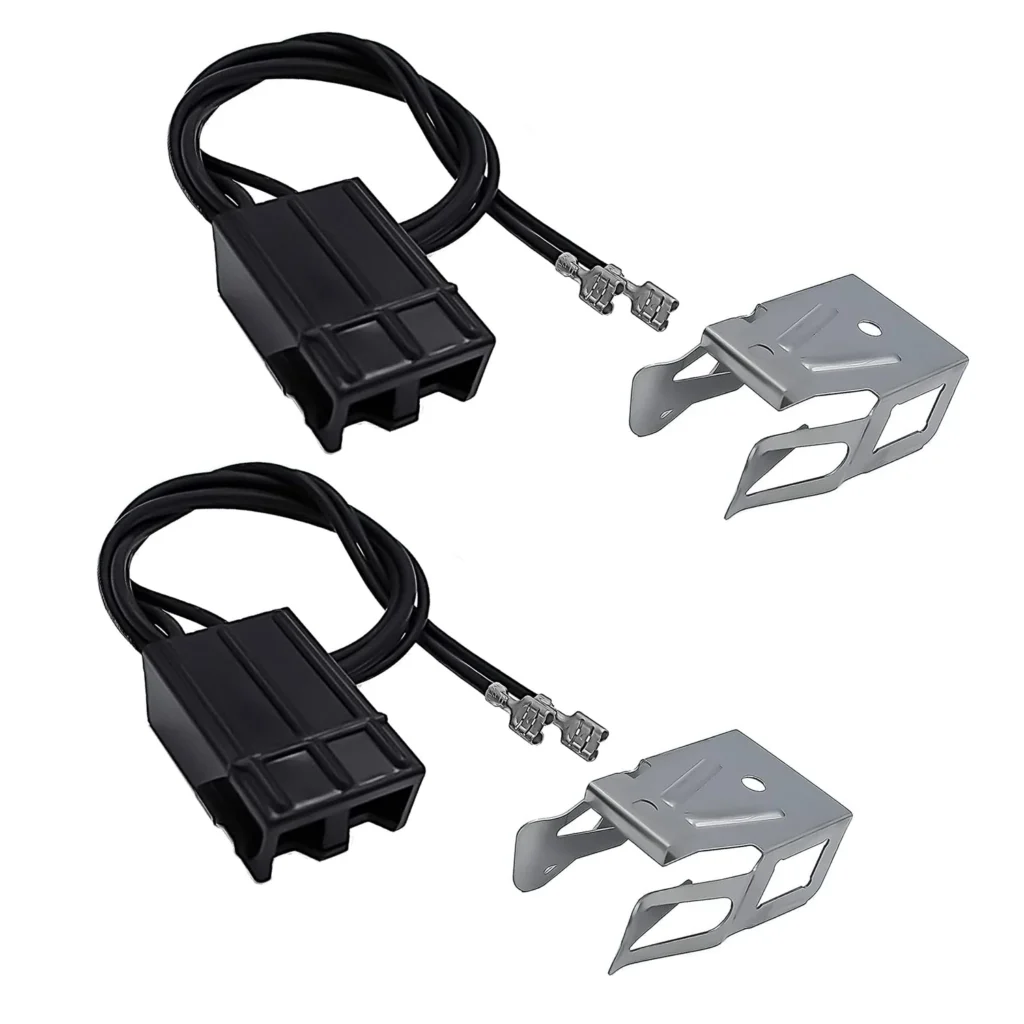
Your JBP24GS1 burner won't heat, and you've traced it to a melted receptacle. Now you're staring at two options: a $65 OEM GE part with a 2-week lead time, or a $24.99 aftermarket kit that ships tomorrow. Here's what actually matters in that decision.
Quick Answer
For the WB2X8228 burner receptacle and wire kit, aftermarket wins on value. You're getting the same ceramic block and wire gauge at 62% less cost. OEM only makes sense if you're under warranty or need documentation for a rental property repair.
Side-by-Side Comparison
| Factor | OEM GE (WB2X8228) | Heima Aftermarket |
|---|---|---|
| Price | $58–$72 | $24.99 |
| Warranty | 90 days parts only | 1 year parts & labor |
| Lead Time | 7–14 business days | Ships same/next day |
| Fit & Finish | Factory specs, GE logo | Identical dimensions, no logo |
| Where Made | Mexico (varies by batch) | China to GE specs |
| Wire Gauge | 14 AWG high-temp | 14 AWG high-temp |
When OEM Makes Sense
There are three situations where spending double on the GE-branded part is justified:
You're still under manufacturer warranty. If your range is less than a year old, using aftermarket parts can void coverage. Call GE first — they might cover the receptacle replacement entirely.
You're a landlord documenting repairs. Some property management companies require OEM parts for appliance repairs to satisfy insurance requirements. Keep your receipts either way.
You're fixing a high-end pro range. On a $3,000+ range like the JGS750, some people prefer all-OEM parts for peace of mind. Fair enough — but this receptacle is identical across the entire GE line, from budget JBP models to pro series.
When Aftermarket Wins
For most home repairs, aftermarket is the smarter play. Here's why:
The failure mode is identical. Both OEM and aftermarket receptacles fail the same way — the ceramic cracks from repeated heat cycles, or the terminals pit from arcing. Neither design prevents this; it's just how coil burner connections work. Spending $65 doesn't buy you a fundamentally different part.
Installation is plug-and-play. The WB2X8228 clips into the same mounting holes and uses spade terminals. There's no calibration or adjustment. If it fits GE's design (which aftermarket must, or it wouldn't work), it performs identically.
You're back to cooking faster. Two-week waits for OEM parts are common right now. When your element won't heat and you can't use that burner, getting the fix done tomorrow matters more than a logo stamp.
Better warranty coverage. Heima's 1-year warranty beats GE's 90-day parts-only coverage. If the receptacle fails in month four, you're covered — not buying another part.
Our Verdict
Save the $35–$45 and go aftermarket. The WB2X8228 is a commodity electrical component — ceramic block, brass terminals, heat-rated wire. There's no proprietary GE technology here worth paying double for. Use the savings to replace both receptacles if your range is 8+ years old, since they typically fail around the same time.
The one exception: if you're already ordering other genuine GE parts and getting free shipping over $75, toss the OEM receptacle in the cart. Otherwise, aftermarket delivers identical performance at real-world pricing.
Frequently Asked Questions
Will an aftermarket receptacle fit my JBP30BA1 exactly?
Yes. The WB2X8228 mounting holes, terminal positions, and wire lengths are standardized across all compatible GE, Hotpoint, and Kenmore ranges. The part either fits the factory design specs or it doesn't work at all — there's no "close enough" on electrical connections.
Do I need to replace the burner element when I replace the receptacle?
Not unless the element itself is damaged. If your element still has continuity (test with a multimeter) and shows no cracks or breaks in the coil, reuse it. Most element-won't-heat issues are the receptacle, not the element. That said, if your element is corroded where it plugs in, replace both while you're in there.
How long does an aftermarket burner receptacle typically last?
Expect 5–8 years with normal use, same as OEM. Lifespan depends more on cooking habits than part origin — if you frequently max out burners or spill liquid onto hot elements (causing steam and thermal shock), you'll go through receptacles faster regardless of brand. Clean spills promptly and avoid slamming heavy pots onto cold elements to extend life.
Ready to go aftermarket?
WB2X8228 · Factory direct · 1-year warranty