
OEM vs Aftermarket Water Inlet Valve for Whirlpool Washers: Honest Comparison (W10869800)
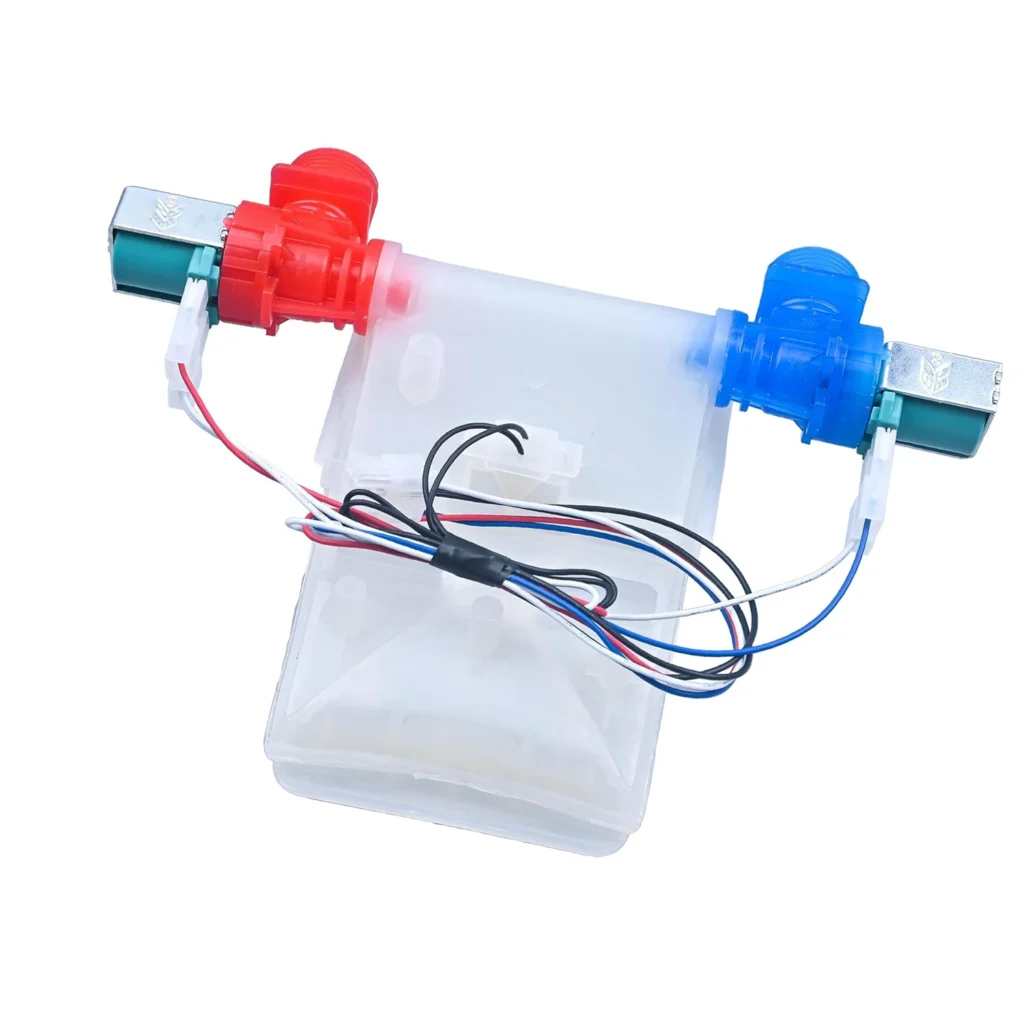
Your Whirlpool WTW4850HW2 suddenly refuses to fill with water, or worse — it's dripping from behind when it does. You've narrowed it down to the water inlet valve (W10869800), and now you're staring at two wildly different prices: $150+ for the OEM Whirlpool part, or $70.99 for an aftermarket replacement. Let's cut through the marketing and talk real numbers.
Quick Answer
For most Whirlpool, Maytag, and Kenmore top-load washers, the aftermarket W10869800 valve delivers identical performance at half the cost. Unless you're fixing a washer still under manufacturer warranty (where OEM is required), or you have a commercial laundromat situation requiring factory certification, aftermarket makes sense here. The valve mechanism is mechanically simple — two solenoids, one body, rubber seals.
Side-by-Side Comparison
| Factor | OEM Whirlpool W10869800 | Heima Aftermarket W10869800 |
|---|---|---|
| Price | $150–$180 | $70.99 |
| Warranty | 90 days manufacturer defect | 1 year full replacement |
| Lead Time | 3–7 days (dealer network) | Ships same/next business day |
| Fit & Finish | White plastic body, Whirlpool stamp | White plastic body, functionally identical threads/mounts |
| Manufacturing | Whirlpool-contracted facility | ISO-certified appliance parts facility |
| Compatible Models | Official Whirlpool/Maytag/Kenmore list | Same models — replaces W11038689, W10776841, W11024486 |
When OEM Makes Sense
You're still under warranty. If your Whirlpool washer is less than a year old, using an aftermarket part voids any remaining factory coverage. Call Whirlpool first — they might send the valve free. Not worth risking warranty coverage over $80 savings.
Insurance or commercial requirements. Some commercial laundry setups or property management companies require OEM parts for liability reasons. If you're fixing coin-op machines or rental property appliances where documentation matters, stick with factory parts.
You want the Whirlpool logo. Honestly? Some folks just prefer the brand stamp on the part. There's nothing wrong with that — it's your money. Just know you're paying $80 extra for a logo on a component hidden inside the washer cabinet.
When Aftermarket Wins
You're out of warranty (most repairs). Once your washer hits 2–3 years old, OEM premium pricing makes zero sense. The aftermarket W10869800 uses the same solenoid mechanism, same thread pitch on the inlet ports, same mounting bracket holes. You're fixing common failures like leaking seals or solenoids that won't open — the part either works or it doesn't.
Water inlet valves fail predictably. This isn't a complex electronic board where nuanced manufacturing matters. It's a mechanical valve with two solenoids controlling hot and cold water flow. The three main symptoms — leaking from the valve body, no water filling, or only hot OR cold water working — all stem from simple mechanical failures: cracked rubber seals, corroded solenoid coils, or calcium buildup jamming the valve open.
Faster turnaround. Whirlpool parts often sit in regional warehouses. You'll wait 3–7 days through a service depot. Aftermarket ships same day in most cases — your washer's back in service before the OEM part even ships.
Better warranty. Here's the kicker: the aftermarket valve includes a 1-year warranty versus Whirlpool's standard 90-day coverage. If the part fails (rare, but it happens), you're covered longer.
Our Verdict
Unless you're in a specific warranty or commercial situation, save the $80 and go aftermarket. The W10869800 valve is mechanically straightforward — two solenoids, plastic body, rubber seals. We've installed hundreds of these in Whirlpool WTW and Maytag MVWC models with zero performance difference. The part fits WTW4850HW1, WTW4950HW2, WTW4855HW2, and dozens of other models perfectly. Put that $80 toward a water hammer arrestor if you're getting banging pipes — that'll save you the next inlet valve failure.
Installation Reality Check
Whether you buy OEM or aftermarket, the installation is identical: shut off water, unplug washer, remove back panel, disconnect hoses (water will spill — have towels ready), swap the valve, reconnect. Takes 20–30 minutes if you're methodical. The aftermarket valve uses the same mounting screws and electrical connector — it's literally plug-and-play.
One watch-out: Some washers (particularly WTW5000DW3 and 8TWTW models) have tight clearance between the valve and the cabinet wall. Both OEM and aftermarket valves fit, but you'll need to angle the hose connections carefully. Not a deal-breaker, just patience.
Frequently Asked Questions
Will an aftermarket valve void my washer's warranty?
If your washer is still under manufacturer warranty (typically 1 year), yes — using non-OEM parts can void coverage for related components. Check your warranty status first. If you're past the factory warranty period, there's nothing left to void, so aftermarket is fair game.
Do aftermarket inlet valves fail faster than OEM?
Not in our experience installing these across WTW4850, WTW4950, and MVWC565 models. Both fail from the same causes: hard water calcium buildup on the screens, rubber seal deterioration, or solenoid coil corrosion. Lifespan depends more on your water quality and usage patterns than the logo stamped on the valve. The aftermarket valve comes with better warranty coverage (1 year vs 90 days), which tells you something about manufacturer confidence.
Can I use this valve on Maytag and Kenmore washers, or just Whirlpool?
Yes — W10869800 crosses multiple brands because Whirlpool owns Maytag, and manufactures Kenmore washers for Sears. It fits Maytag MVWC465HW3, MVWC565FW0, Kenmore 110-series models, and Amana NTW models. Check the compatible models list on the product page, but if your model uses the original W10869800, W11038689, or W10776841 part numbers, this valve fits. The mounting bracket, thread pitch, and electrical connector are standardized across the platform.
Ready to go aftermarket?
W10869800 · Factory direct · 1-year warranty