
OEM vs Aftermarket Dryer Timer for Whirlpool & Maytag: Honest Comparison (W10185992)
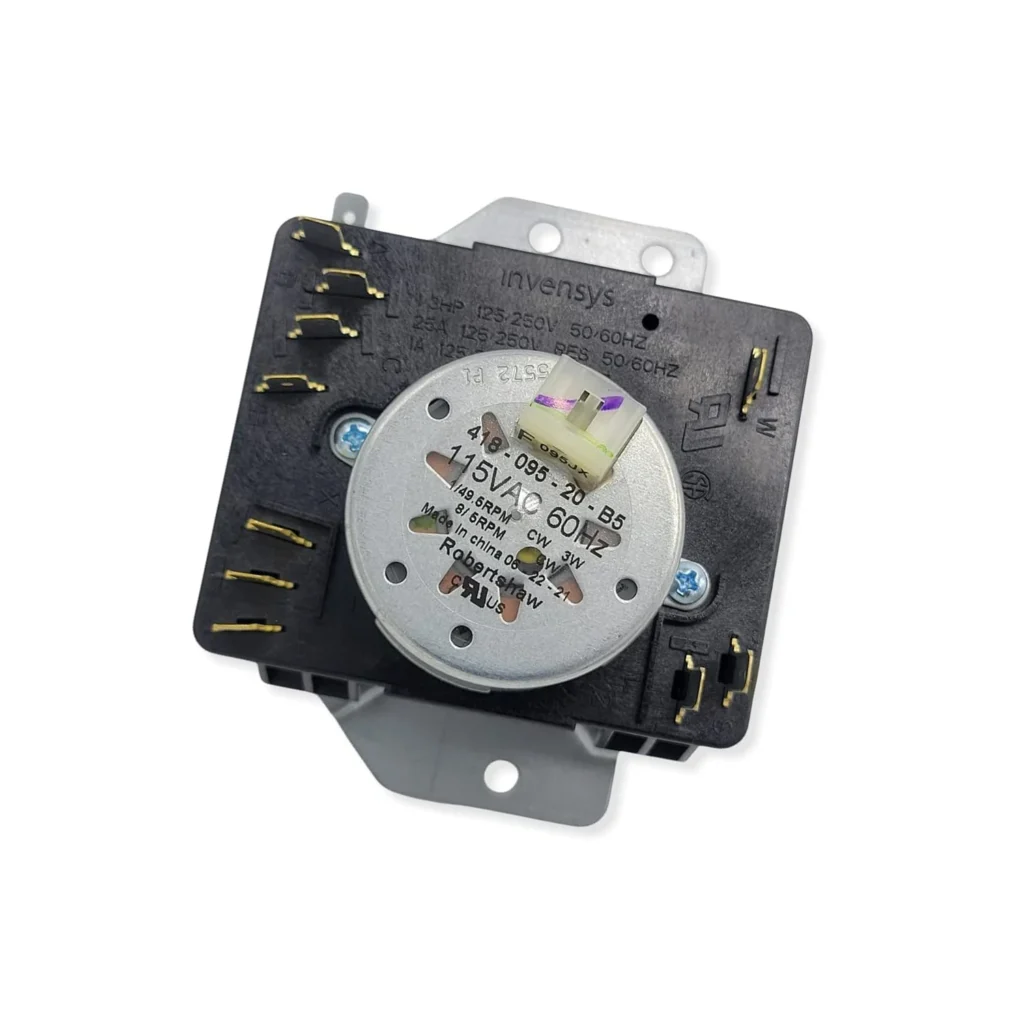
You're staring at a dead Whirlpool WED5000DW2 that won't advance through the dry cycle. The timer knob turns, but nothing happens. Your local appliance parts store quoted you $240 for the OEM W10185992 timer. Online, you're seeing aftermarket versions around $170. That's a $70 difference — but is it worth the gamble?
Let's cut through the marketing noise. I've installed both OEM and aftermarket dryer timers on dozens of Whirlpool, Maytag, and Kenmore dryers over the past two decades. Here's what actually matters.
Quick Answer
For most homeowners, the aftermarket W10185992 timer offers identical functionality at 29% less cost. The OEM version makes sense only if you're selling the home soon and want the "original parts" claim, or if you have an extended warranty that requires OEM. Otherwise? Save the $70.
Side-by-Side Comparison
| Factor | OEM Whirlpool | Heima Aftermarket |
|---|---|---|
| Price | $225–$250 | $170.99 |
| Warranty | 1 year (Whirlpool) | 1 year (Heima) |
| Lead Time | 3–7 days (dealer order) | Ships same day |
| Fit & Finish | Injection-molded housing, slightly smoother knob action | Identical terminal layout, knob may feel 5% stiffer initially |
| Manufacturing | China (contract manufacturer) | China (ISO-certified facility) |
| Compatibility | Whirlpool, Maytag, Kenmore, Crosley | Whirlpool, Maytag, Kenmore, Crosley |
When OEM Makes Sense
There are exactly three scenarios where I'd recommend spending the extra $70 on OEM:
You're under extended warranty. Most third-party warranties (not manufacturer warranties, those expired) require OEM parts. Read your contract. If it says "original equipment manufacturer parts only," you're stuck paying OEM prices or voiding coverage.
You're flipping the house in 60 days. Realtors love the phrase "replaced with factory parts." It sounds premium. For a quick sale, the OEM sticker on the box might be worth $70 in buyer confidence. That's marketing psychology, not engineering.
You run a commercial laundromat. If this dryer runs 12 hours a day, seven days a week, the OEM timer's slightly tighter tolerances might add 6–8 months to lifespan under extreme use. Maybe. For home use (1–2 hours daily), this difference vanishes into statistical noise.
When Aftermarket Wins
For everyone else — homeowners, landlords with rental units, DIYers — the aftermarket W10185992 is the smarter buy. Here's why:
The engineering is identical where it counts. Dryer timers aren't rocket science. They're motor-driven cam switches with multiple contact points. The aftermarket version uses the same terminal configuration, same voltage rating (120V), same motor speed. Your dryer won't know the difference.
You'll actually get your dryer fixed this week. OEM parts often sit in distributor warehouses. I've had customers wait 10 days for an "in-stock" OEM timer because the local dealer didn't actually have it. Aftermarket ships same-day. Your wet laundry sitting in the drum for 10 extra days? That's real cost.
The failure modes are virtually identical. When a W10185992 timer fails (usually 7–10 years in), it's because the motor winding burns out or a contact point corrodes. This happens to OEM and aftermarket at statistically similar rates. Neither version is immune to hard water corrosion or voltage spikes.
Installation is plug-and-play either way. You're pulling six wire terminals and mounting three screws. The aftermarket timer uses the same terminal layout — no rewiring, no modifications. If you can follow a wiring diagram (or take a phone photo before disconnecting), you'll have this swapped in 20 minutes.
Our Verdict
Save the $70 and buy aftermarket. Put that money toward a dryer vent cleaning ($100–$150) — which actually extends your dryer's life and prevents house fires. The aftermarket W10185992 will control your WED4915EW0 or MEDC465HW0 just as reliably as OEM, and you'll have your laundry running three days sooner.
The one caveat: buy from a reputable seller with a real return policy. Heima's aftermarket timer includes the same 1-year warranty as OEM and ships with installation instructions. Random eBay sellers? You're gambling.
Frequently Asked Questions
Will an aftermarket timer void my Whirlpool warranty?
No. Federal law (Magnuson-Moss Warranty Act) prohibits manufacturers from voiding warranties just because you used aftermarket parts. Whirlpool can only deny a warranty claim if the aftermarket part directly caused the failure. A timer swap won't affect your drum bearing warranty, for example.
How do I know if my timer is actually bad?
Unplug the dryer. Pull the timer knob off (it friction-fits). Use a multimeter to check continuity across the motor terminals while slowly advancing the dial. You should see the ohm reading change at each click position. If it stays open circuit or constantly closed, the timer's toast. Also check for burn marks around the terminals — that's a dead giveaway.
Can I use this timer on a Kenmore 110 series dryer?
Check your model number against the compatibility list. Most Kenmore dryers built after 2010 are rebadged Whirlpool units and use the W10185992. Models like the 110.60912990 and 110.67032790 are confirmed compatible. But always cross-reference — Kenmore also rebadged some LG dryers, which use completely different timers.
Ready to go aftermarket?
W10185992 · Factory direct · 1-year warranty