
OEM vs Aftermarket KW7-0 Micro Switch: Which Door Switch Actually Lasts? (Air Fryer & Microwave)
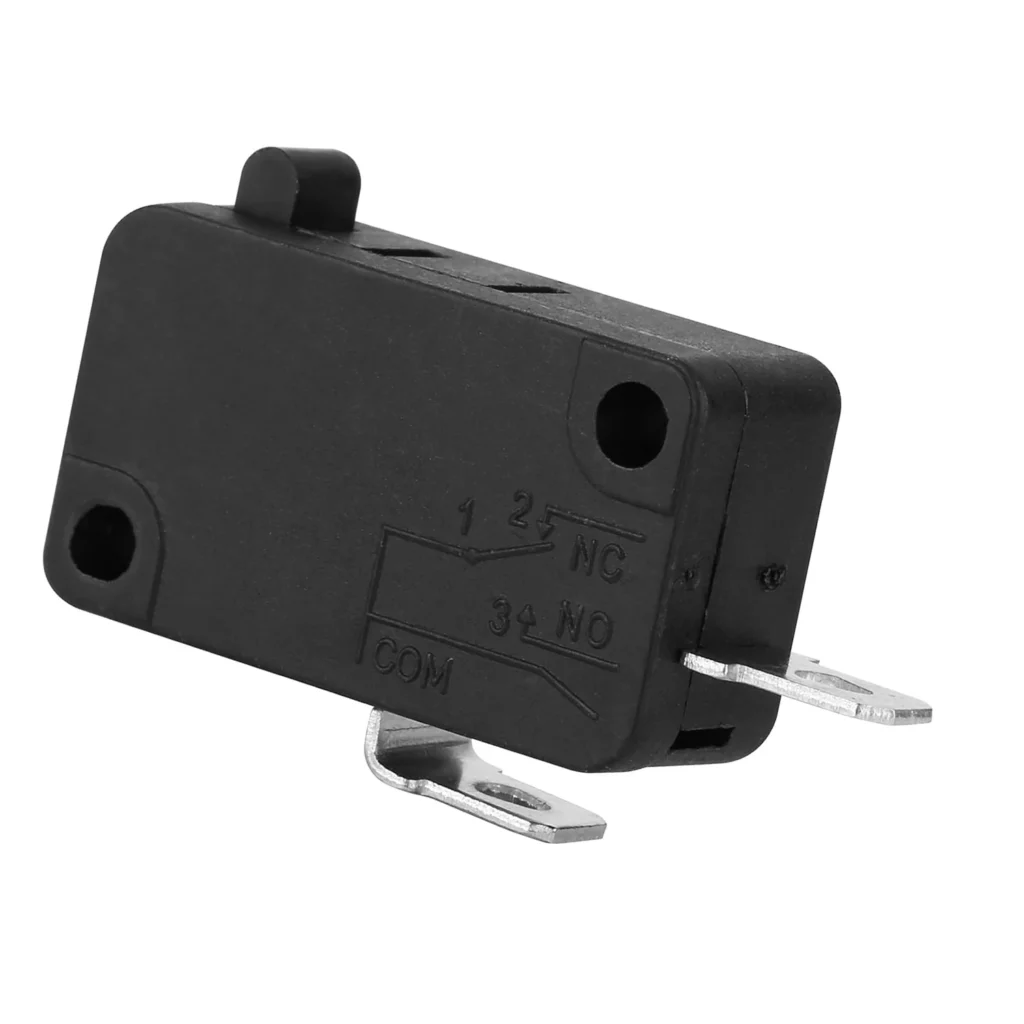
Your Whirlpool microwave won't start, or your COSORI air fryer thinks the door's open when it isn't. The culprit? That tiny KW7-0 micro switch has finally given up after thousands of door clicks. Now you're staring at a $15 aftermarket option versus a $45+ OEM part (if you can even find it in stock), and you're wondering if saving $30 means you'll be replacing this thing again in six months.
Let's cut through the marketing and look at what actually matters.
Quick Answer
For the KW7-0 micro switch, aftermarket makes sense for 95% of repairs. These switches are commodity components made by the same handful of manufacturers in China — whether it has a Whirlpool sticker or not. The failure point is mechanical fatigue, not brand loyalty, and aftermarket versions use identical contact materials and spring mechanisms.
Side-by-Side Comparison
| Factor | OEM (Whirlpool/Brand Labeled) | Heima Aftermarket KW7-0 |
|---|---|---|
| Price | $35–$65 depending on dealer | Typically $12–$18 |
| Availability | Often backordered 2–4 weeks | Ships same/next day |
| Warranty | 90 days parts only | 1 year parts replacement |
| Contact Rating | 16A 250VAC (SPDT) | 16A 250VAC (SPDT) — identical spec |
| Terminal Type | 3-pin quick connect | 3-pin quick connect (universal fit) |
| Packaging | Brand box with part number | Anti-static bag with install diagram |
When OEM Makes Sense
There are exactly two scenarios where paying extra for the OEM switch is justified:
You're under manufacturer warranty. If your Whirlpool MH8150XJQ0 or COSORI CAF-DC601-AUSR is still covered, use the OEM part. Mixing aftermarket components can give warranty departments an excuse to deny future claims, even if the switch isn't related.
You're repairing commercial equipment. Some commercial kitchen codes require manufacturer-certified parts for liability reasons. A $200,000 restaurant insurance policy isn't worth risking over a $30 switch savings.
That's it. For everyone else — home cooks with out-of-warranty appliances — the OEM premium buys you nothing but a fancy box.
When Aftermarket Wins
The KW7-0 is a universal micro switch used across dozens of brands — Whirlpool, COSORI, Power XL, Gourmia, Paula Deen, and Crux all source these from the same Asian contract manufacturers. The switch in your air fryer and the switch in your microwave are electrically identical despite having different brand stickers.
Here's what matters: the contact material is silver alloy either way, the spring mechanism uses the same tempered steel, and the failure mode is the same (mechanical wear from repeated actuations, not electrical degradation). Whether you pay $15 or $50, you're getting 50,000–100,000 cycles before the contacts oxidize or the spring fatigues.
The aftermarket KW7-0 replaces obsolete variations (KW7-0A, KW7-1, KW7-2) that manufacturers have discontinued. Good luck finding an "official" KW7-0A from Whirlpool in 2024 — they stopped stocking it three years ago. The aftermarket version maintains backward compatibility with all three terminal configurations.
Installation is identical: Unplug the appliance, remove the door panel or control housing, disconnect the three terminals (note their positions — photo it with your phone), press the retaining tab, and pop out the old switch. The new one clicks into the same mounting bracket. Five minutes if you've done it before, fifteen if you haven't.
Our Verdict
Skip the OEM markup. The KW7-0 micro switch is a standardized component where brand names add zero functional value. Save $30–$40, get faster shipping, and enjoy a longer warranty. Put the savings toward a backup switch — these fail eventually regardless of the logo stamped on them. For appliances like the Whirlpool W10727360, COSORI AF601, or Power XL Vortex 6Qt, the aftermarket option performs identically in real-world use.
Frequently Asked Questions
Will an aftermarket KW7-0 void my appliance warranty?
Only if your appliance is still under the manufacturer's warranty period — and even then, they'd have to prove the aftermarket part caused a failure elsewhere (Magnuson-Moss Warranty Act). For out-of-warranty appliances (which is 90% of these repairs), there's zero risk. You can't void a warranty that doesn't exist.
Are the terminals on aftermarket switches compatible with all three wire configurations?
Yes. The KW7-0 uses standard .187" quick-connect terminals in a common/normally-open/normally-closed arrangement. Whether your Gourmia GAF799 or Whirlpool MH7140XFQ0 uses two-wire or three-wire logic, the terminal positions are universal. Match the wire colors to the same terminal positions as your old switch and you're set.
How long do aftermarket micro switches typically last?
Expect 3–7 years depending on usage frequency. A microwave door opened 5 times daily will outlast an air fryer door opened 15 times daily. The switch itself is rated for 50,000–100,000 mechanical cycles — the same as OEM. Failure isn't about brand, it's about accumulated door slams and contact arcing over time. Both versions fail the same way: intermittent connection or stuck contacts.
Ready to go aftermarket?
KW7-0 · Factory direct · 1-year warranty