
Samsung Washer Won't Fill with Water — 5 Causes & How to Fix
You load your Samsung washer, hit start, and… nothing. The drum stays dry. Or maybe it fills halfway and then just stops with an OE error code flashing at you. One frustrated owner put it this way: "Washer kept 'dinging' when I went to check on it the cycle had stopped and it was displaying error code OE." Sound familiar?
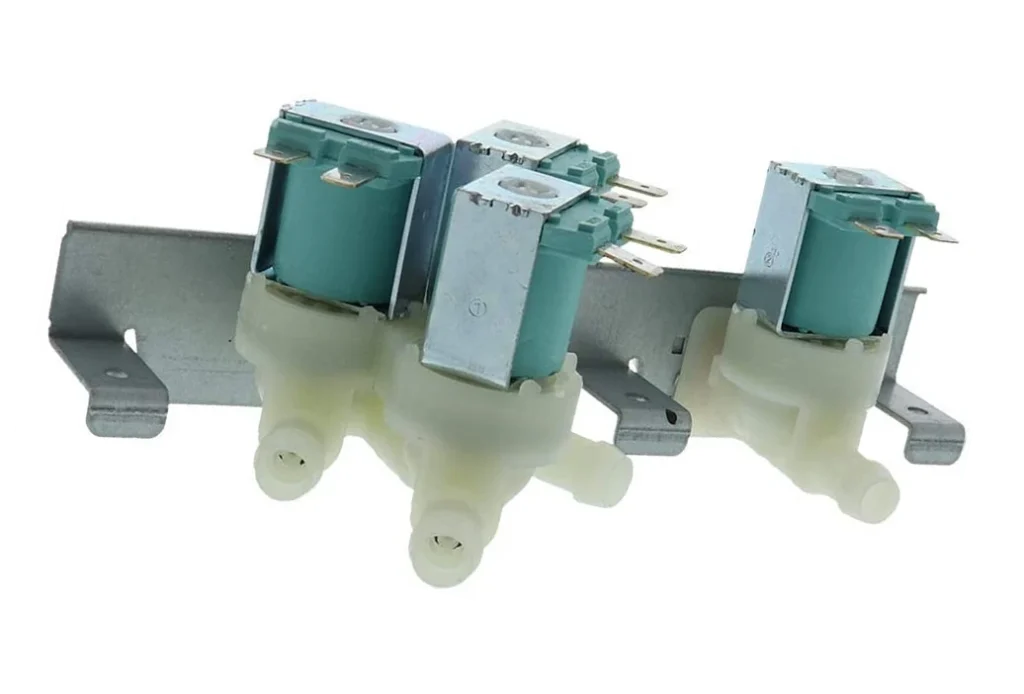
When a Samsung washer refuses to fill — or fills too slowly — the water inlet valve assembly (part DC97-15459D) is the culprit about 70% of the time. This valve controls water flow into your machine, and when it fails, you're stuck with a pile of dirty laundry and a machine that won't cooperate.
Quick Symptom Check
Before you grab your toolbox, verify what's actually happening:
- No water enters at all — drum stays completely dry
- Partial fill then stops — cycle pauses with OE or 4C error code
- Very slow fill — takes 10+ minutes for what should take 2-3 minutes
- Loud buzzing or humming when cycle starts but no water flow
- Water continues flowing after cycle ends — won't shut off properly
- Washer overfills — water level way too high or leaking from top
Cause #1: Failed Water Inlet Valve (70% Probability)
The water inlet valve assembly is an electromechanical device with solenoid coils that open and close to let water in. After years of cycling on and off thousands of times, these coils burn out or the valve seats wear down.
As one repair tech described: "I determined that one of the cold water valves was not working so I replaced the assembly with this part." The valve has separate solenoids for hot and cold — one can fail while the other works fine.
How to diagnose:
- Unplug the washer and turn off both water supply valves
- Pull the washer forward to access the back panel
- Locate the valve where hoses connect (usually top back section)
- Check the wire harness connections — wiggle them to ensure they're tight
- Use a multimeter to test resistance across each solenoid terminal (should read 500-1500 ohms)
- If you get infinite resistance or zero, the valve is dead
The fix: Replace the entire DC97-15459D valve assembly. This fits models like WA5471ABP/XAA, WA5471ABW/XAA, and WA5451ANW/XAA. You'll need pliers, screwdrivers, and an adjustable wrench. Budget 15-30 minutes.
Cause #2: Clogged Inlet Screens (15% Probability)
Tiny mesh screens sit inside the valve where hoses connect. They catch sediment from your home's water supply. Over time, mineral deposits, rust particles, and debris build up until water can barely squeeze through.
How to diagnose:
- Turn off water supply and disconnect inlet hoses
- Look inside the valve ports — you'll see small screens
- Use a flashlight to inspect for brown/white buildup or debris
- If screens look crusty or you can't see through the mesh, they're clogged
The fix: Use needle-nose pliers to carefully pull screens out. Soak them in white vinegar for 30 minutes, then scrub gently with an old toothbrush. If they're severely corroded or damaged, replace the entire valve — screens aren't sold separately.
Cause #3: Low Water Pressure (8% Probability)
Samsung washers need at least 20 PSI to fill properly. If your home's water pressure is weak — common in older homes or with partially closed shutoff valves — the inlet valve won't open fully.
How to diagnose:
- Check if other faucets in your home have weak flow
- Make sure both hot and cold supply valves behind the washer are fully open (turn counterclockwise)
- Disconnect one inlet hose and turn the water on — should fill a gallon bucket in under 20 seconds
- If it takes longer, you've got pressure issues
The fix: Call a plumber to check your home's main water pressure. Sometimes the issue is a partially closed main shutoff valve or a failing pressure regulator on your home's supply line.
Cause #4: Faulty Water Level Pressure Switch (5% Probability)
This switch tells the control board when the drum has enough water. If it fails or its air tube gets clogged, the board thinks the tub is full when it's actually empty.
How to diagnose:
- Locate the pressure switch (usually top front, behind control panel)
- Check the small rubber air tube connected to it for kinks or clogs
- Blow through the tube — should be clear
- Test switch continuity with multimeter while adjusting water level dial
The fix: If the tube is clogged, clear it out. If the switch itself is bad, you'll need a replacement pressure switch assembly specific to your model.
Cause #5: Control Board Communication Error (2% Probability)
The main control board sends 120V to the inlet valve solenoids. If there's a wiring fault or the board itself has failed, the valve never gets the signal to open.
How to diagnose:
- Check wire harness from control board to inlet valve for damage
- Use a multimeter to test for 120V at the valve connector when washer tries to fill
- No voltage means either bad wiring or failed control board
The fix: Trace and repair any damaged wiring. If wiring checks out but there's no voltage, the control board needs replacement — a job best left to a pro unless you're comfortable with electronics.
When to Call a Pro
Replacing the water inlet valve is genuinely DIY-friendly. It's three hose connections, a couple screws, and a wire harness. If you can change a car battery, you can swap this valve.
Call a professional if:
- You're getting voltage at the valve but it still won't fill (rare valve defect)
- The control board needs replacement (diagnostic alone costs $100-150)
- You see water leaking from somewhere other than obvious connection points
- Error codes keep coming back after valve replacement
Professional repair typically runs $200-350 including parts and labor. The DC97-15459D valve assembly itself costs $133.99, so DIY saves you at least $70-200.
Frequently Asked Questions
Why does my Samsung washer fill very slowly?
Slow filling usually means partially clogged inlet screens or one failed solenoid in a dual-valve assembly. The washer still fills because one valve works, but it takes forever. Check and clean the screens first — they're the easy fix. If screens are clean, test both solenoids with a multimeter. You'll often find one reading infinite resistance while the other tests normal.
Can I repair just one solenoid in the valve assembly?
No, the DC97-15459D is a sealed unit. Even though it has separate hot and cold solenoids, they're not sold individually. If one fails, replace the entire assembly. Trying to jury-rig individual solenoids creates leak risks and violates warranty coverage if your washer is still under protection.
What's the difference between OE and 4C error codes?
Both indicate water supply problems, but there's a subtle difference. OE means the washer didn't detect enough water within the expected time — could be valve, pressure, or sensor. 4C specifically flags that no water entered at all — strong indicator of complete valve failure or closed supply valve. Check your supply valves first with 4C, then move to valve testing.
Diagnosed the problem?
DC97-15459D · In Stock · Fast shipping