
Frigidaire Dishwasher Not Filling with Water — 5 Causes & How to Fix
You press start on your Frigidaire dishwasher, hear the motor hum, but then... nothing. No water rushing in, no spray arms spinning — just an empty tub and blinking lights. Your FDB1050REB3 sits there mocking you while last night's dinner plates pile up in the sink.
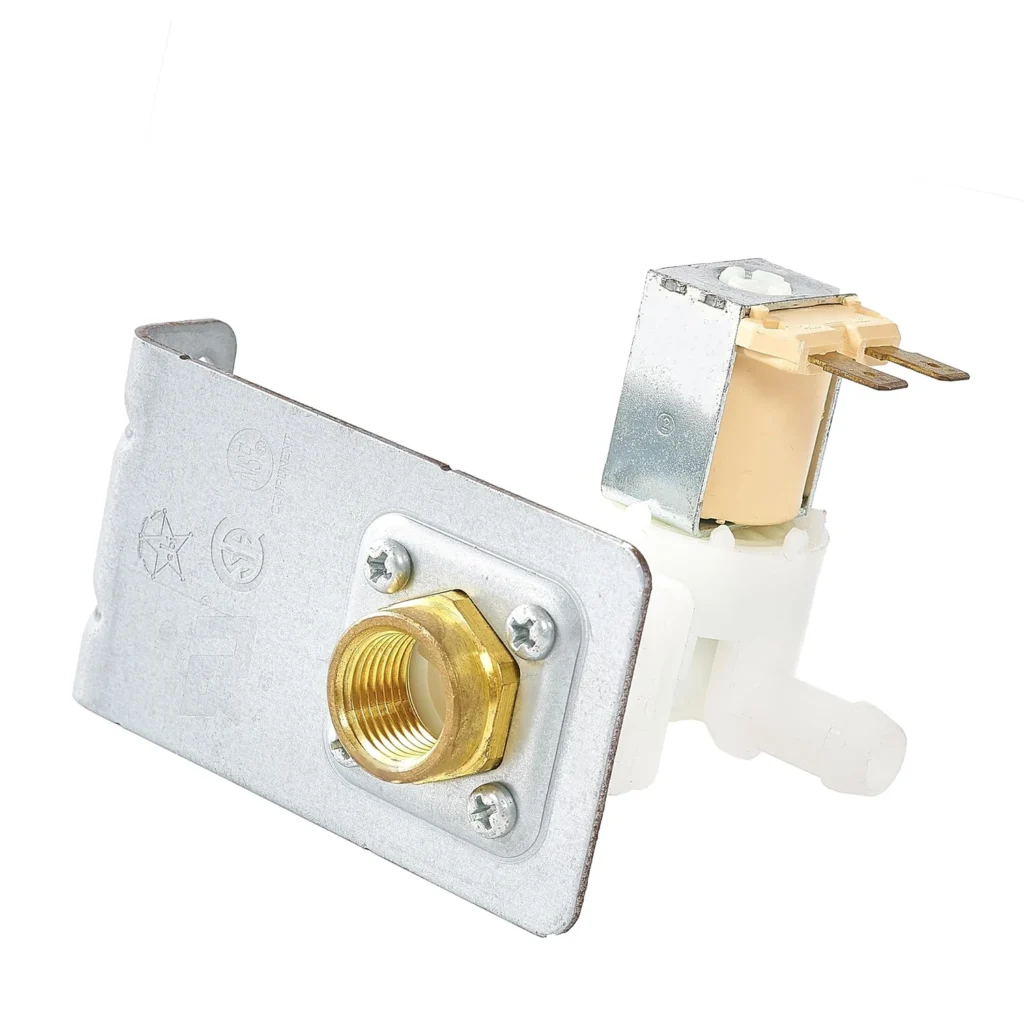
When a dishwasher won't fill, you're usually looking at a water inlet valve problem. This $15.99 part (154637401) controls the flow of water into your machine, and when it fails, your dishwasher becomes an expensive drying rack. Let's walk through what's actually going wrong.
Quick Symptom Check
Before you grab tools, confirm what you're seeing:
- No water entering the tub — You hear the dishwasher running but the tub stays bone dry
- Slow fill or weak spray — Takes forever to fill, or spray arms barely move
- Error codes flashing — Many Frigidaire models show i20, i30, or iF0 codes when water won't enter
- Humming at startup then nothing — Motor engages but no water flows
- Works intermittently — Fills sometimes, refuses other times with no pattern
Cause #1: Failed Water Inlet Valve (70% Probability)
The inlet valve is an electrically-controlled gate that opens when your dishwasher needs water. Inside are solenoid coils that magnetize to pull open a rubber diaphragm. After a few thousand cycles, these coils burn out or the diaphragm gets clogged with mineral deposits.
How to diagnose: Turn off power and water supply. Remove the lower front panel (two screws at bottom). The inlet valve sits at the bottom left where the water line enters. Disconnect the wires and use a multimeter set to ohms. Test across the two terminals on each solenoid coil — you should read 500-1500 ohms. Anything showing infinite resistance (OL on your meter) means the coil is toast.
Compatible with models like FDB1100RHB0, FDB1200RGB0, FDB1500LFB1, FDB1504RGB0, FDB2415LFB1, and dozens more Frigidaire, Kenmore, and Crosley units. This valve (part 154637401) replaces older numbers 154373301 and 154359801.
The fix: Shut off water at the wall. Unscrew the inlet line (have a towel ready for residual water). Disconnect wire harness and remove mounting screws. New valve installs in reverse — hand-tighten the water line, then give it another quarter turn with pliers. Don't overtighten or you'll crack the plastic threads.
Cause #2: Clogged Inlet Screen (15% Probability)
Inside the valve where your water line connects, there's a tiny mesh screen that catches sediment. If you've got hard water or old pipes, this screen gets packed with rust, calcium, and mineral crud. Water can't flow through, so your dishwasher thinks the supply is shut off.
How to diagnose: Remove the inlet line from the valve. Look inside the valve inlet port with a flashlight. See a screen that looks brown or white instead of clean metal? That's your problem. Sometimes you can see sediment chunks stuck in the mesh.
The fix: Try cleaning it first. Pull out the screen (needle-nose pliers work), soak in vinegar for 30 minutes, scrub with an old toothbrush. If it won't come clean or the screen is damaged, just replace the whole valve — it's $15.99 and saves you another callback in six months.
Cause #3: Low Water Pressure (8% Probability)
Inlet valves need at least 20 psi to open properly. If your home water pressure is weak (common in older homes or on well systems), the valve won't fully open even when the solenoids work perfectly.
How to diagnose: Turn on your kitchen faucet full blast. Does it flow strong and steady, or does it dribble out? If other fixtures in your house also have weak flow, you've got a pressure problem, not a dishwasher problem.
The fix: Check your home's pressure regulator (usually near where the main water line enters). It might need adjustment or replacement. If you're on a well, your pressure tank could be failing. This isn't a dishwasher repair — call a plumber for the main supply issue.
Cause #4: Kinked or Blocked Supply Line (5% Probability)
The braided supply line from your wall shutoff to the dishwasher can get crushed if the machine was pushed back too hard during installation. Or sometimes the line just ages and collapses internally.
How to diagnose: Pull the dishwasher out slightly (you'll need someone to help slide it). Look at the water line — any obvious kinks or flat spots? Disconnect it at both ends and blow through it. Air should pass freely.
The fix: Replace the supply line. They're $10 at any hardware store. Get a braided stainless steel line rated for dishwasher use, not a cheap rubber one. Make sure you leave a small loop of slack so the line doesn't get crushed when you push the unit back in place.
Cause #5: Faulty Control Board or Wiring (2% Probability)
Rarely, the main control board fails to send voltage to the inlet valve even though the valve itself is fine. Or the wire harness develops a break or corroded connection.
How to diagnose: With power on and the dishwasher attempting to fill, use a voltmeter to check for 120V at the inlet valve wire terminals. No voltage means the board isn't sending the signal, or there's a wiring break somewhere between the board and valve.
The fix: Trace the wiring for obvious damage first — look for burn marks, melted insulation, or loose connectors. If wiring looks fine, you're looking at a control board replacement, which runs $150-300. At that point, honestly evaluate whether the dishwasher is worth repairing based on its age.
When to Call a Pro
This repair is genuinely DIY-friendly if you're comfortable with basic tools. The inlet valve location is accessible, and you're not dealing with high voltage when the power is off. However, call a tech if:
- You're not comfortable shutting off water supply lines
- Your dishwasher is hard-wired (not plugged in) and you're unsure about electrical safety
- You've replaced the valve but the problem persists — there might be a secondary issue with the control board
- Your model is still under warranty (DIY repairs can void coverage)
Most appliance repair shops charge $150-200 for this repair including parts. You'll save about $130 doing it yourself.
Frequently Asked Questions
How long does a dishwasher water inlet valve typically last?
Most inlet valves survive 7-10 years of regular use. Hard water areas see failures closer to 5-7 years because mineral buildup damages the valve internals faster. If your dishwasher is 8+ years old and you've never replaced the valve, it's probably due.
Can I clean the inlet valve instead of replacing it?
You can try cleaning the screen and soaking the valve body in vinegar to dissolve mineral deposits, but it rarely works long-term. The solenoid coils inside can't be cleaned — once they fail electrically, replacement is the only fix. At $15.99, a new valve is cheaper than the time you'll waste trying to resurrect a dead one.
Will any water inlet valve work, or do I need the exact part number?
You need one designed for your dishwasher's voltage and connection type. Part 154637401 is specifically engineered for Frigidaire, Kenmore, Crosley, Gibson, and Tappan models listed in your manual. It replaces older part numbers AP4321824, 154373301, 154359801, and PS1990907. Using a generic valve from a hardware store won't work — the mounting holes, wire connectors, and flow rates won't match.
Diagnosed the problem?
154637401 · In Stock · Fast shipping