
GE Refrigerator Not Dispensing Water — 4 Causes & How to Fix
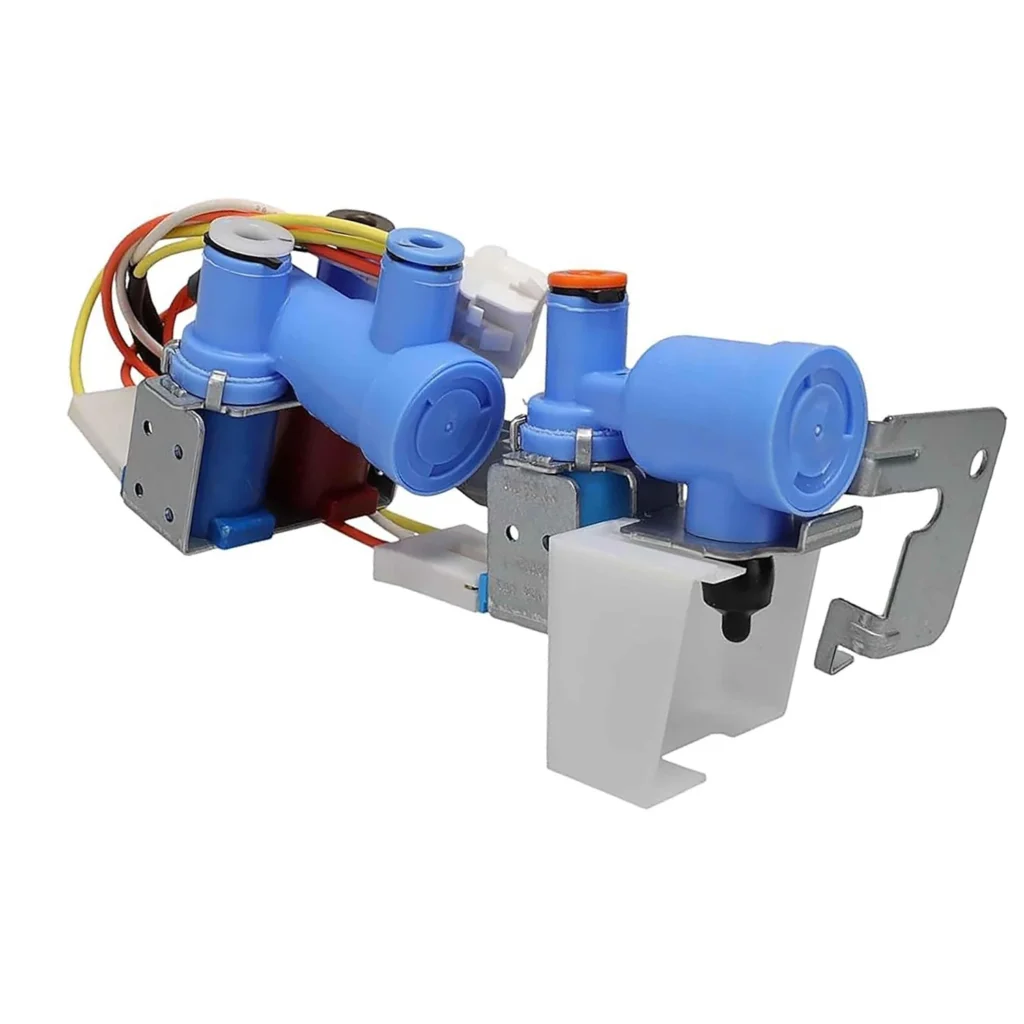
You press the dispenser paddle and... nothing. Maybe a weak dribble, maybe just a sad hissing sound. Your GE side-by-side is clearly getting power — the lights work, it's cooling fine — but the water dispenser acts like you've asked it to perform miracles.
This issue hits dozens of GE models hard, from the GSS25GSHNCSS to the GNE27JYMWFFS. The good news? About 60% of water dispenser failures trace back to just two components, and one of them — the isolation valve — fails so predictably that GE redesigned it twice (hence the multiple replacement part numbers for WR57X30890).
Quick Symptom Check
Before you start tearing into your fridge, confirm what you're actually dealing with:
- Zero water flow when you press the paddle (but you hear the dispenser solenoid clicking)
- Weak stream or dribbling instead of normal pressure
- Ice maker still works fine (this tells you the main water supply is good)
- No visible leaks inside the fridge or underneath
- Water filter was recently changed and properly seated
If your ice maker also stopped working, you've got a different problem — likely the main inlet valve or supply line freeze-up. But if it's just the dispenser? Keep reading.
Cause #1: Failed Isolation Valve (65% of Cases)
The isolation valve (part WR57X30890) sits inside the fresh food compartment, usually behind the deli drawer or lower crisper. Its job is simple: route water pressure between the dispenser and ice maker. When it fails, it typically sticks in the "ice maker" position, starving the dispenser completely.
Why it fails: The internal rubber diaphragm hardens after 5–8 years of temperature cycling. When it loses flexibility, it can't redirect water flow properly. GE models built between 2015–2019 seem especially prone to this — the GSS23GGPBCWW and GSE25HEMKHDS have particularly high failure rates.
How to diagnose:
- Locate the valve assembly (check your model's tech sheet for exact position)
- With the fridge running, press the water dispenser paddle
- Listen at the valve — you should hear a distinct click and feel a slight vibration
- If it clicks but no water comes out, the valve's stuck internally
- Check for visible cracks in the clear plastic housing (dead giveaway)
The fix: Replacement is your only option. The valve costs $63.99 (part WR57X30890 replaces older WR57X26569 and WR57X30891). It's a 20-minute job if you're comfortable with basic tools — unplug the fridge, release the water line clips, swap the valve, reconnect. The hardest part is usually accessing it behind the drawer.
Success probability: 85% if you've confirmed the valve clicks but doesn't flow water.
Cause #2: Frozen Water Line in Door (20% of Cases)
The thin water tube that runs through your freezer door to the dispenser can freeze solid, especially if your freezer's running too cold (below 0°F) or if humid air keeps getting into the door cavity.
Quick test: Remove the ice bucket and shine a flashlight up into the dispenser chute. If you see ice buildup around the tube, there's your problem.
The fix:
- Unplug the fridge for 6–8 hours with both doors propped open (hair dryer trick works but risks melting plastic)
- Once thawed, check your freezer temp — should be 0°F to 5°F, not colder
- Inspect the door gasket for gaps that let warm air in
- Consider insulating the water line with foam tube insulation if it keeps recurring
Success probability: 90% for temporary relief, but it'll freeze again if you don't fix the root cause.
Cause #3: Clogged or Incorrectly Installed Water Filter (10% of Cases)
Yeah, it's obvious, but you'd be surprised how many service calls are just a backwards filter or one that wasn't pushed in all the way. Even if the filter is new, a defective one can restrict flow to the dispenser while still supplying the ice maker.
Test this first: Remove the water filter completely and try the dispenser. If water flows normally, the filter's the problem — either clogged, counterfeit, or installed wrong.
GE's bypass plug (usually orange or blue) should've come with your fridge. Use it temporarily to confirm diagnosis, then replace with a genuine filter.
Cause #4: Defective Dispenser Actuator or Control Board (5% of Cases)
The dispenser switch and control board rarely fail on their own, but when they do, you'll get zero response when pressing the paddle — no click, no sound, nothing. The display might still work fine.
How to test: Access the dispenser housing from inside the freezer door (remove ice bucket and auger assembly). Use a multimeter to check continuity across the actuator switch terminals while pressing the paddle. Should read closed circuit when pressed, open when released.
If the switch is good but you still get nothing, the main control board may have a fried relay. That's a $200+ repair that might not be worth it on an older fridge.
When to Call a Pro
Most water dispenser repairs are DIY-friendly, especially the isolation valve swap. But call a tech if:
- You're seeing active water leaks inside the fridge or on the floor (could indicate cracked tubing in the walls)
- The compressor runs constantly and the fridge isn't cooling properly (bigger issue than just the dispenser)
- You've replaced the isolation valve and filter but still get nothing (possible control board or complex line routing problem)
- Your fridge is still under warranty (duh, but people forget)
For models like the GNE25JGKCFBB and GZS22DMJRFES, the valve replacement is straightforward. For French door models with complex ice maker systems, it can get trickier.
Frequently Asked Questions
Will the ice maker stop working if the isolation valve fails?
Usually no — the valve typically fails in a position that keeps feeding the ice maker while cutting off the dispenser. That's actually how you know it's the valve and not your main water supply. If both stopped working simultaneously, look upstream at your inlet valve or household water supply.
Can I just bypass the isolation valve and run a direct line?
Technically yes, but you'd lose the automatic switching between dispenser and ice maker. Some techs do this as a temporary fix, but it's not recommended long-term. The valve costs $64 and takes 20 minutes to replace properly — just do it right.
How long should an isolation valve last?
Factory valves typically go 7–10 years. The replacement WR57X30890 uses improved materials that should outlast the original. If yours failed in under 5 years, check your water pressure — anything over 120 PSI can shorten valve life significantly. Install a pressure regulator if you're running hot.
Diagnosed the problem?
WR57X30890 · In Stock · Fast shipping