
Whirlpool Refrigerator Won't Start or Clicking Noise — 4 Causes & How to Fix
You walk into the kitchen and notice it's oddly quiet. Your Whirlpool refrigerator isn't running. You open the door and the light works, but there's no familiar hum. Or maybe you hear a click-click-click sound every few minutes, but the compressor never kicks on. Either way, nothing's getting cold.
This is one of the most common refrigerator failures, and in about 60% of cases where the compressor won't start, the culprit is a failed start relay or overload protector — the exact components in the ER61005518 kit. Let's diagnose what's happening with your fridge.
Quick Symptom Check
Before you grab tools, confirm these symptoms match what you're experiencing:
- Compressor won't run — You hear clicking but no compressor hum
- Fridge is warm — Both fresh food and freezer sections aren't cooling
- Interior light works — Power is reaching the fridge
- Periodic clicking — Every 2-5 minutes, you hear a click from the back
- Compressor feels cool — If it were seized, it would be warm or hot to touch
If you're nodding along to three or more of these, keep reading. This is fixable.
Cause #1: Failed Start Relay (Most Common — 60% of Cases)
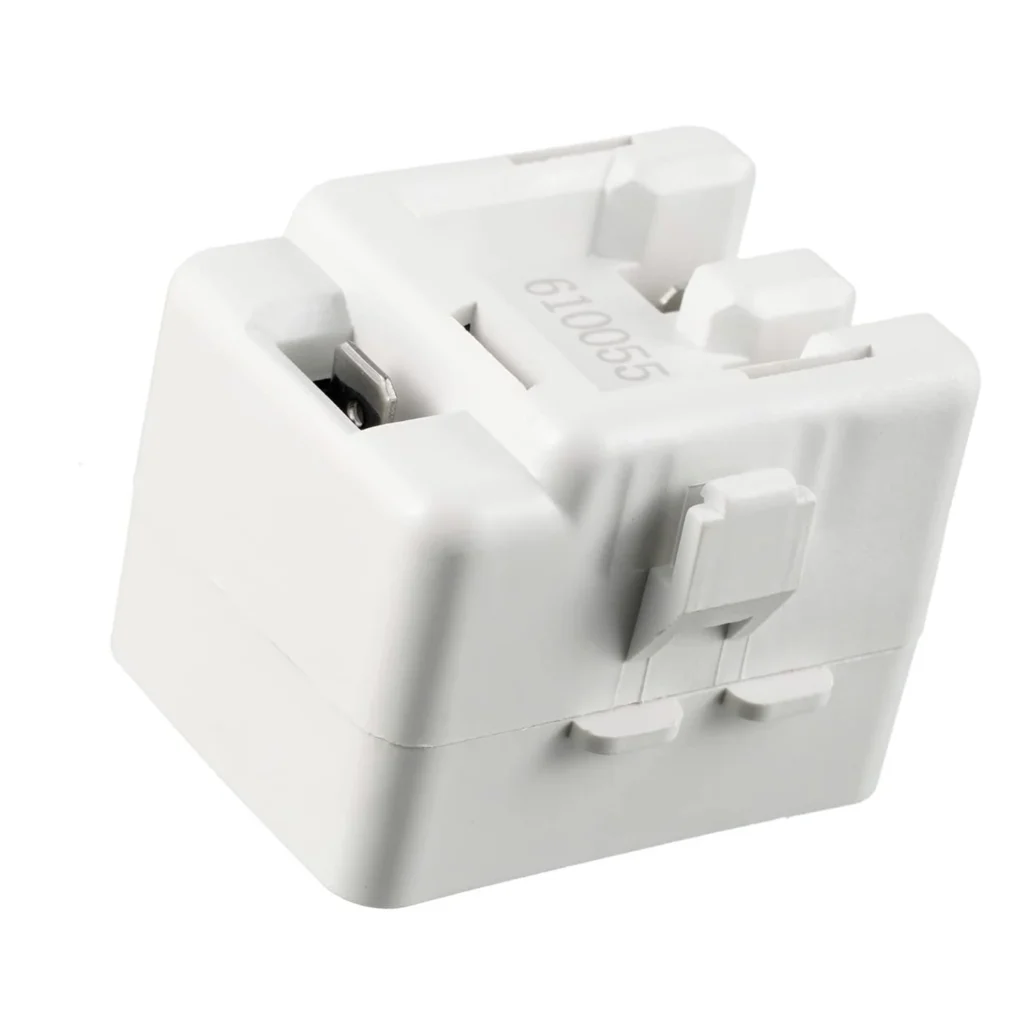
The start relay is a small device mounted on the side of your compressor. It gives the compressor the electrical boost it needs to start up. When this relay fails, the compressor gets power but can't overcome the initial resistance to start spinning.
How to diagnose:
- Unplug the refrigerator and pull it away from the wall
- Remove the rear access panel (usually 4-6 screws)
- Locate the compressor — it's the black cylindrical component
- The start relay clips onto the side terminals of the compressor
- Pull the relay off and shake it — if you hear rattling, it's failed
- Check for burn marks or a burnt smell
A working relay should be silent when shaken and have no visible damage. If yours rattles or shows discoloration, it's done.
Probability: If your fridge is 5+ years old and showing the clicking symptom, there's a 60% chance this is your problem.
Fix difficulty: Easy. This is a 10-minute repair with zero technical skill required.
Cause #2: Overload Protector Failure
The overload protector sits right next to the start relay. It's a safety device that cuts power to the compressor if it draws too much current or overheats. When it fails in the "open" position, it permanently cuts power even when the compressor is fine.
How to diagnose:
- With the relay removed (from step above), locate the overload — it's usually a small black or tan disc
- Use a multimeter set to continuity/ohms
- Touch probes to the two terminals
- You should get a reading of near zero ohms (continuity)
- No continuity = failed overload
The tricky part: overloads can fail intermittently. They might show continuity when cold but open when they heat up. If you're getting intermittent operation, this is likely your culprit.
Probability: About 25% of compressor-won't-start issues, often combined with a weakened relay.
The smart move: Since the ER61005518 kit includes both the relay and overload for under $20, replace both together. They wear out at similar rates.
Cause #3: Compressor Itself Is Seized
This is the scenario you don't want, but we need to rule it out. A seized compressor has mechanically failed inside and can't turn, no matter what electronics you throw at it.
How to diagnose:
- Feel the compressor body after the clicking has happened several times
- If it's extremely hot (too hot to keep your hand on), that's a bad sign
- Listen closely during the click — a seized compressor makes a distinctive electrical "buzz" as it tries to start
- Check the amp draw with a clamp meter — a seized compressor pulls way above normal amps
Here's the thing: if your compressor is seized, you'll know. It gets hot fast, the clicking happens more frequently, and sometimes you'll hear a buzzing or humming that sounds strained. A working compressor that just has a bad relay stays relatively cool and makes a clean click sound.
Probability: Only about 10% of cases with these symptoms. More common in fridges 10+ years old.
Repair note: If the compressor is seized, you're looking at a $400-800 repair or fridge replacement. Try the relay kit first — it's worth the $15-20 gamble.
Cause #4: Wiring or Connection Issues
Sometimes the problem isn't a failed component, it's a loose connection or damaged wire feeding power to the start relay and compressor.
What to check:
- Visually inspect all wires going to the compressor terminals
- Look for signs of arcing (black marks) or melted insulation
- Wiggle connections while listening — if clicking changes, you found it
- Check the wire harness connector for corrosion
This is more common in garage fridges or units exposed to humidity. Corrosion builds up on terminals and creates resistance.
Probability: About 5% of cases, but worth the 30-second visual check.
When to Call a Pro
Be honest with yourself about these scenarios:
Call a technician if:
- You've replaced the relay/overload kit and still get the same symptoms
- The compressor is extremely hot and you suspect it's seized
- You're not comfortable working around electrical components
- Your fridge is still under warranty
- You smell burning or see melted plastic near the compressor
DIY is fine if:
- You're getting the classic click-no-start symptom
- The fridge is 3+ years old (past warranty)
- You're reasonably handy and can follow instructions
- You've confirmed power is reaching the compressor area
The ER61005518 kit works on dozens of Whirlpool, Maytag, and Kenmore models (see the compatibility list — everything from the ATB1935HRQ to the CTB1521GRQ). It's a universal solution for a universal problem.
The Replacement Process (Brief Overview)
Since you're troubleshooting, here's what you're in for if you order the part:
- Unplug fridge and pull away from wall (5 minutes)
- Remove rear access panel (2 minutes)
- Photograph the wiring configuration on your phone
- Pull off old relay and overload (1 minute)
- Snap new relay onto compressor terminals (1 minute)
- Attach new overload (1 minute)
- Replace panel, push back, plug in
Total active work time: about 15 minutes. Then you wait 5 minutes and listen for the compressor to start. That first hum when it kicks on? That's a beautiful sound.
Frequently Asked Questions
Why does my Whirlpool fridge click but not start?
The clicking sound is the start relay attempting to energize the compressor. When the relay or overload protector fails, the compressor receives the signal to start but doesn't get the proper electrical boost or gets shut down by the overload. The thermostat keeps trying every few minutes, creating the repetitive clicking. This is the classic symptom of a failed start relay, which is why the ER61005518 kit exists — it's a common failure point on these models after 5-7 years of service.
Can I test the start relay without removing it?
Not reliably. The shake test (listening for rattling) requires removal, and visual inspection for burn marks needs you to see all sides of the component. However, you can do a quick preliminary check: feel the relay while the fridge is trying to start. If it's extremely hot within seconds, it's likely failed. But to definitively test it, you need to remove it from the compressor terminals. The good news: it pulls straight off with no tools required on most models.
How long does a refrigerator start relay typically last?
Most start relays last 5-10 years depending on how often your compressor cycles. Fridges in hot garages or that are opened frequently work harder and burn through relays faster. If your Whirlpool, Maytag, or Kenmore fridge is approaching the 7-year mark and you're getting clicking symptoms, age-related relay failure is very likely. The overload protector has a similar lifespan. This is why the ER61005518 kit includes both components — they typically fail within a year or two of each other anyway.
Diagnosed the problem?
ER61005518 · In Stock · Fast shipping