
GE Refrigerator Running Hot & Loud — 5 Condenser Fan Motor Failures Explained
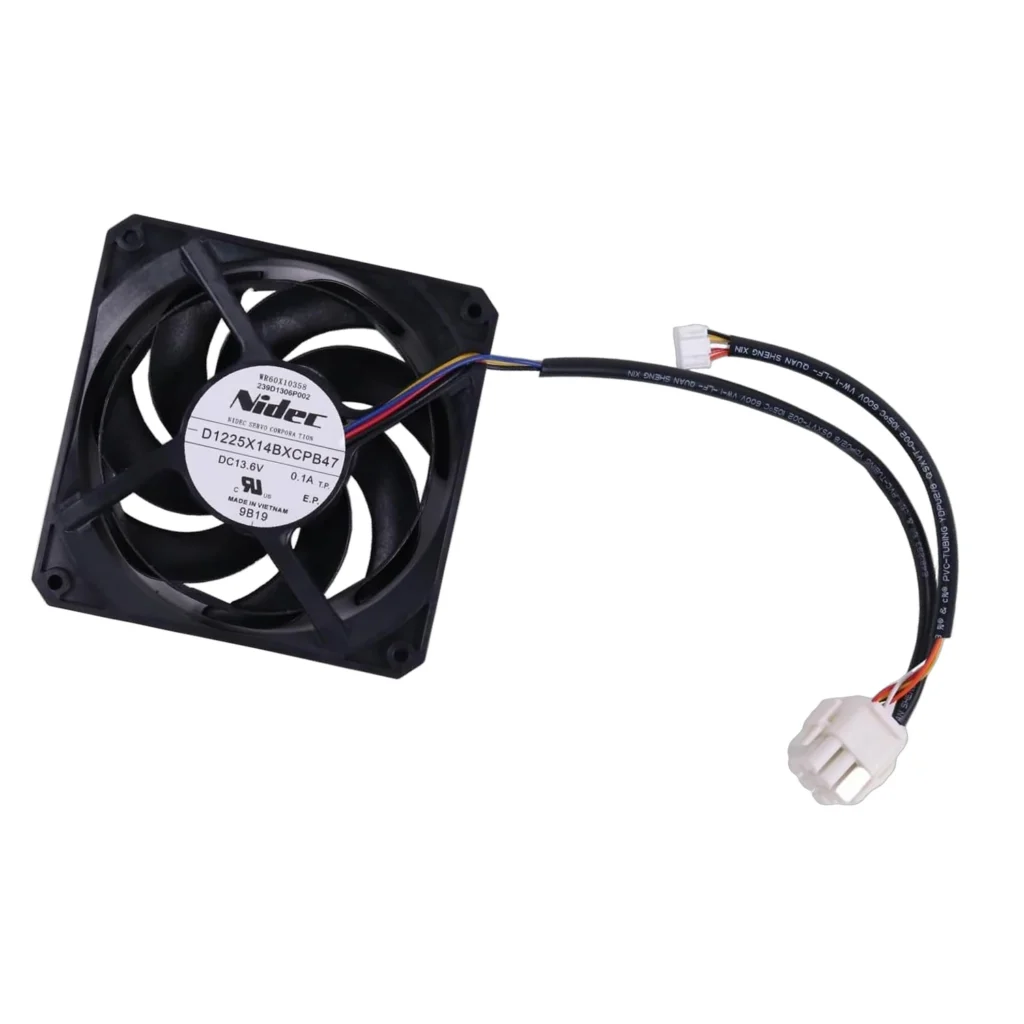
Your GE fridge sounds like a jet engine spooling up, and the milk's starting to feel room temperature. You press your hand against the side panel between the doors—it's uncomfortably warm. Nine times out of ten, that's your condenser fan motor calling it quits.
The WR60X10358 DC condenser fan motor sits behind the lower kickplate, exhausting heat from the condenser coils. When it fails on models like the CFE28TSHBSS or CYE23TSDASS, your compressor runs overtime trying to compensate, spiking your electric bill by $30-50 monthly while slowly cooking your food.
Quick Symptom Check — Is Your Condenser Fan Dead?
Stand near your refrigerator and listen. You should hear two distinct fans: the evaporator fan inside the freezer (soft whir) and the condenser fan below (deeper hum). If you only hear one, keep reading.
- Compressor runs constantly but fridge isn't cold enough
- Hot to the touch on exterior side panels or between doors
- Loud grinding, squealing, or clicking from below the fridge
- Fan starts and stops erratically or doesn't start at all
- Error codes on display (if equipped): fan-related alerts
- Kitchen feels warmer than usual when fridge is running
Cause #1: Motor Bearings Seized (45% of Failures)
Likelihood: Very High | Cost: $93 | Time: 45 minutes
DC condenser fan motors on GE French door models from 2012-2019 have a known bearing failure pattern around year 5-7. The bearing dries out, the motor shaft binds, and the fan blade either won't spin or turns sluggishly.
How to diagnose: Unplug the fridge. Remove the lower kickplate (usually two screws). Locate the condenser fan—it's mounted to the compressor assembly. Try spinning the fan blade by hand. It should rotate freely with minimal resistance. If it's stiff, gritty, or won't move at all, the bearings are shot.
You might see black dust accumulation around the motor—that's bearing material breaking down. Some techs try lubricating these motors, but DC motors are sealed units. Once the bearings fail, replacement is the only reliable fix.
Cause #2: Capacitor Failure (25% of Failures)
Likelihood: High | Cost: $15-30 | Time: 30 minutes
The start capacitor gives the motor the electrical kick it needs to overcome inertia. When capacitors age, they lose capacitance and can't deliver enough starting torque.
How to diagnose: With power off, access the condenser fan. The capacitor is usually a small black or silver cylinder attached near the motor. Check for bulging, leaking, or burn marks—those are obvious failures. For borderline cases, you'll need a multimeter with capacitance testing. The capacitor should read within 5% of its rated value (printed on the side).
Here's the tricky part: sometimes the capacitor tests fine but fails under load. If the motor hums but won't spin, and hand-spinning gets it going temporarily, that's classic capacitor behavior. Replace both the motor and capacitor together—the WR60X10358 includes a new capacitor.
Cause #3: Winding Insulation Breakdown (15% of Failures)
Likelihood: Moderate | Cost: $93 | Time: 45 minutes
Condenser fan motors cycle on and off constantly in hot environments—especially if your fridge sits near an oven or gets afternoon sun. Over years, heat degrades the enamel insulation on copper windings inside the motor.
How to diagnose: Disconnect the motor wiring harness. Use a multimeter to check resistance between each motor terminal and the metal motor housing. You should get infinite resistance (open circuit). Any reading below 1 megohm indicates winding-to-frame short circuit.
Also check winding resistance: it's typically 8-15 ohms for these DC motors. Wildly different readings between windings, or infinite resistance where you should have continuity, means the windings are open or burned.
If you smell burnt varnish when you pull the motor, the windings are toast. There's no repair—the motor needs replacement.
Cause #4: Refrigerant Line Vibration Damage (10% of Failures)
Likelihood: Moderate | Cost: $93 + service call if lines need repositioning | Time: 1 hour
GE's condenser compartment is cramped. The fan blade has maybe 3/8" clearance from refrigerant lines. If the compressor mounts loosen or refrigerant lines weren't secured properly during manufacturing, vibration causes the lines to contact the spinning fan blade.
How to diagnose: Listen carefully when the fan runs. Rhythmic clicking or scraping that matches fan speed indicates contact. With power off, inspect the fan blade for nicks, gouges, or missing pieces. Check refrigerant lines for wear marks or copper dust.
Shine a flashlight and slowly rotate the fan blade by hand through 360 degrees. Watch the clearance between blade tips and all surrounding components. If anything touches, you've found your problem.
Sometimes you can carefully bend refrigerant lines away (don't kink them), but often the motor mount itself has shifted. The WR60X10358 includes mounting hardware, so you can reposition the motor for better clearance.
Cause #5: Control Board Not Sending Power (5% of Failures)
Likelihood: Low | Cost: $200-400 for control board | Time: 1.5 hours
The main control board switches power to the condenser fan based on compressor status and temperature sensors. Relay failure on the board means the motor never gets voltage.
How to diagnose: This requires electrical testing. With the fridge running and compressor on, check voltage at the motor connector—should be 12-24VDC depending on model. No voltage but compressor running? The board's fan relay is stuck open.
Before condemning the board, check the thermistor (temperature sensor) that tells the board when to run the fan. A failed thermistor reading -40°F or 200°F will prevent fan operation. Thermistors are cheap ($20-30) and easier to replace than boards.
Control board failures often affect multiple functions—if you're also seeing display glitches, ice maker issues, or defrost problems, the board is more likely.
Step-by-Step Replacement Guide
Tools needed: Phillips screwdriver, 1/4" nut driver, needle-nose pliers, flashlight, work gloves
Safety first: Unplug the refrigerator. If you can't reach the plug, shut off the circuit breaker. Wait 5 minutes for capacitors to discharge.
- Access the compartment: Remove lower kickplate (2 screws at top edge, lift up and out). The condenser fan is on the left side of the compressor, black cylindrical motor with white fan blade.
- Disconnect wiring: Unplug the wire harness from the motor. Take a phone photo first for reference.
- Remove fan blade: The blade is held by a spring clip or set screw on the motor shaft. Use needle-nose pliers to remove the clip, slide the fan blade off. Don't force it—if seized, spray penetrating oil and wait 10 minutes.
- Unmount motor: Two or three screws hold the motor bracket to the compressor assembly. Remove screws, pull motor free. Note the rubber grommets—reuse them if in good shape.
- Install WR60X10358: Position new motor in bracket, secure with original screws and grommets. Slide fan blade onto shaft (flat side of shaft matches flat inside blade). Secure with new clip.
- Connect and test: Plug in wire harness. Verify nothing obstructs fan rotation. Restore power. Fan should start within 30 seconds. If not, check that compressor is running—fan won't run if compressor is off.
- Monitor operation: Let fridge run 2 hours. Check that side panels aren't excessively warm. Listen for abnormal noise.
When to Call a Professional
Most DIYers can swap this motor in under an hour, but call a tech if:
- Refrigerant lines are damaged from fan contact—requires EPA-certified repair
- Multiple electrical issues suggest control board problems beyond your comfort level
- Compressor is also failing—common on units 8+ years old, might justify replacement over repair
- You can't access the compartment—some installations have zero clearance below
The $150-200 service call gets you proper diagnosis if you're not sure about the root cause. Throwing parts at the problem costs more than one diagnostic visit.
Preventing Future Condenser Fan Failures
These motors typically last 7-10 years, but you can extend that:
- Vacuum condenser coils every 6 months—dust buildup makes the motor work harder
- Ensure 3" clearance at fridge sides and back for airflow
- Don't block the kickplate—that's the air intake for the condenser
- Address unusual noise immediately—early replacement prevents compressor damage
The condenser fan is cheap insurance for your compressor, which costs $400-600 to replace. A $93 fan motor every decade beats a $2,000 refrigerator replacement.
Frequently Asked Questions
Can I run my GE refrigerator without the condenser fan temporarily?
Absolutely not. The compressor will overheat within hours, triggering thermal shutdown or—worse—permanent compressor damage. If the fan fails, order the WR60X10358 for next-day delivery and minimize door openings until it arrives. Running without the fan in summer heat can kill your compressor in a single day.
Why does my new condenser fan motor run constantly now?
Normal if your old motor was failing for months. The fridge is catching up—cooling down evaporator coils, freezer walls, and food mass that got too warm. Give it 24 hours. If still running constantly after that, check your door seals (dollar bill test), defrost system (frost buildup), and thermistor (should read 6-12k ohms at 70°F). The new motor revealed the underlying problem.
Is WR60X10358 compatible with all GE French door refrigerators?
No—it fits specific DC motor models, mostly 2010-2020 French door units like CFE28TSHBSS, CYE23TSDASS, and DFE29JGDABB series. Older models used AC motors (different part numbers). Check your model number against the compatibility list or pull your existing motor to verify it looks identical. The mounting bracket and electrical connector must match.
Diagnosed the problem?
WR60X10358 · In Stock · Fast shipping