
GE Dryer Too Hot or Not Heating — Cycling Thermostat Failures Explained
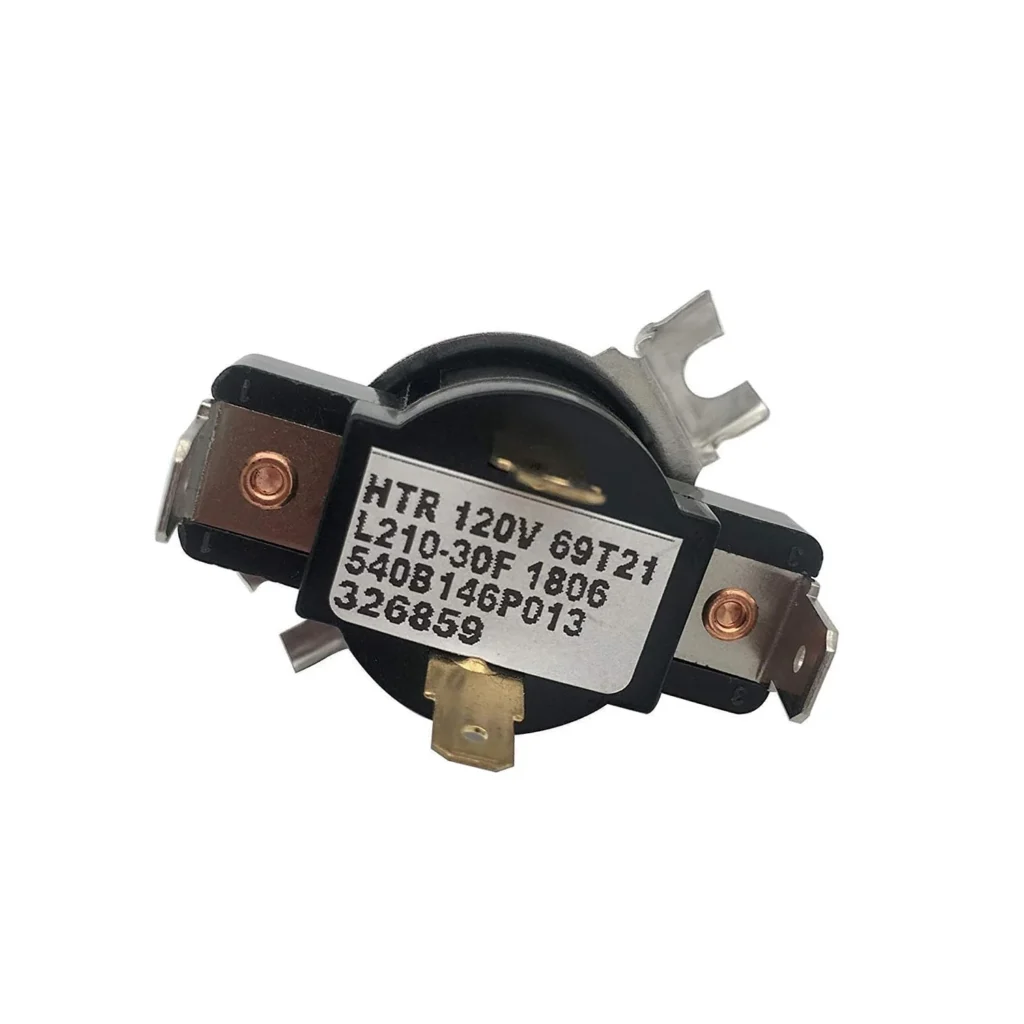
Your GE dryer just scorched your favorite shirt. Or maybe it's running for an hour and your towels are still damp. Both problems? That's the cycling thermostat doing the exact opposite of its job — and the WE4M181 is one of the most common failure points in GE, Hotpoint, and Kenmore dryers built in the last 15 years.
The cycling thermostat is your dryer's temperature brain. It constantly opens and closes a circuit to maintain the selected heat level. When it fails stuck-closed, you get dangerous overheating. When it fails stuck-open, you get no heat at all. Sometimes you'll even see it flip-flop between both symptoms as the contacts degrade.
Quick Symptom Check — Is Your Cycling Thermostat Bad?
Here's what a failing WE4M181 cycling thermostat looks like in real-world use:
- Clothes come out scalding hot — fabric feels stiff or has scorch marks
- Dryer runs but produces zero heat — drum spins, timer advances, but laundry stays wet
- Inconsistent heating — works fine one load, doesn't heat the next
- Takes 2-3 cycles to dry a normal load — timer completes but everything's still damp
- Thermal fuse keeps blowing — you've replaced it twice already this year
- Burning smell from the rear panel — overheated internal components
If you're seeing any combination of these, the cycling thermostat is the first component to test. It's a $36 part that fails more often than the heating element itself.
Cause #1: Thermostat Contacts Welded Shut (Overheating Issues)
Probability: 45% of cycling thermostat failures
When the internal contacts inside the WE4M181 weld themselves together from years of switching cycles, the thermostat can't open the circuit anymore. The heating element stays energized continuously. Your dryer becomes an oven.
How to diagnose:
- Unplug the dryer and remove the front or top panel (varies by model — GTX18GSSJ1WW uses front access, GTDX180GD4WW needs top removal)
- Locate the cycling thermostat on the blower housing — it's the 4-wire component mounted near the heating element duct
- Disconnect the wires and remove the thermostat (usually one or two screws)
- Set your multimeter to ohms and test across the two main terminals
- At room temperature, it should read OPEN (infinite resistance)
- If you get 0 ohms at room temperature, the contacts are stuck closed — this is your problem
The WE4M181 is designed to close only when the dryer drum air drops below the target temp. If it's showing continuity while cool, it'll never shut off the heat when installed.
Why it happens: Every heating cycle creates a tiny arc when the contacts open and close. After 5,000+ cycles, the metal surfaces pit and eventually fuse. High-efficiency cycles make it worse because the thermostat switches more frequently to maintain precise temps.
Cause #2: Thermostat Contacts Corroded Open (No Heat Issues)
Probability: 35% of cycling thermostat failures
The opposite failure mode — the contacts develop so much oxidation and corrosion that they can't make a connection anymore. The heating element never gets power. Your dryer becomes a very expensive fan.
How to diagnose:
- Remove the thermostat using the same access method as above
- Test with multimeter at room temperature — should read OPEN
- Now heat the thermostat disc with a heat gun or lighter for 10-15 seconds
- As it heats up, you should hear a click and see resistance drop to 0 ohms
- If it stays OPEN (infinite resistance) even when heated, the contacts are corroded and can't close
This is common in dryers installed in garages or basements with high humidity. I've pulled WE4M181 thermostats that looked fine externally but had green corrosion dust inside when opened.
Cause #3: Bi-Metal Disc Fatigue (Intermittent Heating)
Probability: 15% of cycling thermostat failures
The cycling thermostat uses a bi-metal disc that physically bends when heated. After years of expanding and contracting, the metal loses its spring tension. The thermostat still works — just not at the right temperature anymore.
Symptoms of disc fatigue:
- Dryer heats but can't maintain consistent temperature
- One load dries perfectly, next load stays damp
- Takes longer to dry than it used to, but does eventually dry
- Temperature varies wildly between permanent press and regular cycles
This one's harder to test at home because the thermostat will pass a basic continuity test. The disc is just cycling at 170°F instead of the designed 155°F. You need a temperature probe and a lot of patience to verify. Usually easier to just replace it if you've eliminated the heating element and thermal fuse as causes.
Cause #4: Thermal Fuse Blown (Often Misdiagnosed)
Probability: 5% — but important to check
Here's the tricky part: the WE4M181 cycling thermostat and the thermal fuse work together. If your dryer has no heat, you might have a blown thermal fuse that looks like a bad thermostat. Or you might have both failed.
Quick check: The thermal fuse is usually mounted on the same blower housing, just a few inches away. It's a 2-wire device. Test it for continuity — should read 0 ohms. If it's open, replace it first, then test the dryer. If the thermal fuse blows again within a few loads, your cycling thermostat is stuck closed and causing overheating.
Models like the HTDX100GD4WW and DBLR333EE0WW have the thermal fuse and cycling thermostat right next to each other. Replace both at the same time if you've got the dryer apart — it'll save you from doing this job twice.
Cause #5: Faulty High-Limit Thermostat Interaction
Probability: Less than 5%
Some GE dryer models use both a cycling thermostat (WE4M181) and a high-limit safety thermostat. If the high-limit is failing intermittently, it can cause symptoms that mimic a bad cycling thermostat.
The high-limit is typically mounted directly on the heating element housing and is set to trip at 250°F or higher. It's a safety backup. If it's opening prematurely (say at 180°F due to internal failure), your dryer will heat briefly then shut off, then heat again — feels like inconsistent cycling.
Test the high-limit the same way: continuity check at room temp should show 0 ohms. If it's open, replace it. But honestly, if you're already in there replacing the high-limit, replace the cycling thermostat too. They're both wear items.
When to Call a Pro
This is a straightforward repair if you're comfortable with a screwdriver and a multimeter. The WE4M181 is literally two screws and four wire connectors on most models. Takes 20 minutes once you've got the panel off.
Call a technician if:
- You've replaced the cycling thermostat and thermal fuse but still have no heat — might be a bad heating element or selector switch
- The dryer is overheating even after thermostat replacement — could be a blocked vent or failed blower wheel
- You smell gas and have a gas dryer — don't mess with gas valve issues yourself
- The control board is showing error codes — some newer models have integrated diagnostics that need professional tools
Otherwise, this is a DIY-friendly repair. The part costs $35.99 and will last another 8-10 years if you clean your lint filter and vent duct regularly.
Frequently Asked Questions
How long does a cycling thermostat typically last in a GE dryer?
Average lifespan is 8-12 years or about 5,000-7,000 drying cycles. If you do 6-8 loads per week, you're right in the replacement window at the 10-year mark. Dryers in commercial or high-use environments (like rental properties) see failures closer to 5-6 years. The WE4M181 has been the standard replacement since the mid-2000s, and it's reasonably reliable — when they fail, it's usually from normal wear, not a manufacturing defect.
Can I test the cycling thermostat without removing it from the dryer?
Not accurately. You can disconnect the wires and test for continuity, but you can't properly test the temperature-switching function while it's mounted. The thermostat needs to heat and cool through its full range to verify it's cycling correctly. Plus, if you're already pulling the wires off, the two mounting screws take another 15 seconds to remove. Just take it out and bench-test it properly — you'll get a definitive answer instead of guessing.
Will a bad cycling thermostat cause my dryer to not start at all?
No. The cycling thermostat only controls the heating element circuit. If your dryer won't start — no drum rotation, no lights, nothing — you've got a door switch, thermal fuse, or control board problem. However, some people confuse "not starting" with "running but not heating." If the drum spins and the timer advances but there's no heat, then yes, the WE4M181 could be the problem. But if pushing the start button does absolutely nothing, look elsewhere first.
Diagnosed the problem?
WE4M181 · In Stock · Fast shipping