
GE Washer Won't Start — Lid Lock Switch Failure (5 Causes & Fixes)
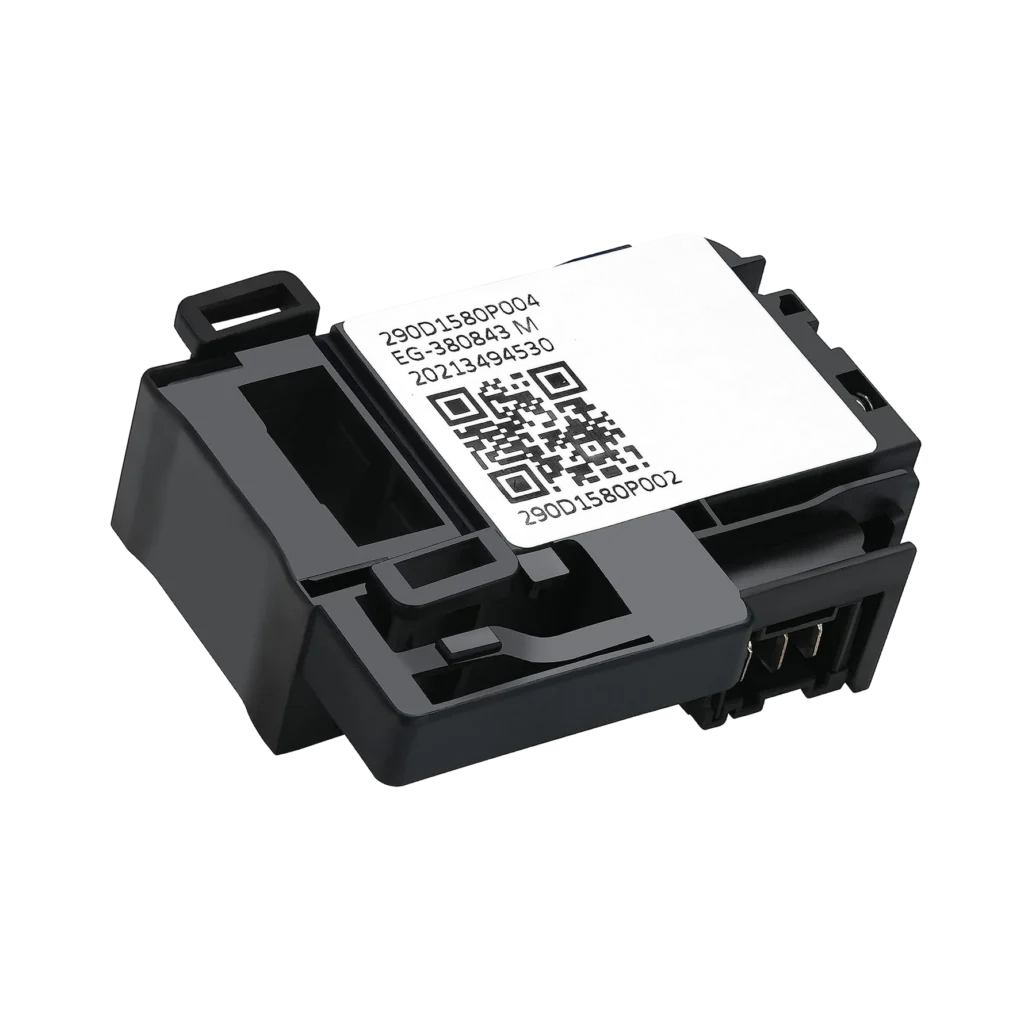
You load the washer, add detergent, press start… and nothing. The control panel lights up, but your GE top-load washer just sits there. You lift the lid and press it down firmly — still nothing. Nine times out of ten, you're dealing with a failed lid lock switch, and it's killing your laundry day.
The WH01X27954 lid lock assembly is the safety mechanism that tells your washer it's okay to spin. When it fails, your machine thinks the lid is always open — even when it's firmly closed. This is a built-in safety feature to prevent injuries, but a malfunctioning switch turns that protection into a total shutdown.
Quick Symptom Check — Is Your Lid Lock the Problem?
Before ordering parts, verify you're dealing with a lid lock issue:
- Washer fills but won't agitate or spin — control panel works, water enters, then everything stops
- Lid clicks but nothing happens — you hear the lock engage but the cycle never starts
- No click sound when closing lid — the lock mechanism is completely dead
- Error codes displayed: LE, LC, or door lock error on GE models
- Intermittent starting — works sometimes, fails other times depending on lid position
If you checked three or more of these, you're almost certainly looking at a lid lock switch failure.
Cause #1: Worn Lid Lock Striker (40% of Cases)
Here's what most people miss: the striker (the plastic piece on the lid that engages the lock) wears down over time. When it gets too short, the switch can't make proper contact.
How to diagnose: Open the lid and look at the striker piece — it should protrude about 3/4 inch. If it's shorter or shows obvious wear marks, that's your culprit. Try pressing down on the lid with extra force. If the washer starts, the striker is worn.
The fix: Unfortunately, the striker isn't sold separately. You'll need to replace the entire lid lock assembly (WH01X27954). The part runs $62.99 and takes about 30 minutes to install.
Likelihood: Very High — this is the most common failure on GTW and Hotpoint top-loaders after 3-5 years of use.
Cause #2: Failed Lock Solenoid (30% of Cases)
The lock mechanism itself has a solenoid that physically engages when you close the lid. These fail from repeated use — thousands of lock cycles eventually wear out the coil.
How to diagnose: Listen closely when you close the lid. You should hear a distinct click within 2-3 seconds. No click? The solenoid is dead. You can also check continuity with a multimeter — disconnect power, remove the lock assembly, and test across the terminals. You should read 500-1500 ohms. No reading means the solenoid coil is open.
The fix: Replace the entire WH01X27954 assembly. The solenoid isn't serviceable on its own.
Likelihood: High — especially on models GTW460ASJ, GTW220ACK, and GTW330ASK series that see heavy daily use.
Cause #3: Broken Wiring Harness at Hinge Point (15% of Cases)
The wires running from the lid lock to the control board pass through the hinge area. Constant opening and closing flexes these wires thousands of times. Eventually, the copper strands break inside the insulation — the wire looks fine but has no continuity.
How to diagnose: Wiggle the wire bundle near the hinge while someone watches the control panel. If the display flickers or changes, you've got broken wires. A multimeter continuity test from the lock connector to the control board will confirm it.
The fix: You can splice and repair the wires if you're handy with a soldering iron, but most people replace the entire lid assembly since it comes with new wiring. If the damage is further back in the harness (toward the control board), you'll need to repair or replace that section separately.
Likelihood: Moderate — more common on machines 7+ years old.
Cause #4: Control Board Lock Circuit Failure (10% of Cases)
Sometimes the lid lock is fine — the control board's lock circuit has failed. The board can't send power to engage the lock or can't receive the signal that the lock is engaged.
How to diagnose: This requires testing voltage at the lock connector. With the washer plugged in and lid closed, check for 120VAC at the lock terminals. No voltage? The control board isn't sending power. If there IS voltage but the lock doesn't engage, go back to Cause #2.
The fix: Control board replacement runs $150-300 depending on your model. This is one to consider calling a pro for unless you're comfortable with electrical diagnosis.
Likelihood: Low — but not impossible, especially after power surges.
Cause #5: Incorrect Lid Position Sensor Calibration (5% of Cases)
Some newer GE models have a position sensor in addition to the lock. If the calibration is off, the machine thinks the lid is open even when the lock engages properly.
How to diagnose: The lock clicks, you can verify it's engaged, but the washer still won't start. Check for error codes — some models will show a specific position sensor error.
The fix: Try the calibration reset: unplug the washer for 60 seconds, plug back in, then run a spin cycle with the lid closed. If that doesn't work, you're looking at a lock assembly replacement (which includes the sensor).
Likelihood: Very Low — mostly on models made after 2018.
How to Replace the WH01X27954 Lid Lock
This is a DIY-friendly repair if you're comfortable with basic tools:
- Unplug the washer — non-negotiable safety step
- Remove the top panel — usually 2-3 screws at the back, slide panel forward and lift off
- Disconnect the wire harness — squeeze the tab and pull straight off
- Remove mounting screws — typically three screws holding the lock assembly to the washer frame
- Install new lock — reverse the process, making sure the striker aligns properly
- Test before reassembling — plug in, close lid, verify the click and that the cycle starts
Total time: 20-40 minutes depending on your model. No special tools required beyond a Phillips screwdriver and needle-nose pliers.
When to Call a Pro
Call a repair tech if:
- You've replaced the lid lock and the problem persists
- Your model requires cabinet removal or special disassembly
- You're getting multiple error codes beyond just the lid lock
- You're not comfortable working with electrical connections
Expect to pay $150-250 for professional lid lock replacement, including parts and labor.
Will My Washer Work Without the Lid Lock?
No. This is a safety interlock required by federal regulations. Attempting to bypass it voids your warranty and creates a serious injury risk — the drum spins at 600+ RPM during the spin cycle. Never try to defeat or bypass the lid lock mechanism.
Frequently Asked Questions
How long does a GE washer lid lock typically last?
Most lid locks last 5-8 years with normal use. Families doing 10+ loads per week may see failure around the 4-year mark. The mechanical lock mechanism has a finite number of cycles before it wears out — typically 15,000-20,000 lock cycles.
Can I test if my lid lock is bad before ordering parts?
Yes. Listen for the click when closing the lid. If you hear it click but the washer won't start, the switch contacts have likely failed. No click at all? The solenoid is dead. You can also check continuity across the switch terminals with a multimeter — should show continuity when locked, open when unlocked.
Why does my washer work sometimes but not others?
Intermittent operation screams worn striker or corroded switch contacts. The lock barely makes contact in certain lid positions but not others. This will progressively get worse until it fails completely. Replace the assembly now before you're stuck mid-cycle with wet clothes.
Diagnosed the problem?
WH01X27954 · In Stock · Fast shipping