
Whirlpool Washer Won't Spin or Agitate — 5 Causes & How to Fix W11395618
You throw a load in your Whirlpool WTW5000DW, hit start, and… nothing. The washer fills with water just fine, but when it comes time to agitate or spin, the drum sits there like a brick. You can hear the motor humming — maybe even smell that electrical burning scent — but zero movement.
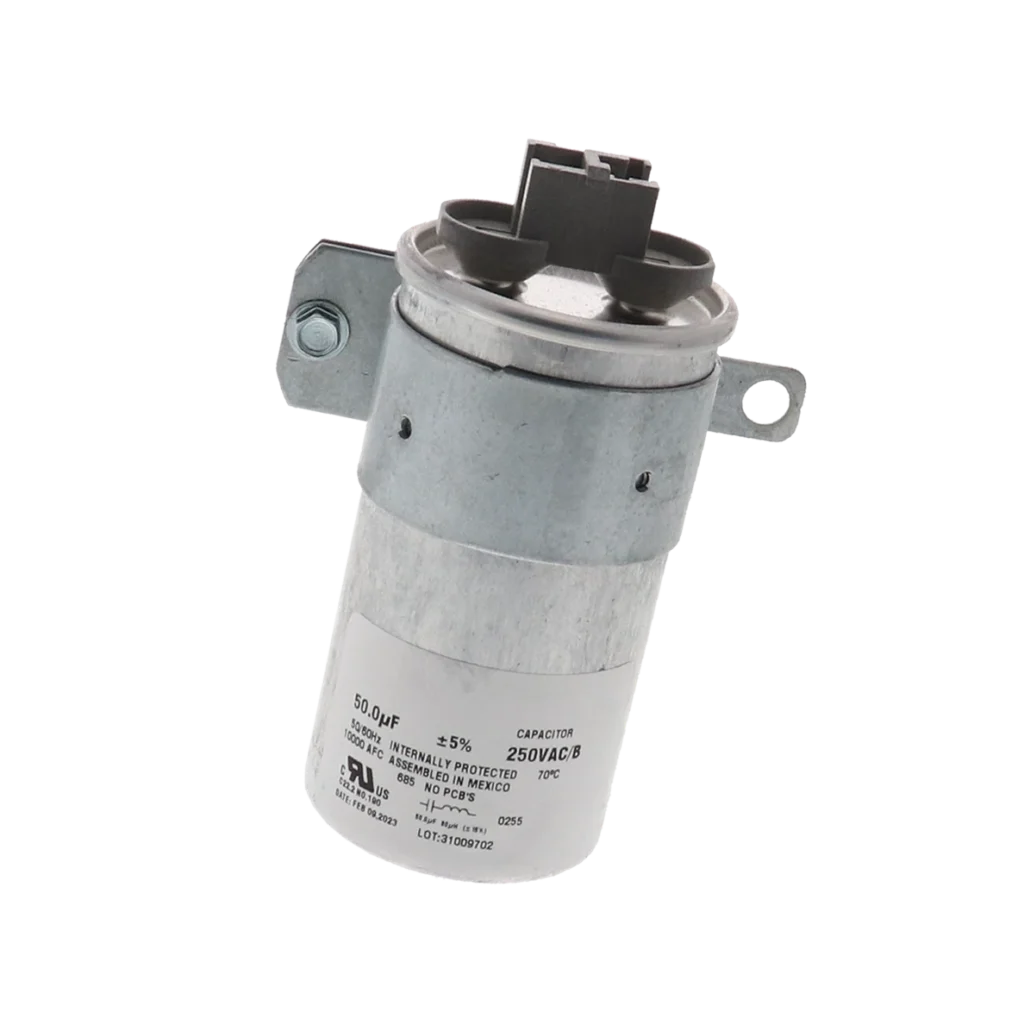
This exact scenario happens when your motor run capacitor fails. It's not the sexiest part, but this little cylindrical component gives your washer motor the electrical jolt it needs to start spinning. When it goes bad, you've got a tub full of soggy clothes and a machine that sounds like it's trying but can't quite get there.
The W11395618 motor run capacitor is the replacement part for dozens of Whirlpool, Maytag, and Kenmore top-load washers including the WTW4915EW, WTW4850HW, WTW5100HC, and WTW5800BW series. Let's diagnose what's actually wrong.
Quick Symptom Check
Your washer capacitor is likely failed if you're experiencing:
- Motor hums but drum doesn't move — most telltale sign
- Washer fills and drains normally but won't agitate or spin
- Burning smell near the motor during attempted spin cycles
- Intermittent spinning — works sometimes, not others
- Tripped breaker when washer tries to spin
If you're nodding along to two or more of these, keep reading.
Cause #1: Failed Motor Run Capacitor (70% Probability)
The capacitor stores electrical charge and releases it to help the motor start under load. These components have a rated lifespan, and when they fail, it's usually catastrophic — not gradual.
How to diagnose:
- Unplug the washer and access the motor area (usually beneath the tub)
- Locate the cylindrical capacitor attached near the motor — it'll have two wire terminals
- Look for visible bulging, cracking, or oil leakage on the capacitor body
- If you have a multimeter, discharge the capacitor safely and test for capacitance (should read 15-20 µF typically)
A blown capacitor often shows physical damage. If it looks swollen like a Coke can left in a freezer, it's done.
The fix: Replace with W11395618 ($79.99). This is a direct swap — disconnect the two wire terminals, remove the mounting bracket, install the new capacitor, reconnect wires. Takes about 30 minutes if you've got basic tools.
Cause #2: Faulty Motor Winding (15% Probability)
Sometimes the motor itself has internal winding failure. The capacitor can't fix a motor that's electrically compromised.
How to diagnose:
- With capacitor disconnected, test motor windings with a multimeter (should show 3-10 ohms resistance between terminals)
- Check for continuity to ground — if motor housing shows continuity to windings, the motor is shorted
- Smell test: burnt insulation smell directly from motor housing (not capacitor area)
If motor windings test bad, you're looking at a full motor replacement, not just the capacitor. That's a $150-250 repair depending on labor.
Cause #3: Loose or Corroded Wire Connections (8% Probability)
Before you blame components, check the basics. Motor wire connectors can vibrate loose or corrode over time, especially in humid laundry rooms.
How to diagnose:
- Inspect all wire connections between capacitor, motor, and control board
- Look for green corrosion on spade connectors
- Wiggle test each connection — any movement means it's loose
Clean corroded terminals with electrical contact cleaner and ensure all connections click firmly into place. Sometimes it's that simple.
Cause #4: Seized Motor Bearings (5% Probability)
A motor with seized bearings can't spin even with a good capacitor providing power.
How to diagnose:
- With belt disconnected, try rotating motor pulley by hand
- Should spin freely with slight resistance
- If it won't budge or grinds, bearings are seized
This requires motor replacement. You can't just replace bearings on these sealed motors economically.
Cause #5: Defective Control Board (2% Probability)
Rarely, the main control board fails to send power to the motor circuit entirely. You'd typically see other symptoms too — no lights, error codes, or completely dead controls.
How to diagnose:
- Test for voltage at motor terminals during spin cycle (should read 120V AC)
- No voltage = control board or wiring harness issue
Control boards run $200-300 and require programming. Try the $80 capacitor first.
When to Call a Pro
Here's the honest truth: capacitor replacement is DIY-friendly if you're comfortable working with basic electrical components. The part costs $79.99, and you'll need a screwdriver, nut driver set, and 30 minutes.
Call a pro if:
- You're not comfortable discharging a capacitor safely (it can shock you)
- Testing reveals motor winding failure — that's a bigger job
- You've replaced the capacitor and problem persists
- Your washer is still under warranty
Service call plus capacitor replacement typically runs $180-250 total. You're paying $100+ for labor on an $80 part.
Frequently Asked Questions
How long do washer motor capacitors typically last?
Most motor run capacitors last 5-8 years under normal use. Heavy usage, power surges, and high humidity can shorten lifespan. If your Whirlpool washer is 6+ years old and you're seeing these symptoms, the capacitor is the likely culprit based on age alone.
Can I use a different brand capacitor instead of W11395618?
Technically yes, but match the microfarad rating (µF) and voltage rating exactly. The W11395618 is rated for specific electrical characteristics that your motor needs. Generic capacitors from hardware stores often don't meet OEM specs and may cause motor damage. For $79.99, use the correct part.
Will a bad capacitor damage other washer components?
A failing capacitor forces your motor to draw excessive current while trying to start. This can trip breakers, overheat motor windings, and stress the control board. Don't run the washer repeatedly if you suspect capacitor failure — each failed start attempt risks cascading damage to more expensive parts.
Diagnosed the problem?
W11395618 · In Stock · Fast shipping