
GE Refrigerator Running But Not Cooling — 5 Causes & How to Fix
You walk into the kitchen and notice condensation on your milk carton. The ice cream's soft. Your GE refrigerator is definitely running — you can hear it — but everything inside feels room temperature. This is one of the most frustrating failures because the unit sounds like it's working, but your food is slowly spoiling.
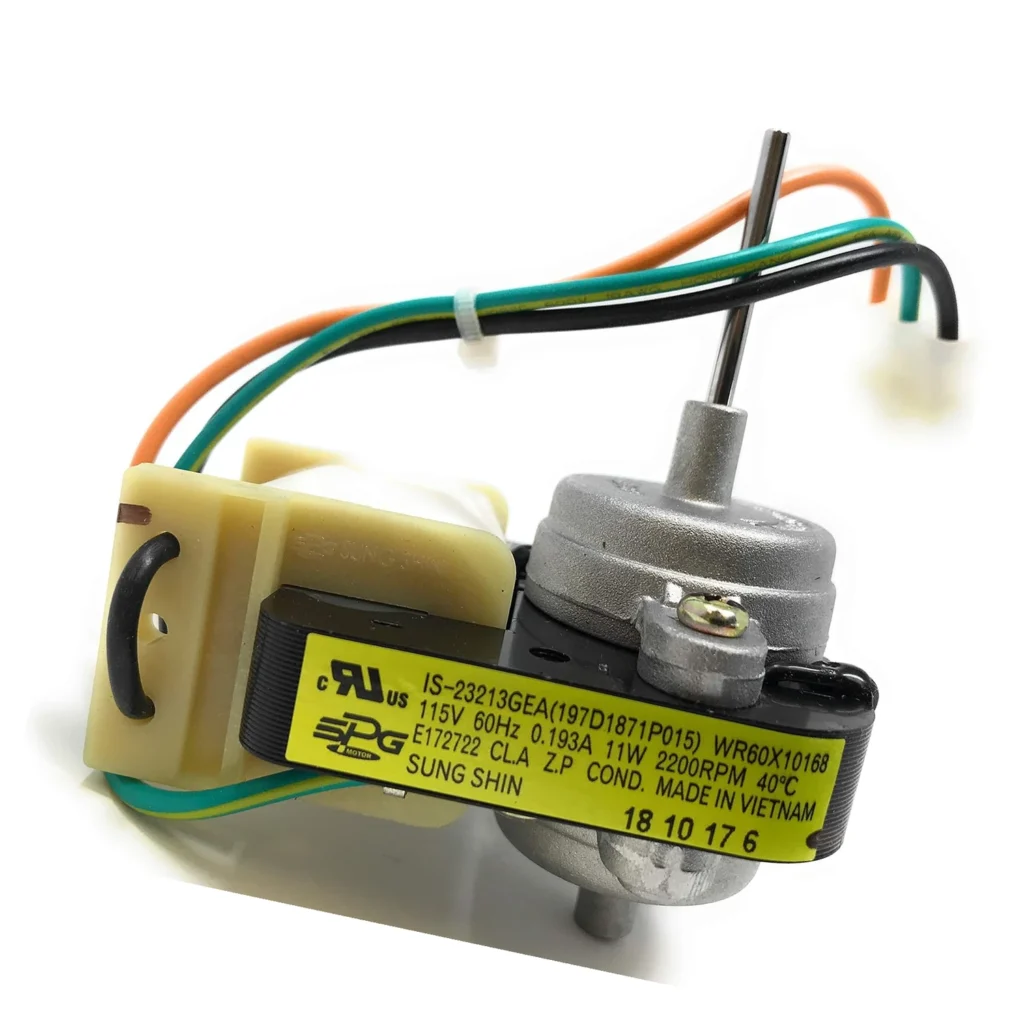
When a GE refrigerator runs but won't cool, the condenser fan motor (part WR60X10168) fails in about 40% of cases. This motor pulls air across the condenser coils underneath or behind your fridge. When it stops, the compressor overheats and can't remove heat properly. Your fridge becomes an expensive bread box.
Quick Symptom Check
Before you start diagnosing, confirm these symptoms match your situation:
- Fridge section is warm (above 45°F) but the unit is running
- Freezer section is also warm or barely maintaining temperature
- You hear clicking sounds from behind or underneath the fridge
- Compressor runs constantly without cycling off
- Condenser coils feel extremely hot to the touch
- No airflow felt near the bottom front grille
If three or more of these match, keep reading. You're likely dealing with a cooling system failure, not just a thermostat issue.
Cause #1: Failed Condenser Fan Motor (Most Likely — 40%)
The condenser fan motor (WR60X10168) sits near the compressor, usually at the bottom rear of your refrigerator. It's supposed to spin constantly when the compressor runs, pulling room air across the condenser coils to dissipate heat. When this motor burns out, the compressor can't reject heat efficiently.
How to diagnose:
- Unplug your refrigerator and pull it away from the wall
- Remove the lower rear access panel (usually 4-6 screws)
- Locate the condenser fan — it's the smaller fan near the compressor
- Try spinning the blade manually. It should turn freely without resistance
- If it's seized or extremely difficult to turn, the motor bearings have failed
- Plug the fridge back in briefly and listen — if the compressor runs but this fan doesn't spin, the motor is dead
Why it fails: These motors run thousands of hours in a dusty, hot environment. Bearings wear out, windings overheat, and eventually the motor seizes. On models like the GTS18FBRERWW and TBX18SABQRWW, this typically happens after 7-10 years.
The fix: Replace the condenser fan motor with WR60X10168. This is a 30-minute repair if you're comfortable with basic tools. Disconnect power, remove the old motor (usually 2 mounting screws and a wire harness connector), install the new motor, and reconnect. Test before reassembling completely.
Cost: $44.99 for the motor, $0 if you DIY or $150-$250 with a service call.
Cause #2: Condenser Coils Completely Blocked (25%)
Even if your fan motor works, blocked condenser coils produce the exact same symptom. Pet hair, dust, and kitchen grease accumulate on these coils over years. Eventually the buildup acts like a blanket, preventing heat dissipation.
How to diagnose:
- With the rear panel off, inspect the condenser coils (black or copper tubes with fins)
- If you can't see through the fins, they're too dirty
- The coils should look like a radiator with visible gaps between fins
The fix: Use a refrigerator coil brush (not a regular vacuum attachment) to clean between the fins. Work gently — these fins bend easily. Vacuum up the debris as you go. If the fan motor spins freely and the coils are clean, your cooling should restore within 4-6 hours.
Cost: $12 for a coil brush, 20 minutes of your time.
Cause #3: Evaporator Fan Motor Failure (20%)
This is the fan inside your fridge that circulates cold air. When it stops, the freezer might stay somewhat cold (it's closest to the evaporator coils), but the fresh food section warms up quickly. You'll typically hear no airflow when you open the fridge door.
How to diagnose:
- Open the freezer door and listen for a fan running
- Remove the back panel inside the freezer (behind the ice buildup)
- The evaporator fan should be visible — check if the blade spins when the door closes
- If the blade is frozen in place, you have a defrost system issue, not a fan motor failure
The fix: If the fan motor itself has failed (not frozen), it needs replacement. This is a more complex repair involving removing frozen panels and possibly defrosting the evaporator coils first. Consider professional help unless you're experienced.
Cost: $60-$90 for the motor, $200-$300 installed.
Cause #4: Defrost System Malfunction (10%)
If your freezer has excessive frost buildup on the back wall, the defrost heater, timer, or thermostat has failed. Ice blocks airflow from the evaporator, and eventually both compartments warm up. The compressor runs constantly trying to compensate.
How to diagnose: Open the freezer and check the back wall. If you see more than a thin layer of frost, or if there's a solid ice block, your defrost system isn't working.
The fix: Manually defrost the freezer (unplug for 24 hours), then test the defrost heater with a multimeter. If it shows no continuity, replace it. If the heater is good, test the defrost timer and thermostat. This troubleshooting requires electrical testing knowledge.
Cost: $30-$70 per component, $180-$280 for professional diagnosis and repair.
Cause #5: Compressor Failure (5%)
This is the worst-case scenario. The compressor is the heart of your cooling system. When it fails, it either won't run at all, or it runs but makes loud knocking/grinding noises and produces no cooling. The compressor body will be extremely hot to the touch.
How to diagnose:
- Feel the compressor (black cylinder at the bottom rear) — it should be warm, not scorching hot
- Listen for abnormal noises: clicking, rattling, or buzzing that wasn't there before
- Check if the compressor runs for 10 seconds then shuts off repeatedly (overload protector tripping)
The fix: Compressor replacement costs nearly as much as a new refrigerator. If your GE fridge is over 10 years old and the compressor has failed, replacement is more economical than repair. If it's under 5 years old and still under warranty, get it serviced immediately.
Cost: $450-$800 for compressor replacement, often not worth it.
When to Call a Pro
Here's my honest take after 20 years fixing appliances: replacing the condenser fan motor (WR60X10168) is a straightforward DIY repair. If you've ever changed a car battery, you can handle this. The part costs $44.99, and you'll save $150+ in labor.
Call a professional if:
- You're not comfortable working with electrical connections
- The compressor itself seems to be failing (hot, noisy, short-cycling)
- You've replaced the condenser fan motor but still have no cooling after 6 hours
- There's a refrigerant leak (you smell a chemical odor or see oily residue)
- Your refrigerator is still under warranty
For models like the GTS18GBRERWW, TBX16SYBNRWW, and HTR15ABRFRWW, the condenser fan motor replacement is identical. The WR60X10168 fits over 200 GE, Hotpoint, and Kenmore models. Just verify your model number matches the compatibility list before ordering.
Frequently Asked Questions
How long does a GE condenser fan motor typically last?
Most GE condenser fan motors last 8-12 years with normal use. If you have pets or your refrigerator is in a dusty environment (garage, unfinished basement), expect 6-10 years. The motor runs whenever the compressor runs, accumulating thousands of hours. When bearings wear out or windings burn up, the motor stops suddenly — there's rarely a gradual decline.
Why is my GE refrigerator clicking but not cooling?
A clicking sound without cooling usually means the compressor's overload protector is tripping repeatedly. This happens when the compressor overheats because the condenser fan motor isn't running. The compressor tries to start, gets too hot immediately, and the safety relay clicks it off. It cools down slightly, tries again, and clicks off — over and over. Check the condenser fan motor first (WR60X10168). If it's not spinning, that's your problem.
Can a dirty condenser cause a refrigerator to stop cooling completely?
Yes, absolutely. Severely blocked condenser coils reduce heat dissipation by 60-70%. Your compressor runs constantly trying to compensate, but it can't overcome the thermal bottleneck. Eventually the compressor overheats and either shuts down on thermal protection or runs ineffectively. I've seen refrigerators with coils so clogged they looked like felt fabric. Thirty minutes of cleaning restored full cooling. Clean your coils every 12-18 months, every 6 months if you have pets.
Diagnosed the problem?
WR60X10168 · In Stock · Fast shipping