
LG Refrigerator Door Bin Cracked or Broken — 5 Causes & How to Fix
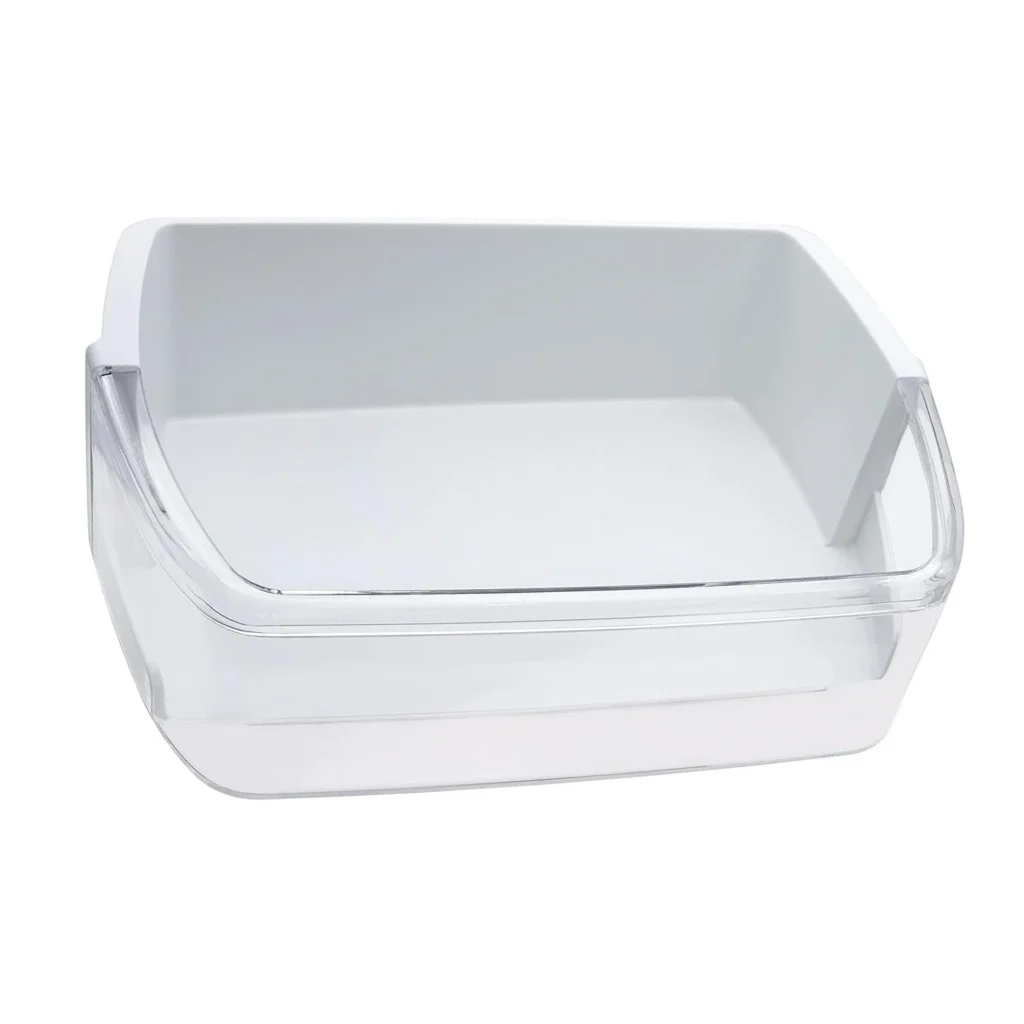
You're grabbing the milk for your morning coffee when you hear it — that sharp crack. The door bin on your LG LFX25991ST just gave out, sending a half-gallon of orange juice crashing to the floor. Sound familiar? Door bins don't fail randomly. They crack, warp, or detach for specific reasons, and most homeowners don't realize they're causing the damage themselves.
The AAP73252202 door bin is one of LG's most frequently replaced parts, fitting everything from the LFX31925ST French door models to the LFXS30726S series. Let's figure out what killed yours.
Quick Symptom Check
- Visible cracks along the bottom or sides of the bin
- Bin tilts forward when you open the door, spilling contents
- Completely detached from mounting brackets
- Warped plastic that won't sit flush against the door
- Broken mounting tabs on the back of the bin
Cause #1: Overloading (60% Probability)
Here's the thing nobody tells you: that bin wasn't designed to hold four glass bottles of salad dressing plus a gallon of milk. The AAP73252202 has a weight limit around 10-12 pounds, but most people treat it like a pantry shelf.
What happens: Constant overloading stresses the plastic at the mounting points. You'll see stress cracks forming where the bin attaches to the door — usually at the bottom corners first. On models like the LFX31935ST and LFXC24726S, the bins are particularly vulnerable because of their deeper design.
How to check: Remove everything and inspect the underside. Run your finger along the bottom edge. Feel any rough spots or hairline fractures? That's overload damage.
The fix: Replace the bin (it's $65.99 for the OEM part). Then redistribute weight — heavy items go on shelves, not door bins. Keep door bins under 8 pounds to extend their life.
Cause #2: Thermal Stress from Dishwasher (25% Probability)
Yeah, the bin looks dishwasher-safe. It's plastic, right? Wrong move.
What happens: High heat warps the polystyrene material. The bin comes out of your dishwasher looking fine, but the mounting tabs have shrunk just enough that they don't grip properly anymore. Three weeks later, the whole thing pops off.
How to check: Compare your old bin to a new AAP73252202. If the mounting tabs look shorter or the plastic feels softer, heat damage is your culprit.
The fix: Hand-wash only with warm (not hot) water. Replace the warped bin — there's no fixing thermal deformation.
Cause #3: Impact Damage (10% Probability)
Slamming the refrigerator door creates more force than you'd think. On models like the LMXS30746S and LFCS31626S with multiple door bins, that repeated impact travels through the entire door assembly.
What happens: Each slam sends a shock wave through the bins. Eventually, the plastic fatigues at its weakest point — usually where the bin curves. You'll see a clean break line, not the spiderweb cracks you get from overloading.
How to check: Does the crack run in a straight line? That's impact. Spiderweb pattern? That's weight stress.
The fix: Install the new bin, then adjust your door closer mechanism if your LG has one. Teach the household to close gently.
Cause #4: Manufacturing Defect in Specific Model Years (3% Probability)
LG had a batch of bins around 2014-2016 that used a slightly different plastic formulation. They're more brittle than later versions.
What happens: The bin cracks with normal use. You're not doing anything wrong — the material itself is subpar.
How to check: If your LFX31925SB or LFXS32726S is from that era and the bin cracked with minimal use, you likely got a bad batch.
The fix: The AAP73252202 replacement uses updated materials. Install it and you're good.
Cause #5: Improper Installation After Previous Replacement (2% Probability)
If someone already replaced this bin once, they might've forced it into place without properly seating the mounting tabs.
What happens: The bin looks installed but isn't fully locked. Every door opening puts stress on half-engaged clips. They eventually snap.
How to check: Can you wiggle the bin side-to-side more than 1/4 inch? It's not seated right.
The fix: When installing the new AAP73252202, you'll hear a definite click when the tabs engage. If you don't hear it, you're not done. Push firmly at the top and bottom until both sides click.
When to Call a Pro
This is a straightforward swap. If you can handle a screwdriver, you can do this. The only exception: if the door liner itself is cracked (the actual door panel where the bin mounts), that's a different repair entirely. You'll need the door disassembled, which takes specialized knowledge on models like the LMXC23746D.
Otherwise? Save the service call fee. The bin snaps in and out in under three minutes.
Frequently Asked Questions
Will the AAP73252202 fit my Kenmore 79572042112?
Yes. This bin fits dozens of LG-manufactured Kenmore models from the 795 series. The part number might say LG, but Kenmore used the exact same bins on their LG-built units. Check your model number against the compatibility list — if it's there, you're good.
Can I use Gorilla Glue to fix a cracked bin instead of replacing it?
Technically yes, but you'll regret it. Adhesives don't flex like the original plastic, so the repair rarely lasts more than a month. Plus, anything you glue near food storage needs to be food-safe when cured. The $66 replacement saves you from a re-crack three weeks later.
Why does LG use such cheap plastic for a $3,000 refrigerator?
Weight and cost. Glass bins would be heavier, adding stress to door hinges. High-grade polycarbonate would work but costs 3x as much. LG's choice is the industry standard — Whirlpool, Samsung, and GE all use similar materials. The bins last 7-10 years with proper use. The problem isn't the material; it's how people load them.
Diagnosed the problem?
AAP73252202 · In Stock · Fast shipping