
Whirlpool Dishwasher Won't Start — 4 Causes & How to Fix
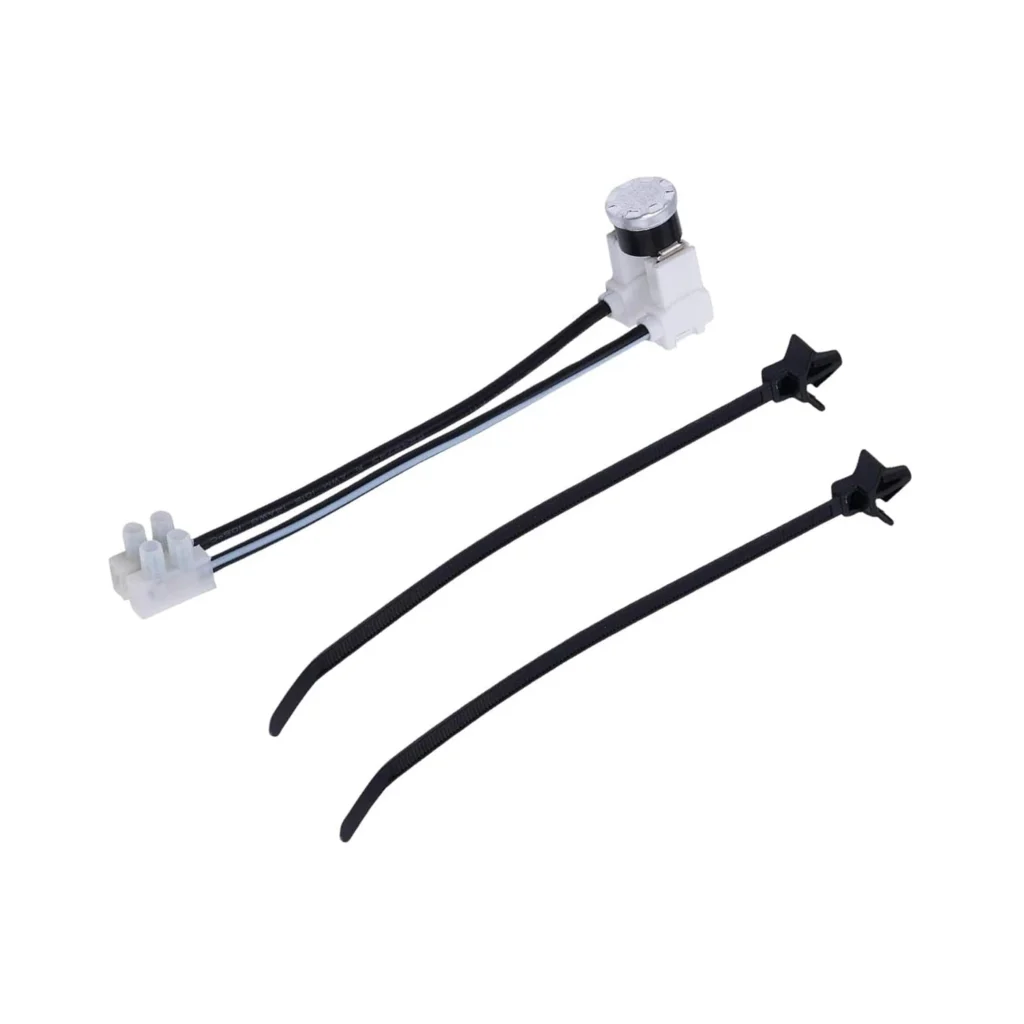
You load the dishes, close the door, press Start, and... nothing. No hum, no water fill, no lights blinking—just silence. One customer put it perfectly: "Removed the screws to access the controls. Used my volt meter to check circuits. Found an open circuit on the thermal fuse." That tiny bi-metal component is the #1 reason Whirlpool, KitchenAid, Maytag, and Kenmore dishwashers suddenly refuse to start.
Quick Symptom Check
- Control panel is completely dead — no lights, no response to buttons
- Door latch clicks but nothing happens — you hear the latch engage but zero action afterward
- Dishwasher was working fine, then suddenly stopped — no gradual decline, just instant failure
- No water entering the tub — the fill cycle never begins
- Recent power surge or overheating incident — maybe you ran a heavy wash cycle right before failure
Cause #1: Blown Thermal Fuse (70% Probability)
The W10258275 thermal fuse is a sacrificial safety device. When your dishwasher's control board or motor overheats—even slightly beyond spec—this bi-metal fuse opens the circuit permanently. It's designed to fail to protect more expensive components. The thermal fuse opens when the temperature gets too high, protecting the circuit from overload.
Diagnosis: You'll need a multimeter set to continuity mode. Access the control panel (usually 4-6 screws along the door edge on models like GU2275XTVY3, GU2300XTVS1, or DU1010XTXB0). Locate the small cylindrical component with two wire terminals—that's your thermal fuse. Touch the meter probes to each terminal. No beep? It's blown.
Why it happens: Extended wash cycles in hot climates, blocked vents restricting airflow around the control board, or a motor that's drawing excessive current all generate heat. The fuse doesn't gradually wear out—it opens instantly when the threshold temperature is reached.
Fix difficulty: Easy. Less than 15 minutes with basic screwdrivers. Disconnect power, remove the door panel screws, swap the fuse, reassemble. No specialized tools required.
Cause #2: Faulty Door Latch Assembly (15% Probability)
Your dishwasher won't start if it doesn't detect a closed door. The latch assembly contains switches that complete the circuit. If the latch mechanism is broken or the micro-switches inside are worn, the control board never receives the "door closed" signal.
Diagnosis: Open and close the door—does it click firmly? Inspect the strike plate on the tub for damage. With the door closed, use your multimeter to test continuity across the latch switch terminals while manually pressing the latch. If there's no continuity when engaged, the latch assembly is shot.
Common on models: 7GU2300XTVQ0, 7GU3800XTVY0, KUDA03CTBS0, and KUDA03CTBS1 after 5-7 years of use.
Cause #3: Failed Control Board (10% Probability)
If the thermal fuse tests good and the door latch checks out, the main control board might have failed independently. Power surges, moisture intrusion, or component aging can kill the board. This is less common because the thermal fuse usually sacrifices itself first.
Diagnosis: With power restored and the thermal fuse bypassed temporarily (for testing only—don't leave it this way), if the dishwasher still won't respond, the board is likely dead. Look for visible burn marks, bulging capacitors, or corrosion on the circuit board.
Cost consideration: Control boards run $150-$300. If your dishwasher is over 10 years old, this might be replacement territory rather than repair.
Cause #4: Drainage Issue Preventing Start (5% Probability)
Some Whirlpool models have a safety feature that prevents starting if residual water is detected in the tub. A clogged drain pump or stuck float switch can trick the control board into thinking there's a drainage problem.
Diagnosis: Remove the lower dish rack and check the sump area for standing water. If you find water, bail it out and inspect the drain pump and filter for blockages. Test the float switch (usually under the filter assembly) by moving it up and down—it should click freely.
When to Call a Pro
If you've tested the thermal fuse and it's good, but you're uncomfortable working with electrical components or disassembling the door panel, call a tech. Also, if you're chasing multiple failed components (fuse + board + latch), you're looking at $300+ in parts alone—time to evaluate whether repair makes sense for your dishwasher's age.
But honestly? The thermal fuse is the culprit 70% of the time, it costs under $30, and the repair takes 15 minutes. That's a homeowner-friendly fix.
Frequently Asked Questions
Can I bypass the thermal fuse permanently?
No. Never bypass a thermal fuse as a permanent solution. It's a safety device that prevents fires if your dishwasher overheats. Replace it with the proper W10258275 part (also replaces AP4423189, PS2360984, W10136048, 661663, and W10344801).
Why did my thermal fuse blow if nothing seems wrong?
Thermal fuses can blow from accumulated heat stress over time, not just obvious overheating events. If your dishwasher runs long cycles frequently or the ambient temperature in your kitchen is high, the control area can slowly heat beyond the fuse's threshold without any dramatic failure.
Will the dishwasher work intermittently with a bad thermal fuse?
No. Once a thermal fuse opens, it's permanently open. There's no intermittent behavior—the dishwasher either works or it doesn't. If you're experiencing intermittent starting issues, look at the door latch or control board instead.
Diagnosed the problem?
W10258275 · In Stock · Fast shipping