
Whirlpool Dryer Won't Spin — 5 Causes & How to Fix
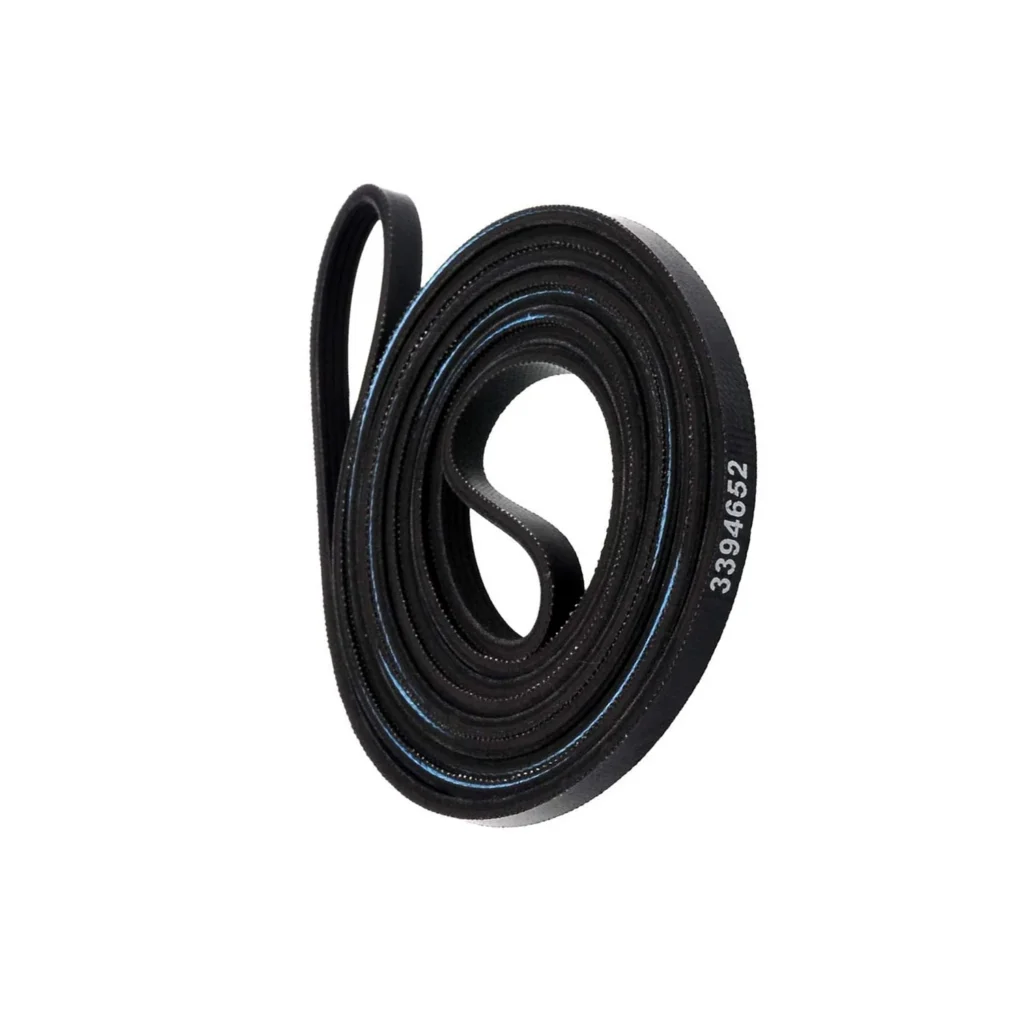
You throw a load of wet clothes in your Whirlpool dryer, hit start, and hear the motor running — but the drum just sits there. Clothes are still soaking wet after 60 minutes. This is the most common call we get at the shop, and 80% of the time, it's the drive belt.
The drum drive belt (part 3394652) wraps around your dryer drum and connects to the motor pulley. When it breaks or slips off, the motor runs but there's nothing turning the drum. Here's how to diagnose what's really going on.
Quick Symptom Check
- Motor runs but drum doesn't turn — classic broken belt
- Drum spins freely by hand — belt is definitely off or broken
- Burning rubber smell before failure — belt was slipping and overheating
- Squealing noise for weeks, then sudden stop — belt finally gave out
- Dryer starts then stops after 2 seconds — could be belt or motor issue
Cause #1: Broken or Worn Drive Belt (85% Probability)
This is your most likely culprit. The 3394652 belt is a long flat rubber loop that wraps around the drum, under the idler pulley, and around the motor pulley. After years of friction and heat cycles, the rubber degrades and eventually snaps.
How to check: Unplug the dryer, pull it away from the wall, and remove the front or top panel (depends on your model — LTE5243DQB and WET4024EW0 models have front-access panels). Reach inside and try to spin the drum by hand. If it turns super easily with almost no resistance, the belt's off.
Normal resistance means the belt's still on. If you see the belt but it's cracked, glazed, or has chunks missing, it needs replacement even if it hasn't fully broken yet.
Fix difficulty: Moderate. You'll need to remove the drum to loop the new belt around it. Takes about 45 minutes if you've done it before, 90 minutes for a first-timer.
Cause #2: Seized Drum Rollers or Bearings (10% Probability)
Even if the belt's intact, seized drum support rollers can stop the drum from turning. The belt might be fine, but if the rollers won't roll, the motor can't overcome the friction.
How to check: With the belt off (or if you're already inside the dryer checking the belt), spin each drum support roller by hand. They should spin freely and quietly. If they're stiff, grinding, or squealing, they're seized. Models like the LDR3822HQ0 and LDR3822PQ0 have four rollers — check all of them.
While you're in there, check the rear drum bearing too. It's the little white bushing at the back center of the drum. If it's black, melted, or won't spin smoothly, replace it.
Fix difficulty: Moderate to hard. Since you're already removing the drum to replace the belt, might as well do the rollers at the same time if they're bad.
Cause #3: Worn Idler Pulley (3% Probability)
The idler pulley keeps tension on the belt. If the pulley bearing seizes or the pulley arm breaks, the belt goes slack and slips off the motor pulley.
How to check: Look for the idler pulley — it's a small wheel on a spring-loaded arm near the motor. The belt should be tight against it. If the pulley doesn't spin freely or the spring arm is broken, that's your problem.
You'll usually hear squealing or grinding for weeks before this causes a total failure.
Cause #4: Motor Pulley Damage (1% Probability)
Rare, but we've seen it. The motor pulley can wear a groove into itself, or the set screw can loosen and let the pulley slip on the motor shaft.
How to check: With the belt off, look at the motor pulley closely. Run your finger around the groove where the belt sits. If you feel a deep channel worn into the metal, or if the pulley wobbles when you wiggle it, there's your issue.
Tighten the set screw with an Allen wrench. If the pulley's worn, you'll need a new motor or pulley assembly.
Cause #5: Broken Motor (1% Probability)
If the motor itself is dead, you won't hear it running. But sometimes a motor will hum without turning — that's a seized motor bearing or a failed start winding.
How to check: Hit the start button and listen carefully. A healthy motor has a smooth whirring sound. A bad motor hums, clicks, or stays silent. If you smell burning plastic or see scorch marks near the motor, it's toast.
Test the motor with a multimeter if you know how. Otherwise, this is pro territory.
How to Replace the Drive Belt (Part 3394652)
Tools you'll need: Putty knife or flat screwdriver, Phillips screwdriver, work gloves, flashlight.
Step 1: Unplug the dryer. Seriously, do this first.
Step 2: Remove the lint screen, then the two screws underneath it. On front-access models like the LTE6234DQ5, pop the top panel up with a putty knife, then remove the front panel screws.
Step 3: Disconnect the door switch wires and lift the front panel off. The drum will tip forward — support it.
Step 4: Reach under the drum and release the old belt from the motor pulley and idler pulley. Note how it's routed — take a picture with your phone.
Step 5: Lift the drum out of the cabinet. It's heavy but not bolted in.
Step 6: Loop the new 3394652 belt around the drum with the ribbed side against the drum. The flat side faces out.
Step 7: Set the drum back in place, then reach underneath and loop the belt under the idler pulley, then around the motor pulley. You'll need to stretch the idler pulley over to get the belt on the motor pulley — use a screwdriver to pull it if needed.
Step 8: Spin the drum by hand a few times. It should turn smoothly with moderate resistance. If it's too easy, the belt's not on the motor pulley.
Step 9: Reassemble the front panel, reconnect the door switch, replace the screws, and test.
When to Call a Pro
If you're not comfortable pulling your dryer apart, call someone. A repair tech will charge $150–$250 for this job depending on your area. The part itself (3394652) runs about $46, so you're paying $100–$200 for labor.
Also call a pro if:
- You replaced the belt but the drum still won't turn
- The motor won't run at all (electrical issue)
- You see burnt wiring or smell burning electronics
- The drum wobbles or grinds even with a new belt
Preventing Future Belt Failures
Dryer belts last 10–15 years on average. You can extend that by:
- Cleaning the lint trap after every load (reduces motor strain)
- Vacuuming out the drum cavity once a year
- Not overloading the dryer (puts excess tension on the belt)
- Replacing worn drum rollers before they seize (saves the belt from slipping)
If you heard squealing for weeks before the belt broke, that was your warning sign. Next time, replace it when you first hear noise.
Frequently Asked Questions
Will a broken dryer belt cause the motor to not run at all?
No. The motor will still run even with a broken belt — you'll hear it humming or running, but the drum won't turn. If the motor doesn't run at all, that's a separate electrical or motor issue, not the belt.
Can I use a different belt if 3394652 is out of stock?
Only use an exact replacement or a confirmed compatible part number (like AP2946614, 345675, 4319392, or PS345337). Generic "universal" belts are usually the wrong length or width and will slip or break quickly. The 3394652 belt is 92.25 inches long and 0.25 inches wide — verify dimensions if you're cross-referencing.
How do I know if the belt is on correctly after installation?
Spin the drum by hand before you close up the dryer. It should rotate smoothly with moderate resistance — not super easy, not impossible. If it spins with almost no effort, the belt's not on the motor pulley. If it won't budge, the belt's twisted or jammed. Also, run the dryer empty for 2 minutes and listen for squealing or thumping — that means something's misaligned.
Diagnosed the problem?
3394652 · In Stock · Fast shipping