
Frigidaire Dryer Won't Start or Not Heating — 3 Thermal Fuse Failures & Fixes
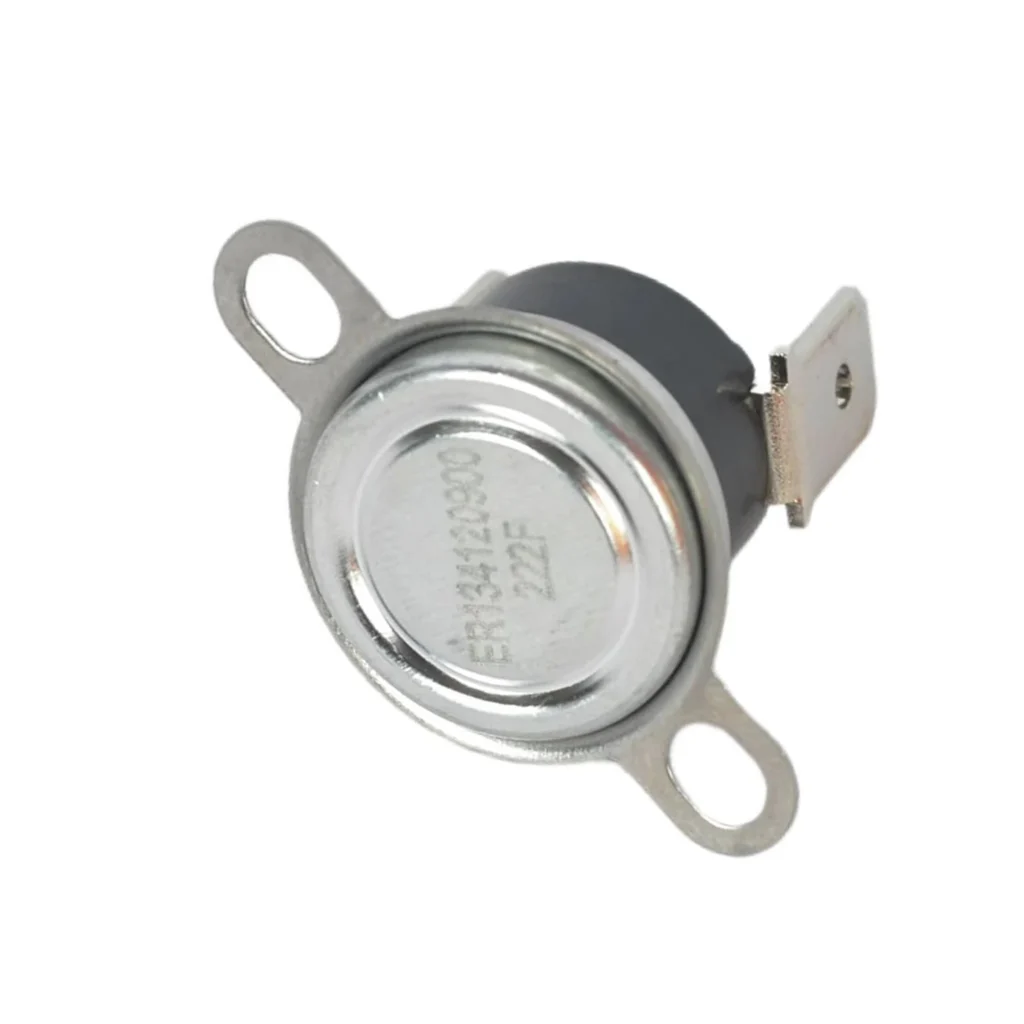
You load wet clothes into your Frigidaire dryer, hit start, and... nothing. Or maybe it starts but blows cold air for 90 minutes while your towels stay damp. Before you call a repair tech charging $150 just to show up, check the thermal limiter. This tiny $11 part is the #1 reason Frigidaire dryers (models AEQ6000ES1, AEQB6000ES0, FEQ332ES0, and hundreds of others) suddenly quit working.
The thermal limiter (part 134120900) is a one-time safety fuse that cuts power if your dryer overheats. Once it blows, it's done forever — you can't reset it. It's located on the heater housing or blower wheel housing depending on your model, and it fails for three specific reasons we'll walk through below.
Quick Symptom Check
Your Frigidaire dryer has a blown thermal limiter if you're experiencing:
- Won't start at all — control panel lights up but drum doesn't turn when you press start
- No heat — drum spins normally but clothes stay cold and wet after full cycle
- Runs too hot — clothes come out scorching or with burn marks (limiter about to fail)
- Stops mid-cycle — starts fine but shuts off randomly after 10-15 minutes
Important: the thermal limiter often works alongside the thermal cutoff (134120800). Many techs replace both at the same time since they fail for the same underlying reasons.
Cause #1: Blocked Exhaust Vent (70% of Failures)
Probability: Very High
Here's what happens: lint builds up in your exhaust vent over months or years. Airflow drops. Heat can't escape. Internal temperature spikes to 220°F. The thermal limiter trips at 196°F and cuts power to protect your house from fire.
How to diagnose:
- Unplug the dryer and pull it away from the wall
- Disconnect the 4-inch aluminum duct from the back
- Shine a flashlight into the duct — if you see a lint mat or can't see through to the outside vent, that's your problem
- Check the outdoor vent hood — flapper should move freely when you blow on it
Even if the limiter tests bad with a multimeter (no continuity), replacing it won't fix anything long-term unless you clear the vent. You'll blow another fuse in two weeks.
Fix: Disconnect the vent entirely and clean it with a dryer vent brush kit or shop vac. For vents longer than 15 feet or with multiple elbows, hire a duct cleaning service. Then replace the thermal limiter.
Cause #2: Failed Heating Element (20% of Failures)
Probability: Moderate
The heating element in Frigidaire dryers (part 5303207153 or similar) is a coiled wire inside a metal chamber. Over thousands of cycles, the coil can crack or touch the chamber walls. When it shorts to ground, it draws excessive current and overheats — triggering the thermal limiter.
How to diagnose:
- Unplug the dryer
- Access the heating element housing (usually lower front panel or rear panel depending on model)
- Visually inspect the coil through the housing slots — look for breaks or spots where wire touches metal
- Use a multimeter: test element for 8-12 ohms resistance (good), infinite ohms (broken), or test from element terminal to ground — if you get continuity to ground, element is shorted
If the heating element is shorted, it'll keep blowing thermal fuses even after you replace them. You'll get one or two loads done, then it trips again.
Fix: Replace the heating element and the thermal limiter together. On models like the AEQ6000CES0 and FEQ332ES0, the element is held in with two screws and a wire harness — 15 minute job if you've done it before.
Cause #3: Restricted Blower Wheel (10% of Failures)
Probability: Low to Moderate
The blower wheel pulls air through the drum and pushes it out the vent. Lint can accumulate on the wheel blades (especially if you dry towels and blankets a lot). A clogged wheel reduces airflow just like a blocked vent — heat builds up, limiter trips.
How to diagnose:
- Unplug dryer and remove the front panel to access the drum
- Remove the drum belt and lift out the drum (easier than it sounds)
- Look at the blower wheel at the bottom of the cabinet — should spin freely
- Check for lint wrapped around the shaft or packed between the blades
You might also hear a loud rattling or squealing sound if the wheel is obstructed or the shaft is worn.
Fix: Vacuum out the blower housing thoroughly. If the wheel itself is cracked or wobbles on the shaft, replace it (part varies by model). Install the new thermal limiter. Reassemble in reverse order.
How to Test the Thermal Limiter
You'll need a multimeter set to continuity or resistance mode:
- Unplug the dryer
- Locate the thermal limiter — on most Frigidaire models it's mounted on the heater housing (silver box in the lower front) or blower housing
- Disconnect the two wires from the limiter terminals
- Touch multimeter probes to each terminal
- Good limiter: reads 0 ohms or beeps (continuity)
- Bad limiter: reads infinite ohms or OL (open circuit)
If it's open, it's blown. But remember — just replacing the fuse without fixing the root cause (vent blockage, bad element, etc.) means you'll be back here in two weeks doing this again.
Replacement Process (30-45 Minutes)
This repair is straightforward if you're comfortable with a screwdriver and unplugging wires:
- Unplug dryer and shut off gas if applicable
- Remove the lower front panel or rear panel (model-dependent) — usually 4-6 screws
- Locate the thermal limiter on the heater housing — it's a small oval component with two wire terminals
- Photograph wire connections before removing anything
- Disconnect wires and remove the mounting screw
- Install new 134120900 thermal limiter in the same position
- Reconnect wires exactly as they were
- Reassemble panels and test
The part is the same for models across Frigidaire, Electrolux, Kenmore (970 series), Gibson, and Kelvinator brands. If your model number starts with AEQ, FEQ, CEQ, GEQ, or 970C, this is your part.
When to Call a Pro
Call a technician if:
- You've replaced the thermal limiter twice and it keeps blowing
- You're not comfortable accessing internal components or testing with a multimeter
- The heating element tests bad and you've never replaced one (elements can be tricky to route correctly)
- Your dryer is still under warranty (DIY repair voids most warranties)
Most independent techs charge $120-180 for this repair including the service call. The part itself is $10.99, so you're paying $110-170 for labor. If you're handy, it's worth doing yourself.
Preventing Future Failures
Once you've replaced the thermal limiter and fixed the underlying cause, prevent it from happening again:
- Clean your lint trap before every load (yes, every single load)
- Vacuum out the lint trap housing monthly — lint gets past the screen
- Inspect and clean the exhaust vent annually
- Don't overload the dryer — clothes need room to tumble for proper airflow
- If cycles are taking longer than 45-60 minutes, your vent is probably restricting
Frequently Asked Questions
Can I bypass the thermal limiter to test if that's the problem?
Technically yes — you can connect the two wires together to bypass it. But don't run the dryer this way for more than one test cycle. The thermal limiter is a critical safety device. If your dryer overheats without it, you risk a house fire. Use this only to confirm diagnosis, then install the new part immediately.
Why does my dryer blow thermal fuses every few months?
You're treating the symptom, not the disease. The limiter is doing its job — protecting you from a dryer running too hot. The real problem is restricted airflow (clogged vent 90% of the time) or a failing heating element. Find and fix the root cause or you'll keep replacing fuses forever.
Is the thermal limiter the same as the thermal cutoff?
No, but they work together. The thermal limiter (134120900) is typically on the heater housing and trips at 196°F. The thermal cutoff (134120800) is usually on the blower housing and trips at a different temperature. Many techs replace both when one fails since they're subjected to the same conditions and cost about the same.
Diagnosed the problem?
134120900 · In Stock · Fast shipping